



















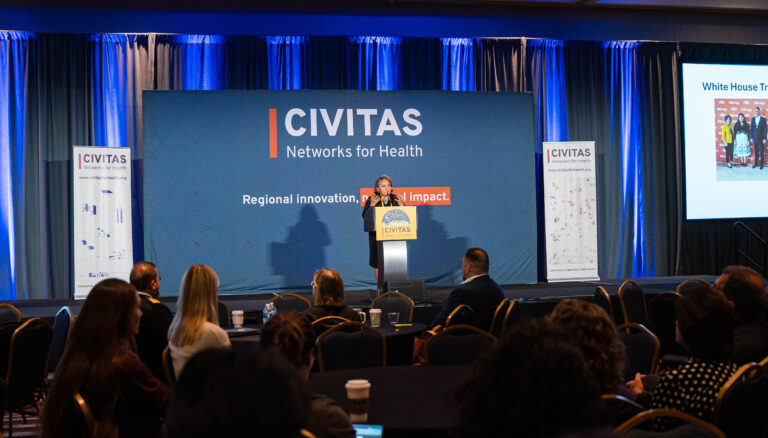










The theme of the ISPOR (International Society of Pharmacoeconomic and Outcomes Research) 19th Annual International Meeting was “Examining the Role of Big Data in Health Care Decision Making.” With much of the discussion focused on highly technical aspects of transforming data into information using statistical analysis models and methods, and with concepts introduced such as “machine learning” and “differential privacy,” the occasional references to actual doctors, nurses, patients, and researchers dealing with documentation and compilation of health care data were of particular interest. Clinical researchers want “real world” evidence (RWE) to inform health care decision making, but who are some of the “real people” contributing to this body of evidence? My imagination is inspired…
Dr. Smith entered the medical profession with a passion for helping patients. While building her practice, she enjoyed several rewarding years, establishing solid relationships with her patients. However, in recent years she has found herself increasingly disillusioned and discouraged. Though she has enthusiastically adopted technology in all areas of her life and has moved from keeping medical records on paper to an electronic health record (EHR) system, she feels she was forced to adopt a poorly designed system due to government-sponsored mandates and pressures from health care payors. She had no choice but to implement these changes if she wanted to maintain her practice, but the EHR system is difficult to use, so Dr. Smith spends less time with her patients these days and more time completing tedious EHR forms.
Mrs. Jones has been a patient of Dr. Smith’s for many years and was curious about the change from a paper medical record to a computerized record. Dr. Smith often seemed more focused on the computer than on her during their visits. Mrs. Jones knew Dr. Smith’s practice was affiliated with her health plan, but not until she was seen by a specialist who was also part of this health plan did she realize how easy and helpful it was for her other doctors to access her EHR. Unfortunately, Mrs. Jones’ most recent experience with the healthcare system in her local area has left her feeling disillusioned and discouraged. When she visited yet another specialist for an urgent medical issue, Mrs. Jones did not realize his practice was not affiliated with her health plan. Neither she nor her new doctor had access to her medical history, so Mrs. Jones had to delay critical treatment until she could find a way to do the paperwork and legwork required to get copies of the needed medical records.
Ms. Brown works as a clinical data abstractor in the Care Communications Research Services Department. During various research projects, she often reviews record copies from the health plan Dr. Smith and Mrs. Jones are part of. Ms. Brown and her colleagues have been abstracting and coding medical records for a wide variety of studies since before Dr. Smith began practicing medicine in the early 1990s, so she is intimately acquainted with how health care has been documented over the years and how medical records have changed with the advent of EHR systems.
During study-focused record review, Ms. Brown can easily recognize patterns in documentation that reflect physician frustration with the poorly designed EHR system. For example, notes may be copied verbatim for multiple encounters, including identical weights or vital signs that Ms. Brown knows will fluctuate from visit to visit. She alerts study researchers to such redundant data and asks how or whether it should be abstracted.
She identifies discrepancies in documentation related to the study drug of interest and digs further in the record to determine the accurate data for abstraction. Ms. Brown also detects clues that study-relevant records for a patient are missing (perhaps because the patient was referred to a specialist outside her health plan), and she reaches out to the study team to determine whether these records should be sought.
Policymakers have ambitious dreams for sharing EHR data and using collections of big data for health care decision-making, but in order for some of those dreams to come true, such issues as EHR software functionality and interoperability, problems with the completeness and accuracy of medical records, patient satisfaction, and health plan data sharing will require the attention, engagement and intervention of real people throughout the health care system for years to come.
Our new white paper, “Data Integrity Concerns Regarding EHR Data for Clinical Research,” helps identify the issues noted above and offers some solutions.


