



























New electronic medical record requirements mean doctors are getting caught up in tedious paperwork. ScribeAmerica is venturing into new technological territory in June to help doctors keep up.
Michael Murphy was in the 1st Ranger Battalion, an Army Commando unit, from 1997 to 2000. As part of his cross-training as a medic, Murphy was given the chance to work at Savannah Memorial Hospital in Georgia. He remembers seeing a doctor save a life for the first time. “I thought, it’s cool to blow things up, but this is a cool thing to do for the long term,” remembers Murphy. So he decided to become a doctor.

While studying pre-med at UC Santa Barbara, Murphy encountered a doctor who was trying to start what he called a “scribe” program. Though the term evoked an image of a medieval monk sedulously copying Aristotle, in the medical context a scribe was someone who shadowed a doctor–taking down notes, updating patients charts, and generally freeing the doctor to worry more about medicine and less about paperwork. Though the idea of the doctor’s scribe was not entirely new–Murphy says that the PubMed database references them as early as the ‘60s–it was far from widespread. In 2002, Murphy met his business partner Louis Moreno, and the two soon formed ScribeAmerica, a company that trains, manages, and supplies scribes.
Murphy remembers first pitching Hoag Hospital in Newport Beach, California. “We begged them to let us in the door,” he says. In an initial trial, only five of 20 physicians signed up to use scribes. But after just a single quarter of data–which revealed how much more efficient and happy those five doctors had become–fully 19 of 20 signed up. “We’ve been with them ever since,” says Murphy. ScribeAmerica began hiring and expanding, first into Florida, then Maryland, Texas, and other states.
The timing was auspicious, and ScribeAmerica was poised to ride the coming wave of health care reform. New health care legislation was–and still is–in the process of incentivizing hospitals to implement electronic health records. The move should benefit health care in the long term, by making data retrieval and transfer much simpler. But in the short term, says Murphy, the first thing doctors have noticed is that electronic health records mean more time spent entering data.
The data-entry burden has, in a way, “disrupted the physician-patient relationship,” says Murphy, with doctors finding themselves typing during an examination, or just as bad, taking hours away from their family at the end of a day to enter data. Such clerical work, says Murphy, is simply not the best use of a medically trained brain. “I went to medical school for four years and was a resident for four years,” says Murphy (who did get his MD amidst his scribe proselytizing), “and the last thing you should do as a physician is to be forced into a kind of secretarial role.”
American health care seems to broadly agree. A recent report puts the number of medical scribes working around the country at about 12,000; ScribeAmerica’s own business has grown from supplying just 1,000 about three years ago to some 3,700 today. “If you look at our growth, you have that hockey stick trajectory,” says Murphy.
And now, Murphy stands poised to launch his most ambitious and experimental offering yet: something he calls “telescribes.” Noting that it’s sometimes difficult to find and train and supply scribes in certain regions–and also, that there are certain practices like OB/GYN and urology where patients prefer fewer people in the examination room–ScribeAmerica will offer remote scribe services via telecenters in Maryland and India.
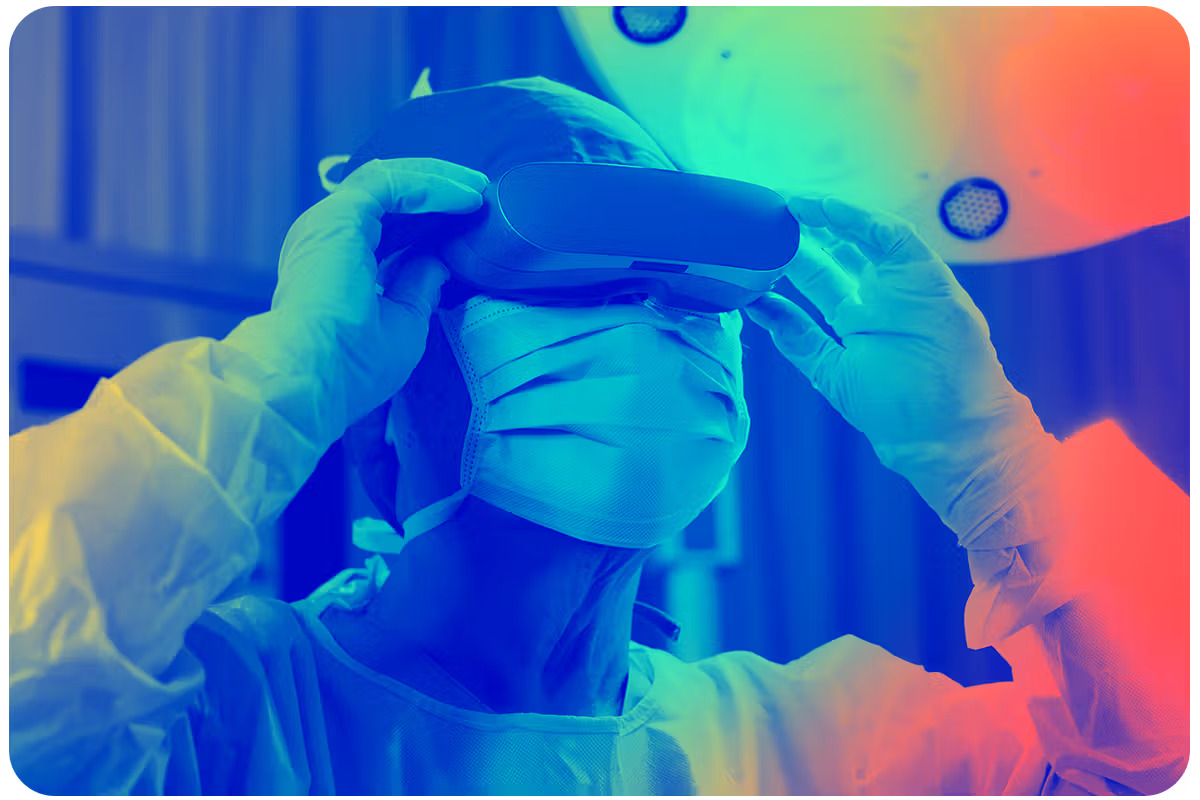
There are a few ways ScribeAmerica will achieve this feat. The first is with a HIPAA-compliant modification (thanks to encrypted software) of Google Glass, which will stream audio and video over the Internet to scribes. The physician will be able to interact with the scribe, too, says Murphy, asking, “Can I see her CAT report? What medications is she on again?” The scribe can then push that information to Google Glass’s display. A somewhat lower-tech version of the service would simply use a phone to transmit audio only to the telecenter. This option works better for facilities with lower bandwidth.
ScribeAmerica intends to launch these services in the first week of June, though they’ve already been testing in four facilities. To use telescribes in the Maryland center would run about $23 an hour, says Murphy; at the telecenter in India, $15 to $18 an hour. To use Google Glass would of course add a $1,500 startup cost, though Murphy says that in some cases that could be bundled into the overall price, “depending on the size of the agreement.”
With his hockey stick-shaped business growth and an ambitious high-tech expansion on the horizon, does Dr. Murphy find any time to practice medicine himself? “I love medicine,” he says, and he does like to stay in touch with the physician’s experience; still, he only is able to find time to do about one shift a month at a VA hospital in Miami. Ultimately, though, he feels what he’s doing is actually the better way to serve more patients.
“My ability to impact more patient lives is better fulfilled right now in ScribeAmerica,” he says. “When you can provide a scribe to a physician and that physician is a happier person giving better care, that’s a really cool thing. I love getting physicians telling me, ‘You just added five years to my career.’”


