




















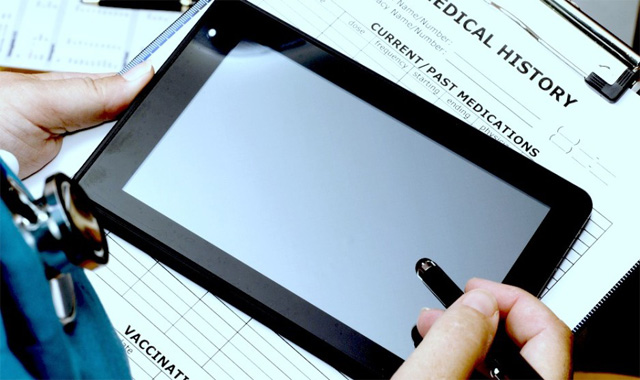



















The electronic health-records article written by Winthrop Quigley (March 3: “Patient files go high-tech”) contained the misconception that the EHR allows a physician to see every scrap of information relevant to a patient’s care.
The EHR that Presbyterian Healthcare Services is using only contains information about patients seen at Presbyterian and can only be accessed by doctors working at Presbyterian.
If a patient is seen at University of New Mexico Hospital, Lovelace Health System or a private doctor, that information is not in the record and cannot be viewed by the Presbyterian doctor. The information also cannot be electronically transferred between doctors unless they work at Presbyterian.
The surgeon interviewed in the article stated that his pre-op interview now has all the information he needs from the referring primary care doctor, when in fact this is only true if that patient was seen by a Presbyterian doctor. It also assumes that all of the patient’s care was given at Presbyterian.
The article also stated that X-rays and blood tests are now accessible through the EHR. This information is available via computer to doctors without the use of the EHR, however different systems do not communicate with each other. Tricore labs and radiology labs allow specific users only, and this privilege is not related to which EHR the physician uses.
The U.S. government could have solved the problem of systems communicating with each other by developing a single EHR and giving the program free to every doctor in the country. If every doctor used the same EHR, there would be no problem communicating among UNM, Presbyterian, Lovelace and the private community. There would be no problem when patients are out of town and see a doctor who needs their records.
The story also did not stress enough the cost of electronic records, which is staggering, especially at a time when the nation is trying to trim the health-care budget.
The worst part of the EHR is that it may prevent a doctor from paying attention to his/her patient. The most important part of a doctor/patient encounter is the history. The doctor needs to pay attention to the patient’s description of his illness and “look the patient in the eye.”
Many doctors are paying more attention to their computer than their patient and might even have their back to the patient. If you can’t speak on a cellphone or text while driving, how is multitasking while taking a patient history any different?
Many doctors take notes and then go to their computers to enter the electronic note, but this is really time-consuming and limits a doctor’s efficiency. Many doctors are now seeing fewer patients and appointments are harder to get because of the extra time involved in working on their electronic records.
I have yet to see an EHR that is suitable for family practice or pediatric doctors. The Presbyterian EHR is not suitable for family medicine and pediatric doctors.
When using the usual EHR, only the patient’s information is available to the doctor. If there are multiple children or family members that need immunizations or follow-up, this would be unknown to the doctor.
When a mother asks me if her “other children are up to date on their immunizations,” it is a difficult question to answer. I don’t know how many other children she has or even what their names are. Each family member’s EHR must be pulled up separately and reviewed separately to answer a question that with a paper chart would have taken seconds to answer.
Overall, the issue of electronic records is very complex and much more could be said, however that would require a newspaper article of great length and cannot be addressed in a letter to the editor. Source


