




























Analytics can help healthcare providers reduce costs and save lives, say attendees of Crimson Clinical Advantage Summit 2014 — but they must be implemented thoughtfully.

When healthcare organizations provide clinicians with data previously hidden within disparate databases and paper files, they can improve treatment and reduce costs, according to a recent gathering of high-level medical professionals.
More than 600 CEOs, CIOS, health system executives, chief medical officers, physicians, and informatics professionals attended The Advisory Board Company’s Crimson Clinical Advantage Summit 2014 in Orlando last week, where they shared best-practices, case studies, and partnerships surrounding their use of Crimson Continuum of Care, Crimson Population Risk Management, and Crimson Care Management and related services.
These tools help health organizations move to value-based payments, trim unnecessary costs, and enhance care, said Richard Schwartz, president of performance technologies and consulting at The Advisory Board Company, in an interview at the conference.
Healthcare organizations “are viewing this as an opportunity to align the system around better healthcare delivery. There’s also a genuine recognition that the traditional economics of healthcare delivery, if they don’t move, are not sustainable,” he said.
Because Crimson and similar tools give hospitals and clinicians insight into each individual physician’s performance, executives stressed that it’s critical that healthcare providers get doctor buy-in, demonstrate the benefits, and follow best-practices.
“We did commit to this use of Crimson for learning, not judgment,” said Dr. James Leo, medical director of best-practices and clinical outcomes at MemorialCare Health System, in a presentation. “This was a program we were implementing to improve our clinical performance, to improve our financial performance, to help people get better at what they do, not a punitive tool. We learned from other systems that tried to implement this on too fast a basis.”
To accomplish these goals, healthcare organizations recommend following these guidelines:
- Include physicians in steering and advisory committees
- Invite doctors to become early adopters and internal champions
- Communicate updates regularly and frequently
- Share users’ successes via video, newsletters, meetings, and other means to underscore benefits of analytics
- Don’t move too quickly
“We rolled it out by physicians, for physicians,” said Helen Macfie, chief transformation officer at MemorialCare Health System, in an interview. Currently about 600 of MemorialCare’s 2,600 physicians are trained in Crimson. They access the software from work or remotely, using it to find trends that improve care and save money.
For example, Leo said, one Saddleback Memorial Medical Center pulmonologist discovered that patients who took progressively greater volumes of hypnotic sedatives (excluding IV drugs) had longer hospitalizations, more complications, and increased chance of readmission. Using Crimson, Orange Coast Memorial Medical Center reduced readmissions by 30% by following up with patients within seven days of discharge and emphasizing the importance of medication.
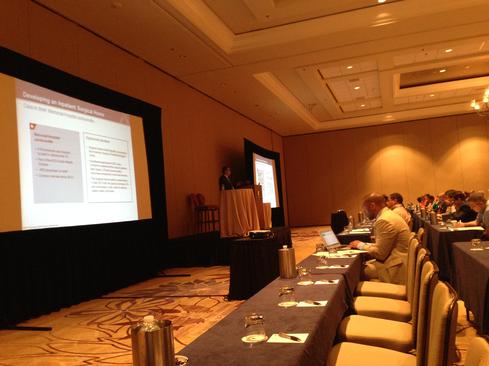
Several HCA South Atlantic Division hospitals reduced sepsis mortality rates and average stays when physicians gained insight into patient data, said Helena Feather, VP for quality, risk management, and ethics and compliance officer, in a presentation. Collaboration among the emergency department, ICD-9 coding, the sepsis team, physicians, and Feather’s division identified improvements that delivered across-the-board improvements. “The best of all the work everybody has done is: We saved 75 lives in 2013. So that’s tremendous,” said Feather.


