





































Events Calendar

Mon
Tue
Wed
Thu
Fri
Sat
Sun
M
T
W
T
F
S
S
2
3
5
6
7
8
11
12
13
14
15
16
17
18
19
20
21
22
24
25
26
27
28
30
1
2
3
4
5
The 10th Annual Traumatic Brain Injury Conference
2020-06-01 - 2020-06-02    
All Day
Arrowhead Publishers is pleased to announce its 10th Annual Traumatic Brain Injury Conference will be coming back to Washington, DC on June 1-2, 2020. This conference brings [...]
5th World Congress On Public Health, Epidemiology & Nutrition
2020-06-01 - 2020-06-02    
All Day
We invite all the participants across the world to attend the “5th World Congress on Public Health, Epidemiology & Nutrition” during June 01-02, 2020; Sydney, [...]
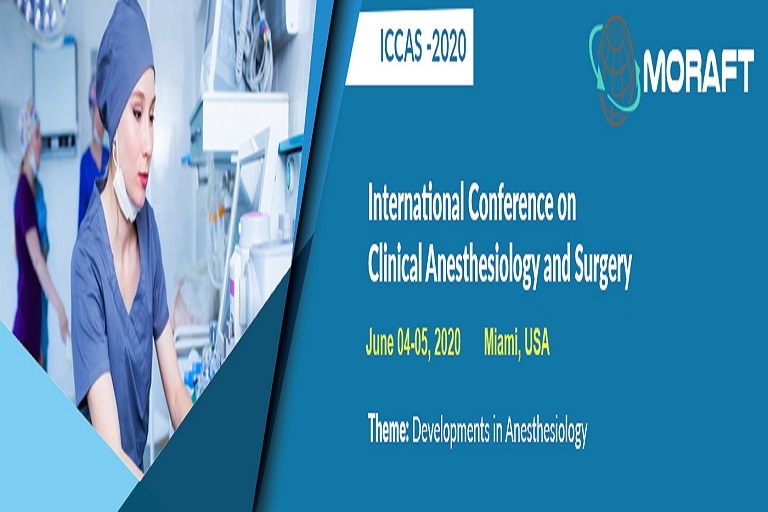
Global Conference On Clinical Anesthesiology And Surgery
2020-06-04 - 2020-06-05    
All Day
Miami is an International city at Florida's southeastern tip. Its Cuban influence is reflected in the cafes and cigar shops that line Calle Ocho in [...]
5th International Conferences On Clinical And Counseling Psychology
2020-06-09 - 2020-06-10    
All Day
Conferenceseries LLC Ltd and its subsidiaries including iMedPub Ltd and Conference Series Organise 3000+ Conferences across USA, Europe & Asia with support from 1000 more scientific societies and Publishes 700+ Open [...]
50th International Conference On Nursing And Healthcare
2020-06-10 - 2020-06-11    
All Day
Conference short name: Nursing Conferences 2020 Full name : 50th International conference on Nursing and Healthcare Date : June 10-11, 2020 Place : Frankfurt, Germany [...]
Connected Claims USA Virtual
The insurance industry is built to help people when they are in need, and only the claims organization makes that possible. Now, the world faces [...]
Federles Master Tutorial On Abdominal Imaging
2020-06-29 - 2020-07-01    
All Day
The course is designed to provide the tools for participants to enhance abdominal imaging interpretation skills utilizing the latest imaging technologies. Time: 1:00 pm - [...]
IASTEM - 864th International Conference On Medical, Biological And Pharmaceutical Sciences ICMBPS
2020-07-01 - 2020-07-02    
All Day
IASTEM - 864th International Conference on Medical, Biological and Pharmaceutical Sciences ICMBPS will be held on 3rd - 4th July, 2020 at Hamburg, Germany . [...]
International Conference On Medical & Health Science
2020-07-02 - 2020-07-03    
All Day
ICMHS is being organized by Researchfora. The aim of the conference is to provide the platform for Students, Doctors, Researchers and Academicians to share the [...]
Mental Health, Addiction, And Legal Aspects Of End-Of-Life Care CME Cruise
2020-07-03 - 2020-07-10    
All Day
Mental Health, Addiction Medicine, and Legal Aspects of End-of-Life Care CME Cruise Conference. 7-Night Cruise to Alaska from Seattle, Washington on Celebrity Cruises Celebrity Solstice. [...]
ISER- 843rd International Conference On Science, Health And Medicine ICSHM
2020-07-03 - 2020-07-04    
All Day
ISER- 843rd International Conference on Science, Health and Medicine (ICSHM) is a prestigious event organized with a motivation to provide an excellent international platform for the academicians, [...]
04 Jul
2020-07-04    
12:00 am
ICRAMMHS is to bring together innovative academics and industrial experts in the field of Medical, Medicine and Health Sciences to a common forum. All the [...]
Events on 2020-06-04
Events on 2020-06-10
Events on 2020-06-23
Connected Claims USA Virtual
23 Jun 20
London
Events on 2020-06-29
Events on 2020-07-02
Articles

May 28 : The overlap between EHRs and big data

health systems

By Drew Settles, Technology Advice

You cannot manage what you cannot measure. And if you can’t measure it, you can’t improve it. These management adages are particularly resonant when it come to electronic health records (EHRs) and medical data.

When the EHR mandates were passed down in the American Recovery and Reinvestment Act (ARRA) of 2009, the idea was that moving patient records to an electronic format would improve clinical efficiency and treatment outcomes, thereby lowering medical costs. While the jury is still out on efficiency, EMR software is being used to collect massive amounts of data that will, in time, improve treatment outcomes.

Previous to EHR adoption, the only way to aggregate large amounts of clinical data was to do so manually. Published clinical trials were the best way to discover new treatment options, but trials are limited in that they only record the data that the administering physician deemed important or appropriate. In addition to data limitations, it takes an average of 17 years (really) for clinical trial research to be incorporated into everyday practices, according to the Agency for Healthcare Research and Quality (AHRQ. EHRs can collect more data, and disseminate it faster than any clinical trial.

While EHR interoperability remains low, in the not-too-distant future, EHRs should be able to export large sets of anonymized patient data, allowing clinicians to discover patterns in treatments, symptoms, demographic information, and more. Physicians will be able to review their patients records against large datasets to establish better baselines and averages. This will also help better plan treatments. For example, an oncologist could predict his or her patient’s reaction to a certain treatment based on the reactions of other patients who share similar symptoms, genetics, etc.

This type of data is already being utilized, albeit in a limited capacity, in clinical decision support functionality. Clinical decision support software (CDSS) can review a physician’s diagnosis against an individual  patient’s historical record. Also, CDSS can review a patient’s medication history and return data on the efficacy of past and current medications. That data can be used to make medication and dosage recommendations.

While the information is limited to a single patient and EHR vendor at present, improvements in interoperability should allow CDSS to draw from larger datasets. This would help further reduce the possibility of adverse reactions to treatments and medications.

In short, better measurement of health data will help physicians better manage patient health, and improve treatment outcomes. Of course, the old statistical adage “garbage in, garbage out” still applies here. Conclusions drawn from inaccurate or incomplete datasets can be dangerous. Thankfully,  the higher specificity of ICD-10 diagnosis codes should improve the quality of data, and the conclusions drawn from said data.


Source
