

























Steve Zeldes is a clinical assistant professor in MSU’s Department of Neurology and Ophthalmology and an ophthalmologist in West Bloomfield, Mich. He is one of only a handful of ophthalmologists in the country Athena Health selected to develop an electronic medical records system for ophthalmology.
It’s hard to believe that the transition from paper to electronic medical records (EMRs)—a change that took decades—has now advanced from desktops to mobile devices in only a few short years. And now, another potential tech transition looms: from mobile to Google Glass?
When I started my practice 12 years ago technology was primitive when compared to today. The records were on paper, the back room was filled with charts, we took eyelid photos with a Polaroid, and my retinal photos were on slides. We sent out reminder cards once a month, and my staff complained daily about calling patients who were due for an appointment. And who can forget the panic attacks I would get when my server-based practice management software would crash.
Fast forward to today—my records are electronic, photos are digital, data is in the cloud, server is in the garbage and technology has freed up valuable staff time used to call patients.
All these amazing advancements aside, I still find myself distracted by the computer when I should be talking to patients. And it is for this reason that I think Google Glass wearable computing device sparked my interest.
My Day with Google Glass
I would have struggled with the very concept if a colleague hadn’t offered me the rare opportunity to experience Glass before it was available to the general public. Jennifer Ware, an assistant professor in MSU’s School of Journalism, is one of thousands of individuals chosen to beta test Glass. I would like to give a big thanks to her for allowing my family and I to experience this innovation. My kids loved playing with it, and while I’m sure they were focused on ways this would make gaming more fun and interactive, the doctor in me immediately started thinking up clinical use cases, more specifically, how this could impact my experience with the EMR.
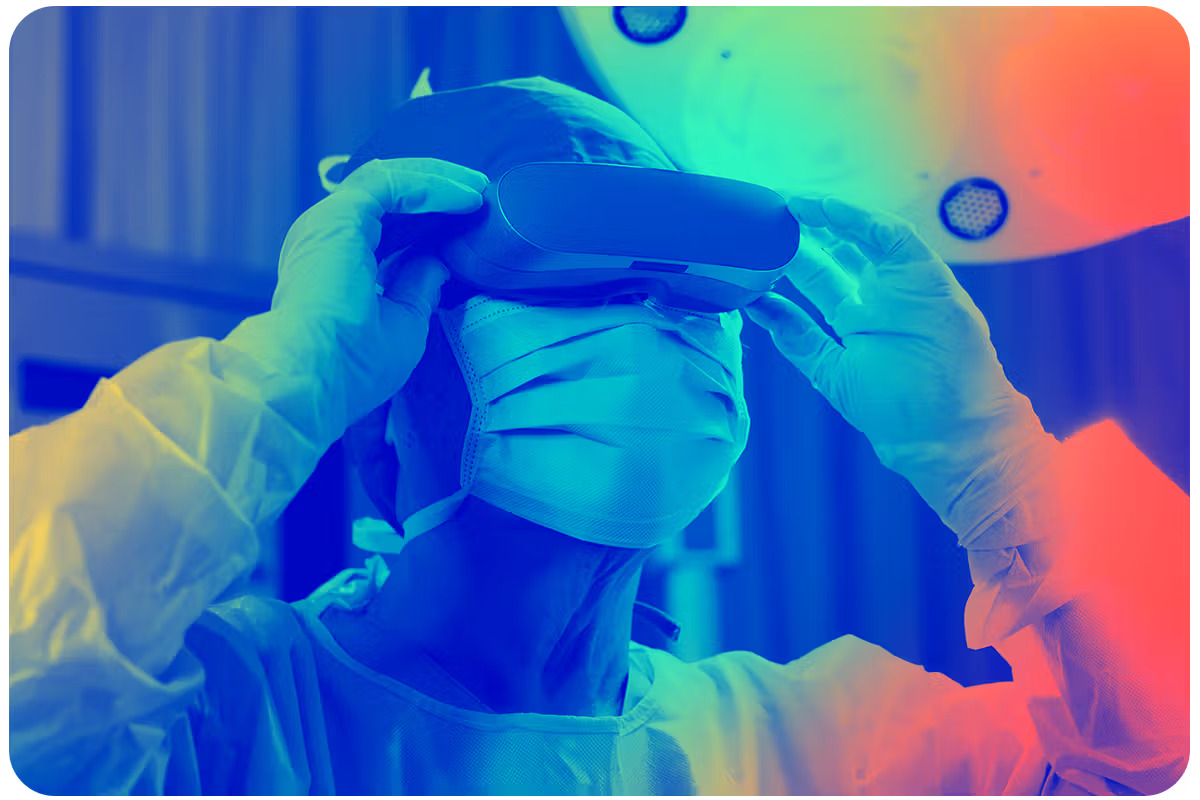
If you’re not familiar with Google Glass, it has one ocular in the right lens with a small screen in the upper right. The right side of the Glass or the arm of the frames is used as a keypad for scrolling. Like the iPhone’s Siri, Glass responds to simple voice commands like “Take a picture,” or “Take video.” The Glass frame was lightweight, comfortable and easily portable.
A “Glass-ified” EMR
After spending a full day wearing Google Glass, I continued to think up ways this technology could be incorporated into my practice—all the use cases seemed to circle back to the EMR experience. What could I do as a physician with a “Glass-ified” EMR? Here are my top thoughts, or, hopes and dreams, if you will:
- Patient Communication: With a tool like Google Glass, I could access a patient record without being distracted by a computer screen, thus improving direct communication with patients. Imagine a lightweight, portable option for accessing records, something easier than a laptop or tablet—what an advantage in a busy clinic setting or while rounding in the hospital.
- Imaging: Accessing a previous exam in either a photo or video format would allow simultaneous viewing of a previous and current exam. With the addition of a second ocular or projector, this can be three-dimensional. A 3-D image could be a real advantage in a visual specialty like mine, Ophthalmology. The third dimension can help distinguish a nevus (benign) from a melanoma (cancer) on a retinal exam or swelling of the retina from diabetes or changes in the optic nerve from glaucoma. This could also be used to simultaneously view a patient’s MRI or X-ray while performing a physical exam, something that is not easily accomplished with a laptop or iPad today.
- Instant Access During Care: A surgeon could simultaneously view a patient’s vitals while performing surgery. This would allow the surgeon to keep his/her attention on the surgical field.
- Teaching: A 3-D video can be used for teaching purposes. For example, while operating under a surgical microscope, say, for removing a cataract, a surgeon depends on viewing depth. A 3-D video can better demonstrate this important visual and help avoid complications.
Yes, many are still adjusting to the transition to EMRs and learning the difference between an Android, iPhone and iPad, yet I think the potential for Glass as the next tool in our health care belt is an exciting one. Especially if you consider the potential for a seamless integration with our EMRs.
Google and Glass are registered trademarks of Google, Inc.


