








































Events Calendar

Mon
Tue
Wed
Thu
Fri
Sat
Sun
M
T
W
T
F
S
S
30
31
2
4
5
10
11
12
13
14
15
20
21
22
23
24
25
26
27
12:00 AM - Arab Health 2020
29
1
2
5th International Conference On Recent Advances In Medical Science ICRAMS
2020-01-01 - 2020-01-02    
All Day
2020 IIER 775th International Conference on Recent Advances in Medical Science ICRAMS will be held in Dublin, Ireland during 1st - 2nd January, 2020 as [...]
01 Jan
2020-01-01 - 2020-01-02    
All Day
The Academics World 744th International Conference on Recent Advances in Medical and Health Sciences ICRAMHS aims to bring together leading academic scientists, researchers and research [...]
03 Jan
2020-01-03 - 2020-01-04    
All Day
Academicsera – 599th International Conference On Pharma and FoodICPAF will be held on 3rd-4th January, 2020 at Malacca , Malaysia. ICPAF is to bring together [...]
The IRES - 642nd International Conference On Food Microbiology And Food SafetyICFMFS
2020-01-03 - 2020-01-04    
All Day
The IRES - 642nd International Conference on Food Microbiology and Food SafetyICFMFS aimed at presenting current research being carried out in that area and scheduled [...]
World Congress On Medical Imaging And Clinical Research WCMICR-2020
2020-01-03 - 2020-01-04    
All Day
The WCMICR conference is an international forum for the presentation of technological advances and research results in the fields of Medical Imaging and Clinical Research. [...]
International Conference On Agro-Ecology And Food Science ICAEFS
2020-01-06    
All Day
The key intention of ICAEFS is to provide opportunity for the global participants to share their ideas and experience in person with their peers expected [...]
RW- 743rd International Conference On Medical And Biosciences ICMBS
2020-01-07 - 2020-01-08    
All Day
RW- 743rd International Conference on Medical and Biosciences ICMBS is a prestigious event organized with a motivation to provide an excellent international platform for the [...]
International Conference On Nursing Ethics And Medical Ethics ICNEME
2020-01-08 - 2020-01-09    
All Day
An elegant and rich premier global platform for the International Conference on Nursing Ethics and Medical Ethics ICNEME that uniquely describes the Academic research and [...]
International Conference On Medical And Health SciencesICMHS-2020
2020-01-09 - 2020-01-10    
All Day
The ICMHS conference is an international forum for the presentation of technological advances and research results in the fields of Medical and Health Sciences. The [...]
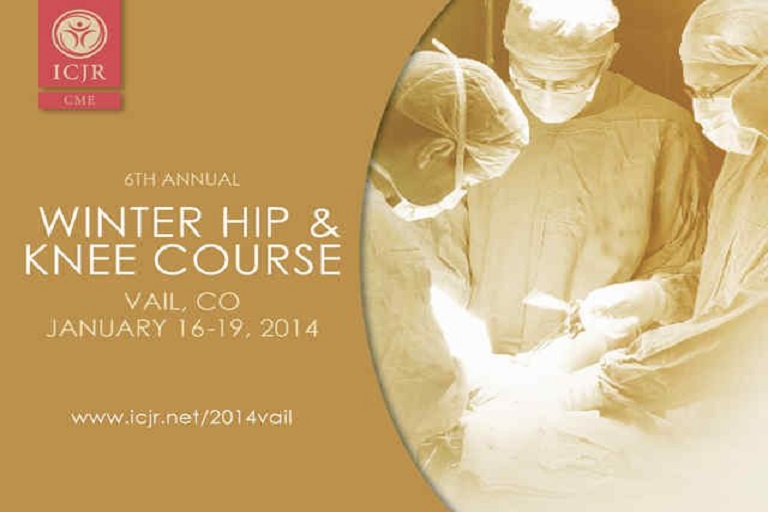
12th Annual ICJR Winter Hip And Knee Course
2020-01-16 - 2020-01-19    
All Day
Make plans to join us in Vail, Colorado, for the 12th Annual Winter Hip And Knee Course, the premier winter meeting focused on primary and [...]
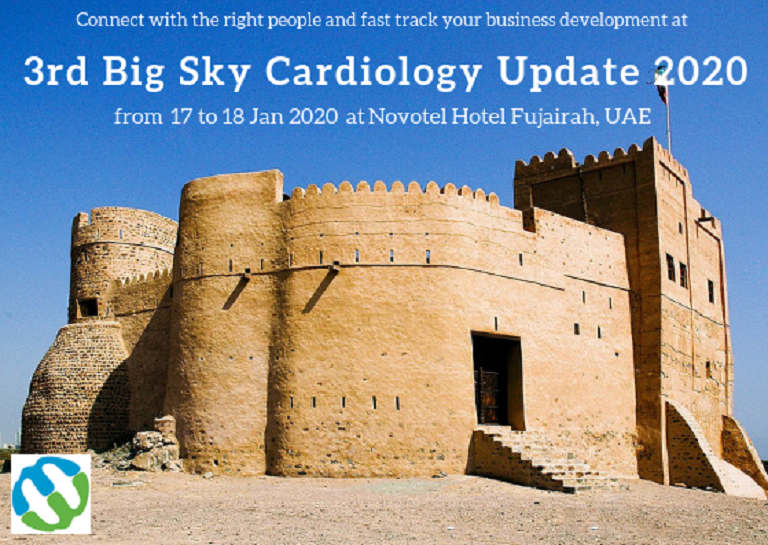
3rd Big Sky Cardiology Update 2020
2020-01-17 - 2020-01-18    
All Day
ABOUT 3RD BIG SKY CARDIOLOGY UPDATE 2020 Following the success of the 2nd edition, I am pleased to invite you to the “3rd Big Sky [...]
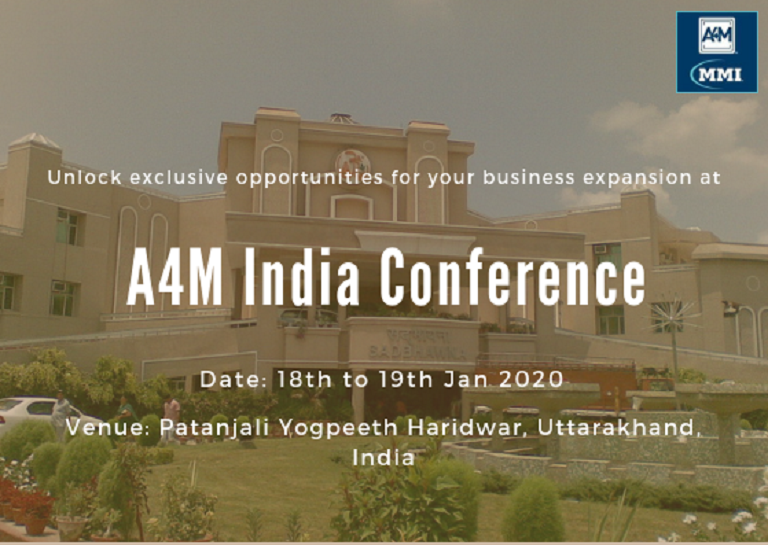
A4M India Conference
2020-01-18 - 2020-01-20    
All Day
ABOUT A4M INDIA CONFERENCE Taking place for the first time in New Delhi, India, this two-day event will serve as a foundational course in the [...]
International Conference On Oncology & Cancer Research ICOCR-2020
2020-01-19 - 2020-01-20    
All Day
The ICOCR conference is an international forum for the presentation of technological advances and research results in the fields of Oncology & Cancer Research. The [...]
Arab Health 2020
2020-01-27 - 2020-01-30    
All Day
ABOUT ARAB HEALTH 2020 Arab Health is an industry-defining platform where the healthcare industry meets to do business with new customers and develop relationships with [...]
12th International Conference on Acute Cardiac Care
2020-01-28 - 2020-01-29    
All Day
ABOUT 12TH INTERNATIONAL CONFERENCE ON ACUTE CARDIAC CARE Acute Cardiac Care has been undergoing a substantial transformation in recent years as the population ages and [...]
30 Jan
2020-01-30 - 2020-01-31    
All Day
The ICMHS conference is an international forum for the presentation of technological advances and research results in the fields of Medical and Health Sciences. The [...]
Annual Lower and Upper Canada Anesthesia Symposium 2020 (LUCAS)
2020-01-31 - 2020-02-02    
All Day
ABOUT ANNUAL LOWER & UPPER CANADA ANESTHESIA SYMPOSIUM 2020 (LUCAS) On behalf of the Departments of Anesthesia of McGill University, Queen’s University, and the University [...]
RF - 577th International Conference On Medical & Health Science - ICMHS 2020
2020-02-02 - 2020-02-03    
All Day
577th International Conference on Medical & Health Science - ICMHS 2020. It will be held during 2nd-3rd February, 2020 at Berlin , Germany. ICMHS 2020 [...]
ISER- 747th International Conference On Science, Health And Medicine ICSHM
2020-02-02 - 2020-02-03    
All Day
ISER- 747th International Conference on Science, Health and Medicine ICSHM is a prestigious event organized with a motivation to provide an excellent international platform for [...]
Events on 2020-01-08
Events on 2020-01-09
Events on 2020-01-16
Events on 2020-01-17
Events on 2020-01-18
A4M India Conference
18 Jan 20
Haridwar
Events on 2020-01-27
Arab Health 2020
27 Jan 20
Dubai
Events on 2020-01-28
Events on 2020-01-30
Events on 2020-01-31
Articles

Why are mobile apps lacking for clinics, inpatient care?

mobile he
The market for mobile health (mHealth) applications is tremendous insofar as recent reports and projections are concerned. However, a closer examination of these apps show a serious bias toward the consumer (i.e., the patient) and much less concern for health IT solutions developed to benefit those responsible for monitoring and managing patients, healthcare organizations and providers.
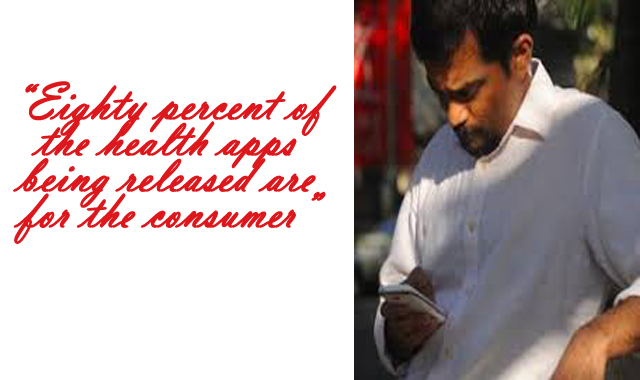
“Eighty percent of the health apps being released are for the consumer,” Naomi Fried, PhD, Chief Innovation Officer at Boston Children’s Hospital, told the audience at the 5th Annual mHealth World Congress.  “Of the remaining percent of health apps that actually are clinical in nature, what we’re primarily seeing are existing websites and tools beings turned into mobile apps.”
According to Fried, the current offering of mHealth apps for healthcare organizations and providers has done little more than present existing tools in a friendlier (i.e., web- or mobile-optimized) format:
But all of these are examples of just changing the delivery mechanism of existing tools and content. Within healthcare, there’s actually a dearth of mobile apps being created in certain areas. I’m thinking in particular of the hospital inpatient environment. Relatively speaking, there are very few truly innovative mobile apps being created.
That prevailing focus of mHealth apps is on the consumer does make sense. Working directly with consumers allows mobile app developers to avoid working in an environment that is heavily regulated and therefore difficult to thrive in.
“Issues of HIPAA privacy and security can be daunting to the uninitiated,” explained Fried. “Healthcare is a heavily regulated industry, and anyone thinking about developing a mobile app needs to respect these regulations if they’re developing in the clinical environments.”
As Fried noted in her presentation, the challenge of developing innovative mobile apps for healthcare is further complicated by the specter of the Food and Drug Administration (FDA) considering upping its role in regulating mHealth apps in a way akin to its regulation of medical devices. “This will certainly give most developers pause when thinking about building a mobile app for this environment,” she added.
Despite the seemingly perilous adventure that is developing mobile apps for healthcare organizations and providers, Fried stressed the untapped potential dormant within healthcare, an industry whose reliance on paper points to the need for serious innovation:
Hospitals are often still using paper, which takes up space and can get lost. And taking care of patients usually involves accessing a great deal of data that you want to have available on the fly. Mobile apps that could provide busy clinicians with access to data, replace paper, and give this to them all on the fly is an ideal solution.
The million- (perhaps billion-) dollar question facing mHealth developers in the hospital space is: What is preventing them from capitalizing on this opportunity?
According to Fried, there are several obstacles in the way, the first of which is the complexity (i.e., diversity) of health IT systems already in place within the inpatient settings.
“The hospital environment is usually running a variety of clinical solutions that a mobile app might need to connect to,” she observed. “It’s pretty complicated. Most clinical IT environments are very complex, hard to learn, and not one that most mobile app developers know much about.”
And that’s just one side of the coin. The other deals with the privacy and security issues which play a major role in how patients and their information is treated. This recognition, claimed Fried, would seem to point to the need for healthcare organizations and providers to develop their own solutions given their familiarity with the environment. That, however, is beyond the reach of many hospitals and clinical settings struggling to allocate resources appropriately.
Why don’t hospital IT departments develop mobile apps for the hospital environment? After all, they understand the clinical IT ecosystem. They certainly are aware of issues of HIPAA privacy and security. But I think you’ll find most hospital IT departments are extremely busy. Most of their workers are overworked, if not exhausted. They are busy supporting all those existing clinical IT systems, dealing with upgrades, complying with security, preparing for meaningful use and ICD-10.
The awareness of these challenges has led Boston Children’s Hospital to use an innovative approach toward innovative health IT, which has taken the form of the FastTrack Innovation in Technology (FIT). This program offers creative individuals and resource groups the opportunity to engage with developers to work through the many stages that mobile app development requires and hopefully bridge the gap between development and adoption.
Obviously, not all institutions can copy this model, but at the very least it shows that many of the great transformative ideas for reforming healthcare delivery already reside in the minds and workflows of those currently doing the work.Source


