






































September 5, 2013 by Dennis Grantham, Editor-In-Chief
For years now, there’s been an intense focus on the adoption of electronic health records (EHRs). So intense a focus that some of you may figure that once yours goes live, or once you qualify for Meaningful Use dollars (eligible providers only, of course!), a good many of your problems would be over.
There are a lot of people who believe that EHR adoption is just the beginning, that meeting requirements for Meaningful Use are just the first hesitant steps on a much longer journey.
And, as I look down the path of that journey, it gets a little more interesting — certainly more interesting than what many of us have heard so far. Once you get underway, the journey becomes less about what “you have to do” with technology and more about how it can work for you. It’s actually about making the job easier, having better tools to use when you need them, and being able to participate in the evolving world of integrated care. It’s about technology that captures and presents your contribution — expertise and information about a patient’s behavioral health treatment — as an integral and respected element in whole person healthcare for everyone.
In that world, the EHRs that likely top your “must have” list today will seem a whole lot more like smart phones or the Internet; they will be things that you touch and use every day, pretty much whenever you want, without a second thought about how impossible and unaffordable they seemed a short time ago. In that world, information transactions that seem wildly complex today — for example, completing a Continuity of Care Document, retrieving a patient’s health records from a regional health information exchange, or even maintaining special privacy protections on confidential addiction treatment records — will be hammered out into boringly reliable legal and technical routines. We’ll download and use “apps” that make swapping these details about as difficult having a live video call with my nephew — a U.S. Marine stationed on Okinawa — using FaceTime on my iPhone. (Did that last Sunday. Yawn!)
The speed and relentlessness with which technology advances will likely be good news for those of you — and I know you’re out there — who still wonder about all of this “automation.” If history is any guide, the technology that you’re 1) afraid to adopt, 2) not sure you really need, or 3) absolutely certain you can’t afford will multiply in power while dividing in cost, all in the foreseeable future.
Slicing up the job
It can be difficult to learn how to use an EHR system because it can do so many things. The trick is to sort out the functions and screens that I’m going to need in my job every day from those needed by other job functions — things I may rarely or never use. Two examples:
- If I’m a clinician, I will appreciate that a patient’s coverage has been verified, that demographic information was collected at admission, and that patient self-evaluation replies are available in his or her electronic record. But I don’t need to master those functional “slices” of the system if those tasks are done by others. What I must master are the slices associated with diagnosis, medication, treatment planning, progress notes, and the like.
- If I’m a primary care physician who is collaborating in care of behavioral health patients, I will appreciate a clinician’s update on how a patient’s MH or SUD treatment is progressing, but my primary role is likely to be involved in treating acute problems, managing medications, and preventing or managing chronic diseases.
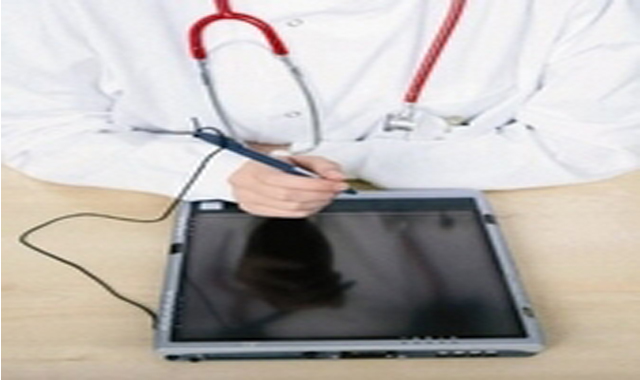
In response to needs like these, system developers have been working on task or job-related “apps” for some time now. The word “app” is definitely appropriate to describe these job or task-specific slices of functionality, since many will operate on a smartphone, a tablet, or an iPad. By definition, they can’t perform all of the functions of a larger enterprise EHR, but then, most users never wanted to learn all of that functionality anyway.
“Point of view” apps
“A lot of what we’re doing today is no longer about working with an enterprise solution. Instead, it’s just a bunch of little applications, just a segment or ‘point of view’,” says Bill Connors, SVP for behavioral health at Netsmart. The company is developing a series of such apps, which they call “points of view” that “sit above an enterprise system, like an EHR, and manage a connection, or pipe, that links it and the user to a specific set of EHR functionality.”
The apps — the company calls them CareViews — can be quite simple, ranging from a simple status reporting app for a nurse doing 15-minute bed checks on a psychiatric floor, to a vital-sign recording app, or a variety of patient wellness or screening apps. There are also learning and continuing education applications, executive dashboards, and progress note apps for outreach and community-focused care workers.
Relatively simple, accessible, and job-focused apps like these are the things that start making life a little easier for IT users, who can learn and use EHR functionality in smaller pieces, without being chained to a desktop, lugging a laptop around, or wading through functionality to get to what’s relevant to them. source


