
























Events Calendar

Mon
Tue
Wed
Thu
Fri
Sat
Sun
M
T
W
T
F
S
S
30
2
3
4
5
6
7
9
12
13
14
15
17
19
22
25
27
12:00 AM - HLTH 2019
28
29
30
31
1
2
3
01 Oct
2019-10-01 - 2019-10-02    
All Day
The UK’s leading health technology and smart health event, bringing together a specialist audience of over 4,000 health and care professionals covering IT and clinical [...]
08 Oct
2019-10-08 - 2019-10-09    
12:00 am
Looking to maximize the efficiency of your current Revenue Cycle solution? Join us as we present strategies for analyzing your MEDITECH Revenue Cycle, and learn from other [...]
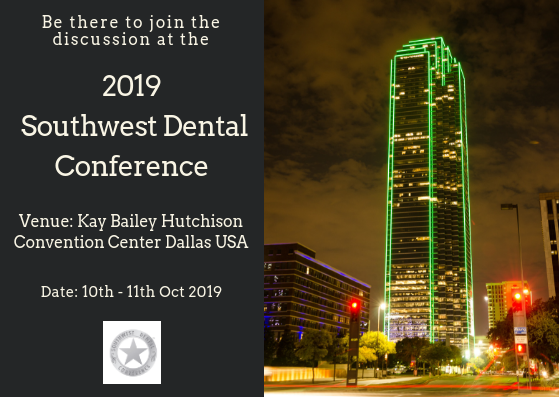
2019 Southwest Dental Conference
2019-10-10 - 2019-10-11    
All Day
ABOUT 2019 SOUTHWEST DENTAL CONFERENCE For 91 years, the Southwest Dental Conference has been the meeting of choice for quality professional development and innovative educational [...]
Annual Conference & Exhibition Lyotalk USA 2019
2019-10-10 - 2019-10-11    
All Day
ABOUT ANNUAL CONFERENCE & EXHIBITION LYOTALK USA 2019 Lyotalk is USA’s largest annual conference on Lyophilization/Freeze Drying. Lyotalk attracts gathering from of 150+ experts from [...]
Lab Indonesia 2019
2019-10-10 - 2019-10-12    
All Day
ABOUT LAB INDONESIA 2019 LabAsia is Southeast Asia’s leading laboratory exhibition, serving as the region’s trade platform for laboratory equipment & services suppliers to engage [...]
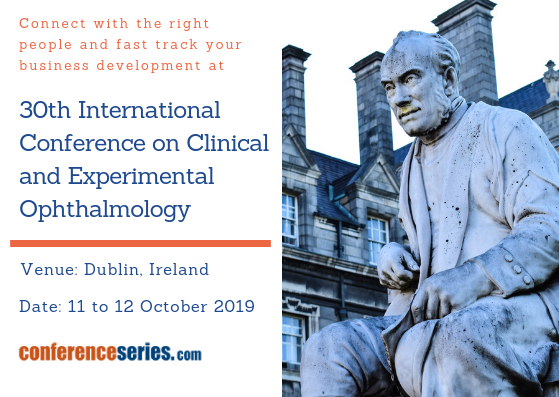
30th International Conference on Clinical and Experimental Ophthalmology
2019-10-11 - 2019-10-12    
All Day
ABOUT 30TH INTERNATIONAL CONFERENCE ON CLINICAL AND EXPERIMENTAL OPHTHALMOLOGY The 30th International Conference on Clinical and Experimental Ophthalmology is going to be held during October [...]
7th International Conference on Cosmetology & Beauty 2019
Cosmetology and Beauty 2019 passionately welcomes each one of you to attend a global conference in the field of cosmetology which is held on October [...]
16 Oct
2019-10-16 - 2019-10-17    
All Day
ABOUT 17TH INTERNATIONAL CONFERENCE ON CANCER RESEARCH AND THERAPY Cancer Research Conference 2019 coordinates addressing the principal themes and in addition inevitable methodologies of oncology. [...]
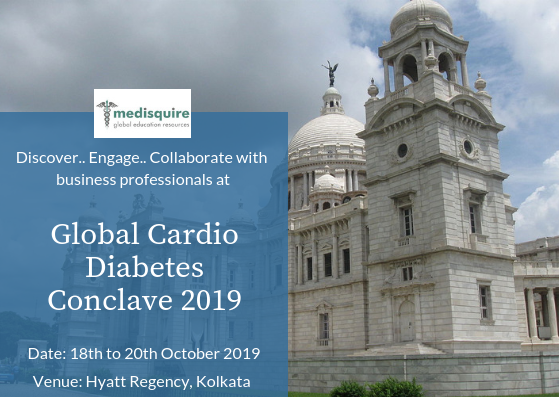
Global Cardio Diabetes Conclave 2019
2019-10-18 - 2019-10-20    
All Day
ABOUT GLOBAL CARDIO DIABETES CONCLAVE 2019 A strong correlation between cardiovascular diseases and diabetes is now well established. The American Heart Association considers that individuals [...]
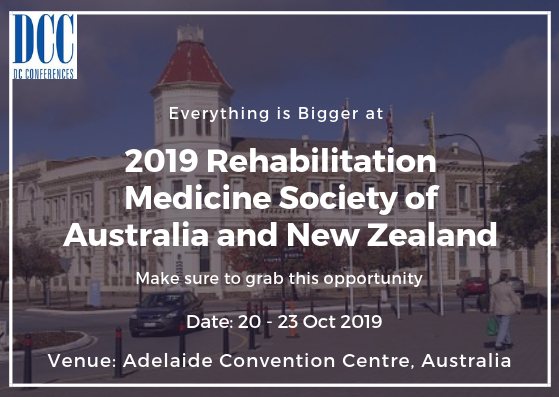
2019 Rehabilitation Medicine Society of Australia and New Zealand
2019-10-20 - 2019-10-23    
All Day
ABOUT 2019 REHABILITATION MEDICINE SOCIETY OF AUSTRALIA AND NEW ZEALAND On behalf of Rehabilitation Medicine Society of Australia and New Zealand (RMSANZ) and the organising [...]
21 Oct
2019-10-21 - 2019-10-23    
All Day
ABOUT GLOBAL CONFERENCE ON SURGERY AND ANESTHESIA (GCSA 2019) Global Conference on Surgery and Anesthesia (GCSA 2019) scheduled on October 21-23 2019 in Dubai, UAE [...]
21 Oct
2019-10-21 - 2019-10-22    
All Day
ABOUT 10TH INTERNATIONAL CONFERENCE ON MASS SPECTROMETRY AND CHROMATOGRAPHY ME Conferences is excited to announce the “10th International Conference on Mass Spectrometry and Chromatography” that [...]
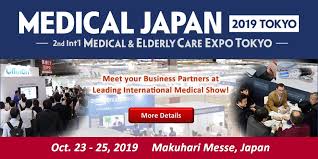
MEDICAL JAPAN 2019 TOKYO
2019-10-23 - 2019-10-25    
All Day
ABOUT MEDICAL JAPAN 2019 TOKYO B to B Trade Show Covering All the Products/Services/Technologies in the Healthcare Industry! MEDICAL JAPAN TOKYO, a sister show of [...]
15th ACAM Laser and Cosmetic Medicine Conference 2019
2019-10-23 - 2019-10-25    
All Day
ABOUT 15TH ACAM LASER AND COSMETIC MEDICINE CONFERENCE 2019 As the new president of ACAM, I am delighted to welcome you all to the 15th [...]
23rd European Nephrology Conference
2019-10-24 - 2019-10-25    
All Day
ABOUT 23RD EUROPEAN NEPHROLOGY CONFERENCE Theme: The Imminent of Nephrology: Current & Advance Approaches to treat Kidney Diseases 23rd European Nephrology Conference is the world’s [...]
FNCE 2019 Food & Nutrition Conference & Expo
2019-10-26 - 2019-10-29    
All Day
ABOUT FNCE 2019 – FOOD & NUTRITION CONFERENCE & EXPO Experience dynamic educational opportunities not available elsewhere. Gain access to new trends, perspectives from expert [...]
HLTH 2019
2019-10-27 - 2019-10-30    
All Day
ABOUT HLTH 2019 HLTH is the largest and most important conference for health innovation. It’s an unprecedented, large-scale forum for collaboration across senior leaders from [...]
Events on 2019-10-01
01 Oct
Events on 2019-10-08
08 Oct
8 Oct 19
Massachusetts
Events on 2019-10-10
Events on 2019-10-18
Global Cardio Diabetes Conclave 2019
18 Oct 19
Bidhannagar
Events on 2019-10-23
Events on 2019-10-24
Events on 2019-10-26
Events on 2019-10-27
HLTH 2019
27 Oct 19
Las Vegas
Articles

Nov 10 : 6 Tips for Reading Your Own Medical Records

medical records

Over the past few years, technology has allowed healthcare systems to open up your medical records to you.

Many good results will come from this new transparency, making patients more actively involved in their own healthcare. However, there is a basic disconnect that we need to explain to patients as this practice becomes more common. These documents written about you are not written to you.

Remember, medical schools do not teach doctors to chart for purposes of providing patients with a document, so that’s a fundamental challenge. In other words, if you are writing a document for the general public, you’re going to write it at roughly a 6th-grade reading level. Believe me, nothing in a medical record is written at a 6th-grade level. For one thing, it’s going to contain a lot of medical terminology, jargon and shorthand.

Also, the concept of transparency in healthcare is moving along at a fast clip. In fact, it’s moving much faster than the style and content of medical records in accommodating the patient reading them.

The problem for patients

What we find is that patients, although they are not trained in medicine, dig through their medical records with a fine-tooth comb. They search every last term on the Internet, even the most minor statements, usually without the proper frame of reference.

So, because they are not experienced in the delivery of healthcare, patients often come away absolutely terrified, magnifying any mention of an abnormality or disease in their record.

Tips for reading your patient record

If you choose to read your patient records, keep these points in mind:

  1. Expect inaccuracies and incomplete documentationDoctors are always in a hurry, and documentation is a secondary priority in taking care of the patient. If you find inaccuracies that you feel may be dangerous for others to read, mention them to your doctor on the next visit.
  2. Remember: Most records are not letters to the patient. They are a way for the doctor to chart what he or she has thought or done. Records also serve as auditing and billing documents for the business of healthcare.
  3. You can’t judge the doctor on the grammar or flow of the document. Some of the best doctors have the most brief and concise chart documents. They may take better care of you than they take care of paperwork.
  4. The medical records are multiple-user documents. They often contain notes from nurses or other medical team members that have met with you. In electronic medical records, you are likely to encounter historical information that is pulled forward from visits that occurred months or years ago. You may encounter pages of old “boilerplate” information, or information that is collected only to meet audit or accreditation requirements.
  5. The most stress for patients reading their records is over lab tests, X-ray or MRI reports. Without medical training, they are nearly impossible to interpret rationally. Abnormal test results are very common, and are often harmless. Abnormal test results may actually be normal in individual situations – the lab does not know your medical background. X-ray and MRI results are the most frightening. The radiologist who reads the images will use specialized jargon and unusual language. Rare and deadly diseases may be mentioned as possible diagnoses. Seeing this in black and white can cause enormous anxiety for a patient. Doctors don’t treat x-ray reports, they treat patients. These images are only a tool to point us toward a clearer diagnosis, not a sentence and a verdict.
  6. Don’t be insulted by notations that seem personal, such as seeing a reference to your weight or the fact that you drink alcohol, smoke or that you’re depressed. Seeing it in writing is sometimes harsh, but these facts are relevant to understanding your physical condition and not made as personal judgments.

When you think about medical records, consider their purpose. For the last two centuries, when doctors wrote their notes, it was not to communicate to patients.

Patient records give doctors reminders of a patient’s health challenges. They record what symptoms you have experienced, and describe the treatment plan. This helps doctors recall details of each patient case and also helps communicate to other providers involved in a patient’s care. Keep this in mind as you begin to have greater access to these records.


Source
