








































By Rob Schertzer, MD, MEd, FRCSC, DHMC Ophthalmology
Teaching works best when it takes place in the context in which the information will be used. That is one of the fundamental tenants of adult education. Another central principle is that adult learners have other things going on in their lives and cannot spend all their time outside of work still engaged in work related learning activities. An institution that rolls out upgrades to a mission-critical system that is central to the daily care of patients, if they really valued their employees and their patients, would protect time during working hours to allow their employees to learn new features while seeing patients. Or, at the very least, free them from clinical responsibilities for enough time to work with mock patients to learn the new system.
On November 9, we go live with a major upgrade to our Electronic Medical Record system without proper training. There is a full patient load booked, with no reduction in the schedule to allow for potential problems either with the system or with end-users. The only “training” session occurred one month prior to the go-live date and was a failure. So, am I worried? What does this say about how patients and employees are valued in our workplace?
It remains to be seen whether I will be seen as Chicken Little, running around needlessly worrying that the sky is falling, or earn “I told you so” bragging rights after we go live, but we are edging close to our November 9, 2014 roll-out of our upgrade from Epic 2010 to Epic 2014 at our hospital. It also happens to be 11 months after it was originally set to occur. Hopefully this gave our hospital time to work out the bugs at the IT side of things even if it did not give them a chance to develop a training program for all its healthcare providers who need to use the system…I’m trying to remain optimistic.
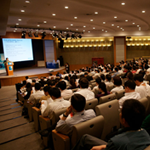
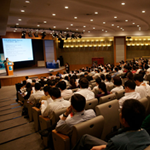
A month before the go-live date, we were treated to a 2 hour training session for all our eye doctors and ophthalmic assistants, technicians and technologists. We had to come to work early that day, to minimize cancelling patient visits. The ancillary staff did get to “punch-in” to get paid for their over-time, much of it spent sleeping, and the doctors like myself came in on their own time. The training was too far in advance of the roll-out date to be retained, geared toward the wrong audience, and did not run through a typical patient encounter from beginning to end – therefore not relevant to how we will be using the system.
What would have made the most sense would have been to step through the approach to a patient as they arrive and get assessed from ancillary staff history and physical, to ordering and performing ancillary diagnostic tests, to the eye doctor documenting the test results and performing their part of the patient encounter. Instead, the education consisted of jumping around showing things that are different in the new version of the software. This might have worked for super computer geeks fluent in EPIC but not for the average user who was never even trained properly in the first place. To top things off, the instructor was logged in as a doctor, 6 of whom were present, instead of as a technician, 20 of whom were present, so was gearing the talk to the minority of the audience. In the end, after random acts of showing features out of context and struggling to even find some of the features he was looking for, most people were left not learning anything. We were then all told to use the “Play” environment on the hospital workstations while at work over the next month to figure it all out on our own. This is nothing anyone is likely to do since there is no work time protected for this since every minute we are at work is spent either seeing patients or documenting our encounters in EPIC.
Fingers are crossed.


