






























(Image courtesy Wikimedia Commons user Gage Skidmore)In the long and ongoing march toward electronic medical records (EMR) adoption, clinicians themselves have often been cited as a major impediment. It has been said that some physicians, especially older ones, were resistant to change because they are technological laggards. A closer examination calls this idea into question.Physicians are innovators when it comes to advanced concepts, like care personalization. They have the clinical desire, necessary leadership, and enthusiasm to push adoption of personalized care forward: It is now the technology itself that is struggling to keep pace.Clinicians already practice a type of personalization from the bedside, so they understand its potential value in the wider coordination of the care environment and ultimately in achieving better population health. But why does healthcare still struggle to tailor care to the patient at a personal level?
The reason is because the healthcare industry hasn’t moved far past the stage of getting EMRs up and running. Reams of data collected within the EMR, as well as the new data streams coming online, could be used to create precisely targeted therapies.
Think about data from emerging areas such as genomics, digital exhausts generated from doctor/patient encounters, a patient’s activities on social media, publicly available information about the environment where a patient lives, and the continually evolving range of wearables. The problem is that there is no strategic framework to translate this data into a better care experience for the patient. There is no functioning operating system for clinical care that is entirely geared toward personalized care.
However, there is another industry that has built a roadmap to follow in building such a system.
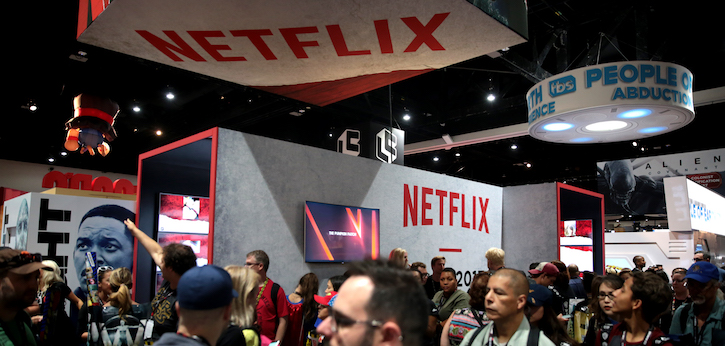
The Netflix Approach to Personalization
In 2006, Netflix wanted to better target video content to each member of its audience. The company established a million-dollar prize for a better algorithm that could predict what customers wanted to watch. As the contest moved forward, so did Netflix’s business model, with streaming video dramatically increasing the amount of data available on consumers’ viewing preferences. Data points—like how long someone would play a video before stopping or what content was browsed before making a movie selection—all could provide a window into how customers were interacting with the streaming service.
What Netflix did with this data was to pair it with an immense number of sub-genre categorizations of movies (about 77,000 genres, to be exact) that they developed by analyzing and breaking movies into attributes of interest that exposed the likes and dislikes of the customers. Here are just a few samples to show how specific these categories became:
- Emotional Independent Sports Movies
- Spy Action & Adventure from the 1930s
- Cult Evil Kid Horror Movies
- Cult Sports Movies
- Sentimental Set-in-Europe Dramas from the 1970s
Just like biomedical research is trying to find out what type of gene or protein is related to a particular manifestation of disease in a patient, Netflix has invented a mechanism to squeeze out the most minute details about customers from their interactions with the service and map those actions in great depth.
Applying the Netflix model to Healthcare
Now, let’s apply this same level of specificity and personalization to a healthcare setting.
Imagine a platform that uses genomics and genetic profile testing to guide cancer treatment tailored to an individual patient’s unique life. It looks further than common population markers, such as age and lifestyle, but still considers those factors as part of a more holistic picture.
The difference is that now missing pieces of the puzzle are being filled in. The Cleveland Clinic considers personalized healthcare as any biologic information that helps predict risk for disease or how a patient will respond to treatments. This type of system can collect all of that data and put it into one comprehensive, on-demand view accessible to both clinicians and patients.
Healthcare needs a Netflix-like framework for personalizing care, and there is no reason to put off its development. The airline industry did not wait for the internet or the mobile phone to arrive before they started to personalize their customer engagement with frequent flier programs. They simply made use of all the data already available. And when Netflix launched its new platform, some of its content categories were still empty.
Similarly, with the data that’s available right at this moment, a functioning operating system for clinical care can be developed that is entirely geared toward personalized care. Such flexibility towards evolving data types in a clinical operating system will allow new capabilities that emerge from precision medicine research to move easily into clinical practice.
Health system leaders should support clinicians’ intent for personalization by providing resources and technology platforms, where clinicians and data scientists can work together in crafting algorithms that segment patients and their needs. These algorithms, when properly tested and proven, should be embedded into workflows where patient interactions, response, and compliance to treatment is generating easily utilizable data that can be captured for continuous improvement to that patient’s unique treatment plan. Just like the idea of a physical Blockbuster store now seems antiquated, our current models of care may seem patently obsolete just a few years from now.
Dr. Sawad Thotathil, clinician and senior director, Persistent Systems, directs product strategy and management for the company’s Digital Healthcare group, helping health systems achieve their digital transformation goals.



.jpg)