



























By Leo Sun
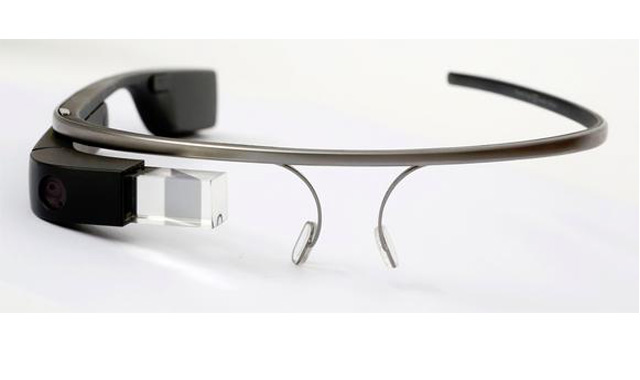
Google‘s (NASDAQ: GOOG ) (NASDAQ: GOOGL ) strategy for Glass as a medical device is finally taking shape. Startup Drchrono just launched the first wearable EHR (electronic health record) for Glass, and Google announced a partnership with Augmedix, a developer of medical apps for Glass.
Drchrono isn’t as well-known as major EHR companies like Epic and Cerner, but it was notably the first company to develop a “native” iPad EHR app tethered to the cloud instead of a desktop. Therefore, Drchrono remains a popular EHR provider among smaller practices, with 60,000 registered health care providers using its free billing option and 3,000 paid subscribers. It has digitized approximately 3 million patient records.

Meanwhile, Augmedix’s apps are designed to streamline the entry of patient information into EHRs with orally dictated information. Augmedix has already signed a major deal with Dignity Health, a company that manages hospitals in 17 states, to provide Google Glass apps to doctors.
Challenging Apple’s popularity in health care
Combining medical apps and an EHR on Glass could give Google an edge in hospitals, where the majority of medical apps and peripherals are still developed for Apple‘s (NASDAQ: AAPL ) iOS devices first, due to perceived fragmentation and security issues with Android devices.
Google will reportedly release Google Fit, a unifying dashboard for fitness trackers and apps, for Android devices to counter Apple’s HealthKit platform. If Google Fit takes off with consumers, Google could gain important footholds among medical professionals and everyday consumers.
If Google links Glass in hospitals to Android devices among consumers, it could realize the same dream as Apple — to combine the two markets into a single one where synchronized health records are seamlessly accessible to patients and doctors.
Google Glass in hospitals
In hospitals, Google Glass has a key advantage — it is a hands-free experience that has inspired companies and hospitals to experiment with their own solutions.
Last July, Qualcomm and Palomar Health launched Glassomics, an idea incubator for developing medical apps for Glass and other wearable devices. Last October, Philips and Accenture launched a proof-of-concept project, in which Glass displayed patient’s vital signs synchronized from Philips’ medical devices. Accenture also synchronized Glass to an EHR to provide the doctor with immediate data for the patient.
At Beth Israel Deaconess Medical Center in Boston, Google Glass is used to scan QR codes on doors to immediately access patient records. Surgeons at Indiana University Health Methodist Hospital in Indianapolis have used Glass to wirelessly access MRI scans during an abdominal surgery.
Most importantly, synchronizing Glass to EHRs can help hospitals achieve meaningful use standards under the HITECH Act, which grants hospitals subsidies for reaching benchmarks of EHR adoption.
But Glass faces two key hurdles in hospitals — cost and security. At $1,500 apiece, Glass is several times more expensive than an iPad. App developers for Glass must also adhere to rigid HIPAA standards, which ensure that a patient’s records remain private — a tough task when data breaches in hospitals are on the rise.
Why more Glass-based EHRs will arrive soon
Despite those challenges, more Glass-based EHRs could arrive soon if hospitals decide that the benefits (especially subsidies) outweigh the drawbacks.

Source: Drchrono
If we look back at native EHR apps for the iPad, we can see that after Drchrono launched its app in April 2010, Epic, Cerner, Allscripts, and other EHR companies all followed suit. Therefore, Drchrono’s early entry into the Glass EHR market is a clear indicator that Glass could get a lot more EHR support soon.
Smaller practices currently favor using native iPad EHRs, while larger hospitals tend to stick with both mobile and desktop versions due to older databases on legacy hardware. But EHR companies don’t all need to develop new native Glass apps like Drchrono. Augmedix has already signed partnerships with Epic, Cerner, and Practice Fusion to integrate their EHRs into its clinical apps for Glass.
The Foolish takeaway
In conclusion, Glass’ future among consumers remains questionable — a recent Adweek survey found that 72% of Americans don’t plan to buy Glass due to privacy concerns. But I believe that Glass has a more promising future in hospitals.
Accenture expects the market for EHRs to continue growing at a steady rate, from $20.9 billion this year to $22.3 billion in 2015. The North American market, which has been the first to receive Glass, will account for approximately 47% of that market. Combine those factors with the goal of achieving meaningful use standards, and Glass is actually a surprisingly strong contender to replace Apple devices in U.S. hospitals.
Leaked: Apple’s next smart device (warning, it may shock you)
Apple recently recruited a secret-development “dream team” to guarantee its newest smart device was kept hidden from the public for as long as possible. But the secret is out, and some early viewers are claiming its everyday impact could trump the iPod, iPhone, and the iPad. In fact, ABI Research predicts 485 million of this type of device will be sold per year. But one small company makes Apple’s gadget possible. And its stock price has nearly unlimited room to run for early in-the-know investors. To be one of them, and see Apple’s newest smart gizmo, just click here!


