
































For health data captured in an electronic health record to prove meaningful, this information needs to be able to move with the patient. And nowhere is health information exchange (HIE) more vital than where patients are required to travel significant distances to access skilled providers and quality care. Add to that mix high levels of poverty and the importance of HIE to rural health cannot be understated.
Such is the experience of many states in the Midwest and Southwest of United States. A case in point is the situation in New Mexico which as it turns out shares many more similarities with foreign countries than it does with much of the US.
“It was a perfect tie-in for me to do my comparison of Iraq and New Mexico because they are very similar,” recalls Craig Hewitt, CIO of the New Mexico Health Information Collaborative (NMHIC), a health information organization (HIO), of a conference panel he was recently a part of where another speaker described healthcare conditions in the Middle East.
“Both have tribes and are cultural diverse,” Hewitt explains. “Forty percent of the population is in poverty. Eighty percent of the deliveries last year were paid for by Medicaid. It is number one in drug abuse in almost every category.”
The collaborative has been in business since 2004 providing the basics of HIE as well as disability determination requests to identify the eligibility of New Mexicans for Medicare or Medicaid benefits. Managing a patient population that is diverse and disparate is part and parcel of the NMHIC’s mission since its launch.
Although the organization has an array of products and services, its toughest technical challenge still remains getting clinical data from remote settings into a centralized repository where analytics and business intelligence can then be applied.
“We’re not different than most of the states in the Southwest or Midwest — very broad geography and open spaces,” says Hewitt. “You have to have the ability to go virtual with a very low technology requirement to be able to deploy services where the needs are. Basically, if you can get to the internet to activate our VPN, you have access to any of our services, whether it’s the data exchange or with the video capability attached to it.”
Appreciating the technological limits imposed by geography has helped lead to adopt and deploy very lightweight and highly flexible solutions that blend HIE and telemedicine into a comprehensive suite capable of evolving over time:
It’s helpful to be able to give a 360-degree of the virtual health record at the same time that you’re doing visuals, whether it’s physician to physician or having the patient involved in that. Of course, that opens the door to biometrics and hooking in other devices if you so choose. That’s down the road. We also have an enterprise imaging toolset that’s web-based so we can snap that over the top akin to PACS services, which people find helpful for the smaller facilities that in many cases are not as advanced as others.
In many ways, the characteristics of healthcare in New Mexico has prepared the NMHIC for what’s down the road for healthcare reform in the form of pay-for-performance reimbursements and bundled payments.
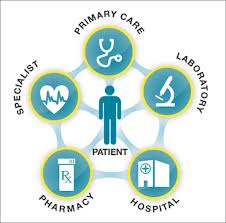
“Everybody’s going to be forced to look at transitions of care and the spectrum of how this all fits together,” claims the NMHIC CIO. “We can go right to an individual detail, but the whole endgame is to take it up to that level of taking a look at what’s really going on, which frankly has never been done in this country — very well, anyways — because we have never had broad sets of information that are structured in such a manner that allow us to effectively make change.”
It could very well be the case that highly connected urban environments will be looking to rural parts of the American landscape for guidance on this next phase of reforming healthcare delivery.


