





























Events Calendar

Mon
Tue
Wed
Thu
Fri
Sat
Sun
M
T
W
T
F
S
S
30
5
6
7
10
11
12
13
14
15
16
17
18
19
20
21
22
23
24
25
26
27
28
29
30
31
1
2
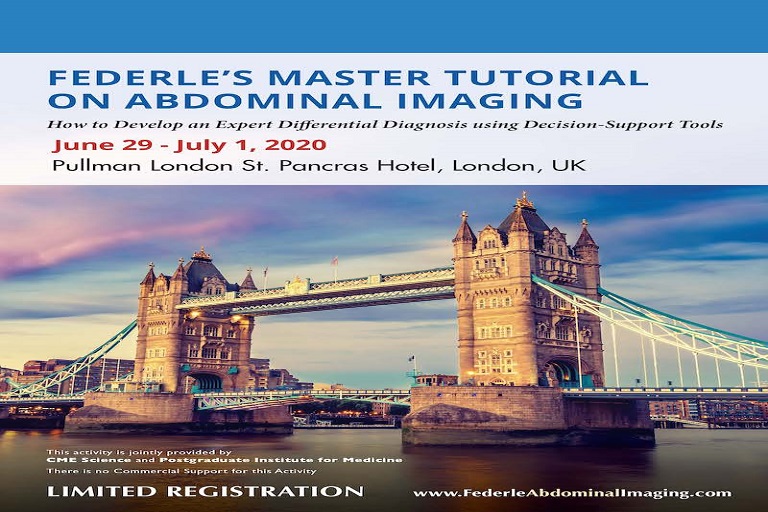
Federles Master Tutorial On Abdominal Imaging
2020-06-29 - 2020-07-01    
All Day
The course is designed to provide the tools for participants to enhance abdominal imaging interpretation skills utilizing the latest imaging technologies. Time: 1:00 pm - [...]
IASTEM - 864th International Conference On Medical, Biological And Pharmaceutical Sciences ICMBPS
2020-07-01 - 2020-07-02    
All Day
IASTEM - 864th International Conference on Medical, Biological and Pharmaceutical Sciences ICMBPS will be held on 3rd - 4th July, 2020 at Hamburg, Germany . [...]
International Conference On Medical & Health Science
2020-07-02 - 2020-07-03    
All Day
ICMHS is being organized by Researchfora. The aim of the conference is to provide the platform for Students, Doctors, Researchers and Academicians to share the [...]
Mental Health, Addiction, And Legal Aspects Of End-Of-Life Care CME Cruise
2020-07-03 - 2020-07-10    
All Day
Mental Health, Addiction Medicine, and Legal Aspects of End-of-Life Care CME Cruise Conference. 7-Night Cruise to Alaska from Seattle, Washington on Celebrity Cruises Celebrity Solstice. [...]
ISER- 843rd International Conference On Science, Health And Medicine ICSHM
2020-07-03 - 2020-07-04    
All Day
ISER- 843rd International Conference on Science, Health and Medicine (ICSHM) is a prestigious event organized with a motivation to provide an excellent international platform for the academicians, [...]
04 Jul
2020-07-04    
12:00 am
ICRAMMHS is to bring together innovative academics and industrial experts in the field of Medical, Medicine and Health Sciences to a common forum. All the [...]
6th Annual Formulation And Drug Delivery Congress
2020-07-08 - 2020-07-09    
All Day
Meet and learn from experts in the pharmaceutical sciences community to address critical strategic developments and technical innovation in formulation, drug delivery and manufacturing of [...]
7th Global Conference On Pharma Industry And Medical Devices
2020-07-08 - 2020-07-09    
All Day
The Global Conference on Pharma Industry and Medical Devices GCPIMD is to bring together innovative academics and industrial experts in the field of Pharmacy and [...]
IASTEM - 868th International Conference On Medical, Biological And Pharmaceutical Sciences ICMBPS
2020-07-09 - 2020-07-10    
All Day
IASTEM - 868th International Conference on Medical, Biological and Pharmaceutical Sciences ICMBPS will be held on 9th - 10th July, 2020 at Amsterdam, Netherlands . [...]
2nd Annual Congress On Antibiotics, Bacterial Infections & Antimicrobial Resistance
2020-07-09 - 2020-07-10    
All Day
EURO ANTIBIOTICS 2020 invites all the participants from all over the world to attend 2nd Annual Congress Antibiotics, Bacterial infections & Antimicrobial Resistance to be [...]
Events on 2020-06-29
Events on 2020-07-02
Latest News

Radiation doses from CT scans should be more consistent, say experts

Chemo-brain
Large variation in doses mainly due to how scanners are used by medical staff

Large differences in radiation doses used for CT scans are mainly due to how the scanners are used by medical staff rather than differences in the patients scanned or the machines used, finds a study in The BMJ today.

Setting more consistent dose standards should therefore be possible and will ensure that patients are not exposed to unnecessary radiation risks.

Computed tomography (CT) scanning creates detailed pictures of areas inside the body to help diagnose a range of conditions. But CT radiation is associated with an increased risk of cancer, so it is important to minimise exposure and reduce unnecessary variation.

In fact, evidence suggests that CT radiation doses are highly variable across patients, institutions, and countries and, in many cases, doses can be reduced by 50% or more without reducing image quality and diagnostic accuracy.

To better understand the factors contributing to this variation, an international research team analysed dose data for over 2 million CT scans from 151 institutions, across seven countries.

They included scans of the abdomen, chest, combined chest and abdomen, and head from 1.7 million adults between November 2015 and August 2017.

They adjusted the data for a range of variables related to the patient (e.g. sex and size), institution (e.g. trauma centre, academic or private), and machine (e.g. manufacturer and model).

The researchers found that most of these factors had only a small effect on dose variation across countries.

For example, after adjusting for patient characteristics, there was still a fourfold range in mean effective dose for abdominal scans and a 17-fold range in proportion of high dose scans (4-69%). Similar variation persisted for chest scans, and combined chest and abdomen scans.

Adjusting for institution and machine factors also had little effect on dose variation.

However, adjusting for technical factors (how scanners were used by medical staff) substantially reduced or eliminated nearly all the dose variation across countries.

As such, the researchers conclude that the variation in doses used for CT scanning of patients is primarily driven by how CT scanners are used, rather than to underlying differences in the patients scanned or the machines used.

This is an observational study, and as such, can’t establish cause, and the researchers point to some limitations that may have influenced the results.

Nevertheless, they say these findings suggest that optimising doses to a consistent standard should be possible. And they call for more education and international collaboration to set benchmarks for optimum target doses.


Source
