



















The healthcare sector is experiencing an extraordinary transformation, largely driven by AI-powered software that enables healthcare professionals to focus more on what truly matters—patient care.
As the demand for high-quality services grows alongside the challenge of managing vast amounts of data, diagnoses, and digital records, automated systems have become essential in alleviating the administrative burden on staff. AI-enhanced software is streamlining workflows, automating routine tasks, and helping physicians identify abnormalities. ASUS is leading this digital healthcare revolution by offering a broad portfolio of advanced AI software solutions, including:
The ASUS Clinical AI Assistant
The ASUS Clinical AI Assistant is built to enhance clinical workflows and decision-making for healthcare professionals. Whether in inpatient wards, outpatient clinics, or health screening centers, this multi-agent AI system offers intelligent summarization, anomaly detection, proactive insights, and tailored documentation support.
Having been piloted in hospitals, real-world feedback is helping refine the product into a reliable clinical partner. Five primary benefits have been identified as key advantages of this solution:
-
Smart Summarization
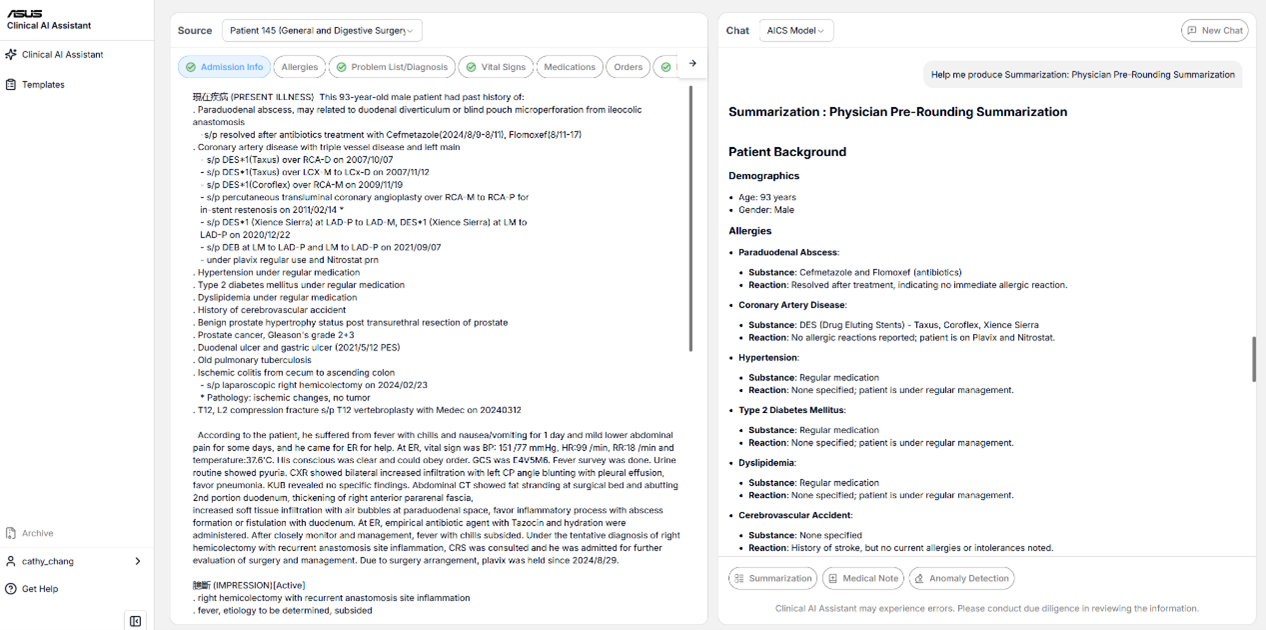
Quick access to relevant patient information is critical, especially during shift changes, pre-rounding, or cross-department referrals. The ASUS Clinical AI Assistant generates intelligent, concise summaries from electronic health records (EHRs), enabling clinicians to rapidly understand a patient’s condition and make timely, informed decisions.Comprehensive summaries provide clinicians with better insights, contributing to more accurate diagnoses. The AI-generated summaries are:
- Specialty-specific (e.g., oncology or cardiology-related findings)
- Scenario-specific (e.g., shift handoff, admission review, or discharge preparation)
- Personalized according to individual clinician preferences (e.g., prioritizing labs, imaging, or medications)
By converting raw, unstructured data into actionable insights, ASUS helps clinicians cut through complexity and focus on what matters most.
-
Personalized Note Generation
Documentation often consumes significant clinician time. The ASUS Clinical AI Assistant reduces this burden by producing high-quality, customizable draft notes for a variety of workflows, including:- Admission notes
- Daily progress reports
- Consultation records
- Weekly summaries
- Discharge summaries
With adaptable templates and prompt-tuning tools, notes can be tailored to hospital or department-specific formats, saving time while ensuring consistency and accuracy across care teams.
-
Proactive & On-Demand Anomaly Detection
Early detection of potential patient deterioration is vital. The ASUS Clinical AI Assistant continuously scans both structured and unstructured data—such as vital signs, lab results, and clinical notes—to spot irregularities that may need further review or intervention. Clinicians receive timely alerts that help them anticipate problems and provide proactive care, improving patient outcomes. -
Evidence-Informed Smart Recommendations
Navigating the complexities of modern medicine requires intelligent support. The ASUS Clinical AI Assistant offers evidence-based recommendations, including:- Suggested ICD codes based on patient history and symptoms
- Potential follow-up actions like diagnostics, referrals, or treatments
- AI-generated medication and care plan proposals aligned with clinical guidelines and international coding standards
This feature streamlines clinical decision-making while ensuring adherence to standardized care and documentation.
-
Pre-Consultation
Understanding patient concerns before visits saves time and improves care quality. The ASUS Clinical AI Assistant includes a smart pre-consultation module that engages patients through structured questionnaires to capture key symptoms and issues. This information is then summarized and provided to clinicians prior to the consultation.The AI-driven pre-consultation adapts dynamically based on patient responses—clarifying unclear symptoms and identifying risk factors that might otherwise be missed. The result is richer, more organized patient data that enables more effective consultations and strengthens patient-provider communication and trust.
Supporting Clinicians, Enhancing Care
Through smart summarization, customized documentation, proactive safety alerts, and intelligent recommendations, the ASUS Clinical AI Assistant enables clinicians to work more efficiently—allowing them to dedicate more time to direct patient care.


