




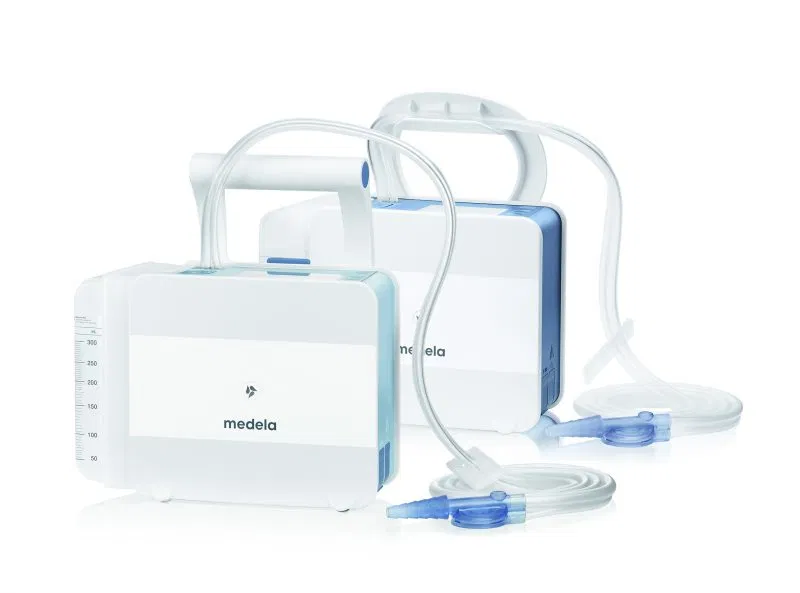
Research reveals portable digital chest drainage systems could help minimise spread of COVID-19
Pioneering research, which reveals digital chest drains generate and distribute less aerosol generated particles compared to traditional water seal systems, has been published in the Seminars in Thoracic and Cardiovascular Surgery journal.
The research was led by a team of thoracic consultants from Guy’s and St Thomas’ NHS Foundation Trust – home to one of the largest lung cancer practices in the UK.
At the start of the pandemic there was limited evidence about the spread of COVID-19 via chest drains which led to uncertainty within the thoracic community about the best medical device to use.
To understand this area further, the researchers reviewed three different types of chest drainage systems – single chamber, 3 compartment wet-dry suction and digital drainage system.
The aim was to establish the best way to prevent transmission of COVID-19 to patients, as well as protecting healthcare workers. While the transmission of COVID-19 is primarily through droplet spread, new research shows that SARS-CoV-2 can survive in smaller aerosols that remain suspended in the air for several hours. These infective airborne particles may travel greater distances and be inhaled, increasing the risk of transmission.
The results of this study showed that the 3-compartment wet-dry suction system and the digital drainage system did not generate any identifiable aerosolised particles at any of the air leak or drain output volumes considered.
Dr Andrea Billè, consultant thoracic surgeon at Guy’s and St Thomas’ and the study author Speaking about the results, Dr Andrea Billè, consultant thoracic surgeon at Guy’s and St Thomas’ and the study author, said: “At the start of the pandemic there was limited evidence about the spread of COVID-19 via chest drains. It’s the first pandemic we’ve encountered in a long time, therefore we had nothing to compare it to.”
“Due to the lack of any specific guidance at the time, we went back to an old-fashioned system (an underwater seal chest drain connected to wall suction) and conducted our own research. What we found was that the digital device reduced aerosol generated particles, which is a good indicator of whether something may contribute to COVID-19 spread. There were also fewer complications compared with the old system.”
During the same period Medela also carried out tests at Nelson Labs, a global microbiology testing lab for medical device, pharmaceutical, tissue and biologics companies. This showed that Thopaz+ can effectively retain pathogen-sized particles and hence prevent them from subsequently exiting to the environment via the exhaust. Drained air passes through a hydrophilic 3-D protection filter with the adaptation of filter performance to retention rate of 99.925% to 99.999 for 25nm particles. Both sets of research were presented at this year’s European Society of Thoracic Surgeons conference.
Rob Rennel, Business Unit Manager at Medela, added: “We are delighted with the results of the research carried out at Guy’s and St Thomas’. There was a lot of confusion at the beginning of the pandemic within the thoracic community about what device to use so it is great that Dr Billè has conducted research into this area. We hope that this will give increased confidence and reassurance during the ongoing pandemic to all clinicians who use chest drains on a regular basis.”
Thopaz+ is designed to increase patient mobility and is supported by clinical evidence from the National Institute for Health and Care Excellence (NICE), which recommends the system for its ability to reduce drainage time and length of stay in hospital, as well as improve safety for patients and cut hospital costs.
Guidance published by the National Health Service (NHS) now advises hospitals against using piped vacuum to support infectious disease units (IDU) to reduce the risk of virus spread and cross-contamination.
Used worldwide, Medela’s portable medical suction machines are designed to provide crucial suction and fluid removal during respiratory treatment provided with ventilators. Their pioneering Thopaz+ digital system is clinically proven to improve outcomes, ensuring a safe and continuous drainage independent of a wall vacuum to provide safer patient care while minimising the risk of cross-contamination.
Source: newswire