

























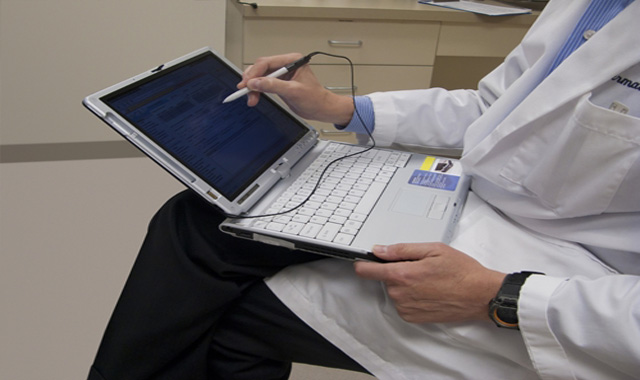
If you are not sure about the correct definitions of Electronic Medical Records (EMR) and Electronic Health Records (EHR), but have been using it interchangeably anyway, you are not alone. In fact, in a report related to the definitions of the Medical Information Technology (IT) terminology written by the USA’s National Alliance for Health Information Technology (NAHIT) few years back, had as many as 35 definitions for EMR and 99 for EHR. But now, things have progressed and we now have a clearer definition of what they actually stand for.
Electronic Medical Records (EMR) is defined as: “The electronic record of health-related information of an individual that is created, gathered, managed, and consulted by licensed clinicians and staff from a single organization / practice who are involved in the individual’s health and care.”
The benefits of digitizing the Medical records of a patient include:
- Easier identification of patients due for check-ups.
- Monitoring patient data over a long period of time, on required parameters.
- Keep a track of the overall quality of care within the healthcare organization, and make improvements if necessary.
The benefits of EMR are exponential when compared to the paper charts and records, but they do lack few critical abilities. The isolated patient data in EMRs fall short of serving the purpose of secure data exchange with other medical and health care entities like labs, insurance companies and more importantly, other healthcare providers, which is where it fundamentally differs from EHR (more on that below). In order to share information stored in an EMR, it might be required to print the data on paper, which defeats the primary objective of shifting to Electronic Medical Records.
The Electronic Health Records (EHR) is defined as “An electronic health record is a digital collection of patient health information compiled at one or more meetings in any care-delivery setting”
It is equipped with interoperability in addition to all the benefits of the Electronic Medical Records. The EHR includes all relevant information pertaining to the health of an individual including his/her demographics, problems, prescribed medications and treatment plan, vital signs, past medical history, immunizations, laboratory and X-ray reports or any such information that is required to be easily accessible by any healthcare provider at any point of time in the lifespan of the individual.
HIMSS Analytics states that, “The EHR represents the ability to easily share medical information among stakeholders and to have a patient’s information follow him or her through the various modalities of care engaged by that individual.” EHRs are easily accessible by not just the various verticals related to healthcare, but also by the patients and all the people involved in the patients care.
So, if a patient has been advised to be transferred to a super specialty hospital for further treatment, the EHR data (shared from the earlier healthcare provider) will help eliminate redundant medical examinations and misdiagnoses at an early stage, leading to an efficient treatment and recovery plan.

Electronic Health Record
Apart from the Electronic Medical Records (EMR) and Electronic Health Records (EHR), the other key document related to the health-related data of an individual is the Personal Health Records (PHR) – where the patient plays a pivotal role in managing his/her health-related information digitally. The document is required to conform to nationally recognized interoperability standards, and the data can be drawn from various sources, but being managed, shared and controlled by the patient.
In an era driven by the Information Technology, it is very critical to have a system in place where the Electronic Medical Records (EMR), Electronic Health Records (EHR) and Personal Health Records (PHR) communicate with one another seamlessly. There has been significant development in this arena of digitizing the medical and health records, and the exciting evolution of the ecosystem where the patient is in control and has all the necessary data in one place to share and to make an informed choice. What the future holds for data management and seamless data sharing in the health-care industry is as exciting as ever!


