

































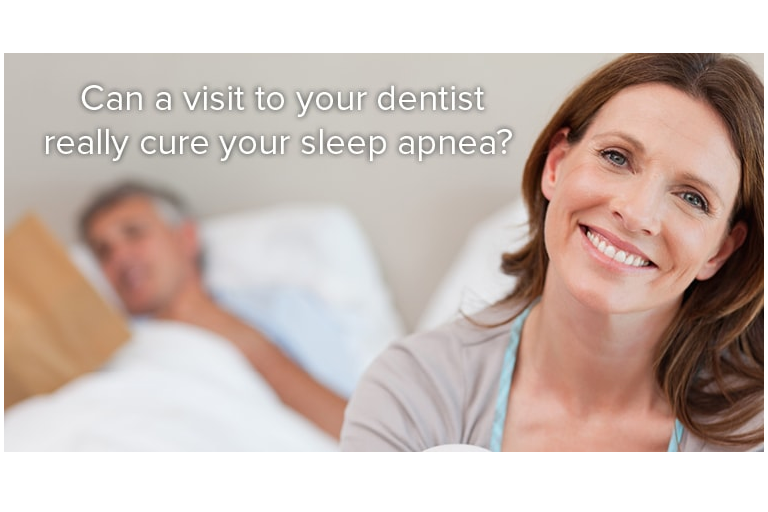
Sleep Apnea and Dentistry: Is There A Connection?
There’s a tendency, in some circles, to think of dental professionals as being restricted to very particular realms of medicine – the mouth, of course, and perhaps parts of the throat. This might lead some to a misunderstanding – though dentists are primarily working with the teeth and mouth, they can still help to screen, diagnose, and treat a wide variety of illnesses you might not immediately associate with the mouth, and this is one of the many benefits of regular dental visits.
Sleep apnea is an excellent example of one of these illnesses. We’ll start by defining sleep apnea, then look at the ways in which dentists can help screen for it. From there, we’ll look at a variety of treatment options that a dentist can help create and monitor for sleep apnea.
What Is Sleep Apnea?
Sleep apnea is a sleep disorder in which breathing stops and starts as you sleep. There are three types of sleep apnea:
- Obstructive (OSA). The most common type – when breathing is physically obstructed (usually by the tongue collapsing into the soft palate, and the soft palate collapsing against the throat)
- Central. This occurs when the brain doesn’t send signals for you to breathe.
- Complex. This is a combination of the two types of sleep apnea.
Sleep apnea is predicted to affect about 3% of “normal weight” individuals, but over 20% of obese individuals. What’s more, an estimated 80% of moderate to severe cases of sleep apnea in America go undiagnosed.
Sleep apnea causes all kinds of problems. Your brain will receive a signal that you’re not breathing, so you’ll wake up in order to take a breath. These awakenings are usually so brief as to be unnoticeable, but they still interrupt your sleep patterns. The consequences of untreated sleep apnea include:
- Daytime fatigue from your sleep patterns being interrupted.
- Increased risk of high blood pressure and heart problems (due to the constant drops and spikes in your blood oxygen levels as you sleep).
- Increased risk of Type 2 Diabetes.
- Increased risk of complications under anaesthetic.
- Increased risk of liver problems.
Sleep apnea is stressful, even if it’s seemingly unnoticeable – episodes of apnea promote a spike in heart rate, blood pressure, and stress hormones. Going through that every night is not sustainable for your body. Symptoms of sleep apnea include:
- Daytime Fatigue
- Snoring
- Waking up in the middle of the night
- Dry mouth in the morning
As mentioned, people who are obese are at much higher risk of sleep apnea. Sleep apnea also tends to affect men more than women, though the risk of sleep apnea in women is much higher after menopause.
The Role of Dentists in Screening Sleep Apnea
Now that we’ve established what sleep apnea is, we can look at how dental professionals (including dentists and dental hygienists) might be able to help you detect if you suffer from sleep apnea.
As we discussed, sleep apnea goes undiagnosed in the vast majority of cases, but is a serious problem, considering all of the health problems it can cause. Your dentist can’t diagnose you with sleep apnea – that’s the role of a physician (more specifically, a sleep physician). A polysomnography is the standard test for sleep apnea; your sleep physician will monitor blood oxygen levels, breathing patterns, brain activity and more.
The role of dental professionals in diagnosing sleep apnea is, then, supplementary – they can screen for symptoms of sleep apnea, and use that information to refer you to a physician, if necessary.
One of the things your dentist can diagnose is bruxism, more commonly known as teeth grinding. While we’re not entirely sure why, it seems that people who have OSA are more prone to having bruxism. This could be because OSA causes bruxism, because bruxism causes OSA, or some combination of a variety of factors. Note that we’ve shown a correlation between OSA and bruxism, and not causation – we don’t understand the exact nature of their relationship.
Other physiological factors might be noticed by your dentist; they may, for example, take note that you have enlarged tonsils or narrow airways. While these alone aren’t sufficient to diagnose someone with sleep apnea, they are sufficiently correlated to be worth examining. Your dentist might also notice an increase in cavities due to bruxism and/or dry mouth, which could point to sleep apnea.
Various screening tools might be employed by your dental team, from the Apnea Risk Evaluation System Questionnaire to the STOP-Bang Questionnaire. These screening tools might produce sufficient cause to pursue a polysomnography.
The Role of Dentists in Treating Sleep Apnea
There are all types of treatment options for sleep apnea. Given the role of obesity as a risk factor in sleep apnea, lifestyle changes are often recommended. These might be used in combination with holistic or naturopathic medicine options – losing weight is complex, and support from medical professionals of all kinds, spiritual and faith leaders, as well as friends and family, can all help.
Other lifestyle changes might include not drinking alcohol before bed, not smoking, not sleeping on your back, using nasal decongestants, and avoiding sedatives.
Lifestyle changes aside, the most common treatment for sleep apnea is a continuous positive airway pressure (CPAP) device. The mask keeps your airways open through pressure, making it possible for you to sleep through the night. While CPAPs are the go-to (and are prescribed by a physician), there are a variety of ways your dentist might be able to help you with sleep apnea, as well.
You may be prescribed an oral device for your sleep apnea – this usually occurs if CPAPs have been ineffective for one reason or another. While these devices are prescribed by your physician, they are crafted by your dentist, and include mandibular repositioning devices and tongue-retaining devices. In this case, the tongue and jaw are pushed forward, opening up the airways.
In some cases, sleep apnea may be caused by an abnormally positioned jaw. There are surgical interventions available to reposition the jaw – patients who undergo surgical intervention (known as maxillomandibular advancement surgery) may not need to use CPAPs. In fact, 96% of patients who are eligible and receive the treatment no longer need to use a CPAP. Oral and maxillofacial surgeons are dental specialists, and your dentist will be able to help you determine whether or not your jaw’s alignment is a possible cause for your OSA.
Dentists and dental professionals can play an important role in screening and treating sleep apnea. Their role is even more important for patients who see their dentist more often than their physician. Have symptoms of sleep apnea? Talk to your dentist!


