






































Hospitals, doctors and Medicare are making it easier for people to have access to their own health records. Some app developers have even created ways to have health information available even on a smartphone.
DAVID GREENE, HOST:
Let’s look now at another change in health care and this one as to do with paperwork. Hospitals and clinics are slowly replacing paper files with sophisticated electronic health records. But with a variety of systems in use, they often can’t easily share medical information with each other. And this can be a pretty serious problem in the case of an emergency.
As Elizabeth Stawicki reports, Smartphones might be one way to bridge this electronic gap.
ELIZABETH STAWICKI, BYLINE: It’s one of those holiday surprises no one wants, a family member is visiting from out of town and they get sick. That happened to Farzad Mostashari’s 76-year-old father who was visiting from Boston, last Thanksgiving weekend.
FARZAD MOSTASHARI: My dad comes downstairs and he has acute pain in his eye where he had cataract surgery. And I said what’s, you know, what’s the matter? What’s the story? And he said, Well, I think they put the wrong lens in my eye. I’d gone back to the doctor and…
STAWICKI: His father didn’t remember exactly what had happened at his last doctor’s appointment and the office was closed anyway.
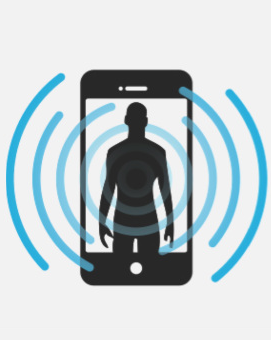
How could a local doctor in Maryland access his dad’s medical record in Boston? Through Medicare Blue Button, a computer program that allows patients to download their medical history into a simple text file on their smartphones and personal computers. Then, third-party applications that you download help organize this information.
Mostashari knows more than a little bit about the subject, he heads the federal office of Health Information Technology, and it’s his passion and his profession to promote electronic health records. So when he took his father to a local doctor, he handed over the phone with his dad’s medical history.
Mostashari predicts that soon everyone will have that information at their fingertips.
MOSTASHARI: Within the next 12 months, if people want to, they will be able to get the same data that your doctors would send to each other, to have it come to you and for you to be able to have a whole host of apps and services help you make sense of it, use it, share it, and help you take better care of your health and health care.
STAWICKI: He says the federal health care law is designed to encourage patients to get more involved in managing their own health.
Jennifer Lundblad, CEO of Stratis Health, a non-profit in Minnesota, says the floodgates have opened for patients to use technology to manage their own care, particularly those who have chronic and expensive diseases.
JENNIFER LUNDBLAD: Some parts of health care are so complex we need complex solutions. But some parts of health care can really be simplified and with the prevalence of smartphones, let’s use the smartphone tool that that patient already has.
STAWICKI: But there are also worries.
LUNDBLAD: Privacy and security is one that comes to mind.
STAWICKI: For instance, what happens if you lose the smartphone with your medical information? What happens to your health data if the app company storing it goes out of business?
DEVEN MCGRAW: Be aware before you share because that’s your best defense.
STAWICKI: Deven McGraw heads the Health Privacy Project at the Center for Democracy and Technology.
She says patients need to understand that when doctors and health plans store your electronic medical information, it’s covered by federal privacy and security rules – rules that don’t necessarily extend to your smartphone.
MCGRAW: When you take possession of it and share it, stick it in an app, share it on the web, a social networking site, it’s not going to be protected beyond what’s in the privacy policy for the app or what’s on the privacy policy for the social networking site, and you need to read that.
MOSTASHARI: Another problem is that physicians may not know whether records stored on a smartphone are complete.
STAWICKI: Attorney Scott Edelstein advises clients on developing mobile health applications.
SCOTT EDELSTEIN: There may be some data that the patient doesn’t want to, you know, keep on their smartphone, maybe there’s very sensitive health information. Maybe there’s information that they don’t want other providers to know, but it could be very important information for a provider to know, for example, in the event of an emergency.
STAWICKI: Edelstein says errors or omissions could be disastrous.
EDELSTEIN: But in the case of Farzad Mostashari’s father…
MOSTASHARI: He had dry eye – was the diagnosis.
STAWICKI: The records on the phone had pointed to the problem. It was an easy treatment that salvaged the Thanksgiving weekend.
For NPR News, this is Elizabeth Stawicki.
(SOUNDBITE OF MUSIC)
GREENE: Elizabeth’s story was part of a collaboration between NPR, Minnesota Public Radio and Kaiser Health News.


