



























Events Calendar

Mon
Tue
Wed
Thu
Fri
Sat
Sun
M
T
W
T
F
S
S
1
2
3
4
5
6
7
8
10
11
12
13
14
15
16
19
11:00 AM - Charmalot 2025
20
21
22
23
24
25
26
27
29
1
2
3
4
5
Oracle Health and Life Sciences Summit 2025
2025-09-09 - 2025-09-11    
12:00 am
The largest gathering of Oracle Health (Formerly Cerner) users. It seems like Oracle Health has learned that it’s not enough for healthcare users to be [...]
MEDITECH Live 2025
2025-09-17 - 2025-09-19    
8:00 am - 4:30 pm
This is the MEDITECH user conference hosted at the amazing MEDITECH conference venue in Foxborough (just outside Boston). We’ll be covering all of the latest [...]
AI Leadership Strategy Summit
2025-09-18 - 2025-09-19    
12:00 am
AI is reshaping healthcare, but for executive leaders, adoption is only part of the equation. Success also requires making informed investments, establishing strong governance, and [...]
OMD Educates: Digital Health Conference 2025
2025-09-18 - 2025-09-19    
7:00 am - 5:00 pm
Why Attend? This is a one-of-a-kind opportunity to get tips from experts and colleagues on how to use your EMR and other innovative health technology [...]
Charmalot 2025
2025-09-19 - 2025-09-21    
11:00 am - 9:00 pm
This is the CharmHealth annual user conference which also includes the CharmHealth Innovation Challenge. We enjoyed the event last year and we’re excited to be [...]
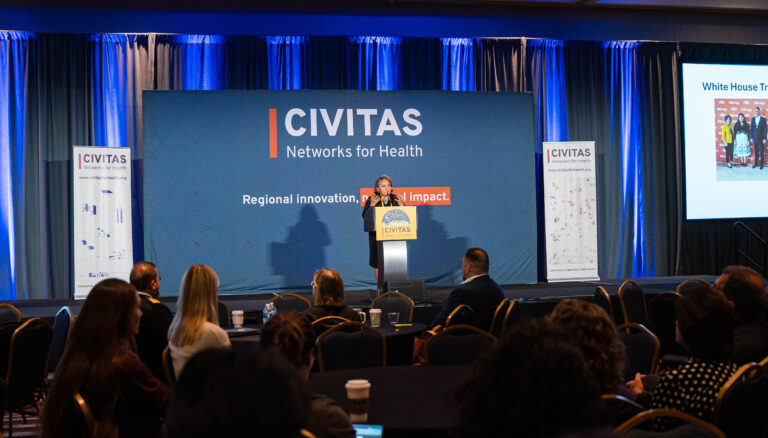
Civitas 2025 Annual Conference
2025-09-28 - 2025-09-30    
8:00 am
Civitas Networks for Health 2025 Annual Conference: From Data to Doing Civitas’ Annual Conference convenes hundreds of industry leaders, decision-makers, and innovators to explore interoperability, [...]
TigerConnect + eVideon Unite Healthcare Communications
2025-09-30    
10:00 am
TigerConnect’s acquisition of eVideon represents a significant step forward in our mission to unify healthcare communications. By combining smart room technology with advanced clinical collaboration [...]
Pathology Visions 2025
2025-10-05 - 2025-10-07    
8:00 am - 5:00 pm
Elevate Patient Care: Discover the Power of DP & AI Pathology Visions unites 800+ digital pathology experts and peers tackling today's challenges and shaping tomorrow's [...]
Events on 2025-09-09
Events on 2025-09-17
MEDITECH Live 2025
17 Sep 25
MA
Events on 2025-09-18
OMD Educates: Digital Health Conference 2025
18 Sep 25
Toronto Congress Centre
Events on 2025-09-19
Charmalot 2025
19 Sep 25
CA
Events on 2025-09-28
Civitas 2025 Annual Conference
28 Sep 25
California
Events on 2025-10-05
Articles

Stanford EMR-Based Program Lowers Use of Transfusions

florence

Four  years ago, Stanford Hospital & Clinics decided to see if it could cut back on unnecessary blood transfusions, procedures which, though sometimes life-saving, also carry risk to patients and may needlessly use up limited blood supplies. Right now, blood transfusions happen in more than 10 percent of all hospital stays which include a procedure, and they’ve been named by the American Medical Association one of five most overused medical treatments.

To address the transfusion issue, Stanford created an alarm in its EMR which encouraged doctors to think twice before they went ahead with a transfusion order. Every time a doctor requests blood through the Stanford EMR, a pop-up appears which asks the doctor to explain the reason for the request and shares guidelines on blood use.  At that point, physicians can cancel the order if they so desire..

The program seems to have been a smashing success. The new prompt contributed to a 24 percent decline in use of red blood cells at Stanford between 2009 and 2012, according to Stanford’s Scope blog. What’s more, transfusions of all blood products at the hospital fell from more than 60,204 to 48,678 per year during that time.

In making this shift, Stanford is now on board with national trends. According to the American Red Cross, which supplies about half of the U.S.’s blood, blood use fell by 3 percent in 2011 and another 5 percent in 2012, Scope reports.

While saving precious, inherently limited blood supplies sounds like a good idea, I do wonder whether adding yet another alarm to override is the best way to accomplish this otherwise laudable goal. And this piece from Scope doesn’t say anything about whether they’ve tracked the outcomes of cases where transfusion was considered and rejected.

Still, if the transfusion reminder is easy to respond to, and dismiss if necessary, perhaps it’s worth the distraction to treatment teams. I guess the proof will be in the long-term patient outcomes of this intervention, which seemingly remain to be seen.


(Source)
