

























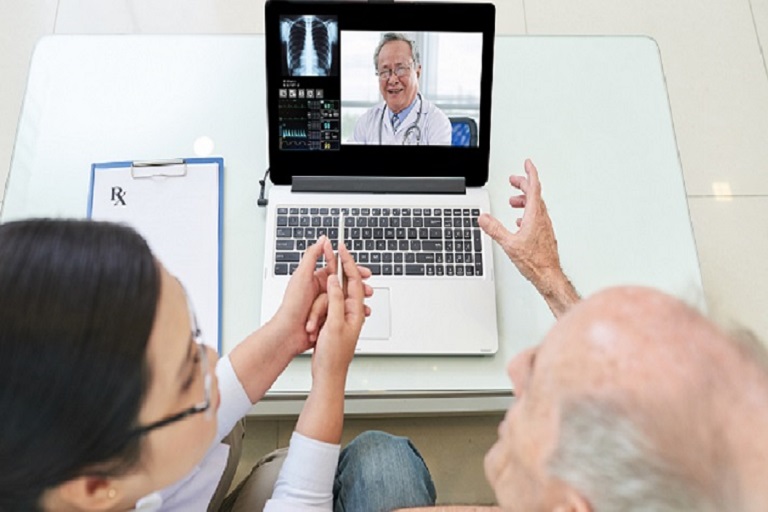
The rapid spread of coronavirus COVID-19 is taxing traditional methods of healthcare delivery. The sheer number of suspected cases of the virus, the pace at which it is spreading, and the desire to have as many people as possible practice social distancing or shelter-in-place have made it more challenging for individuals to receive care in a traditional, in-person setting. Telehealth technology, originally designed to give access to care in areas where there is a shortage of specialty care providers, now is being used much more widely as a way to screen and diagnose patients without risking the spread of disease through personal contact coronavirus covid-19
But if health IT professionals have long been accustomed to notion of telehealth and virtual care, even if they haven’t deployed the technologies themselves, what do healthcare consumers think of this emerging new way of engaging with their care providers? Clearlink, a marketing company focused on customer experience, recently surveyed 2,000 adults from around the United States to assess their perceptions of and experiences with telehealth in the age of COVID-19.
Poll respondents were equally distributed across the country, with 500 respondents each from the Midwest, the Northeast, the South and the West. Of those surveyed, 1,441 potential respondents indicated that they were not familiar with telehealth; those respondents were not qualified to complete the survey. Instead, Clearlink says it focused attention on those who indicated a familiarity with telehealth’s basic concepts.
Few have yet tried telehealth
While the majority of respondents note they are aware of telehealth, far fewer have actually tried a telehealth visit – only about 19%. Of that group, fully one-quarter fell within the 25-34 age group. Conversely, of the group that said they would never consider telehealth, nearly one-third were age 55 and older. An overwhelming amount of those who have tried telehealth services stated they were satisfied enough with the experience that they either already have or will consider scheduling another one in the future. Nearly two-thirds of those who have already had a telehealth appointment have had more than one.
Convenience, health and safety are appealing
It is difficult to assess how much the current shelter-in-place orders and social distancing played into the top reason those surveyed would consider making a future appointment, Clearlink explained. However, 38% of all respondents like the idea of being able to get a potential diagnosis without being around others who are sick in a waiting room.
The convenience of a telehealth visit is similarly attractive to those surveyed; 36% prefer the potential of keeping an appointment without having to commute to a clinic or physician’s office. An additional 12% find the ability to schedule same-day care appealing.
Doubts about quality, doctor-patient relationship
Skepticism around quality of care and aspects of the patient-physician relationship were key motivators for those who would not consider a future telehealth visit. More than 40% of respondents were concerned about the ability to get proper treatment or a diagnosis in a virtual setting. One person commented: “My only concern would be the simple touch and feel aspect. If needed, the doctor obviously cannot [touch and feel] via the internet.” Other respondents expressed that they feel telehealth is only good for minor issues and illnesses.
When asked if people get comparable healthcare through telehealth as they do for in-person visits, about one-third of respondents say that they don’t believe it’s possible for comparable telehealth care – but that it’s a good option for initial consultations or basic care. On the other hand, roughly one-third of respondents say that they do believe people get comparable healthcare through telehealth.
Younger consumers more receptive
Of those who believe people get comparable healthcare through telehealth, most are within the 18-24 age group, and most live in the western U.S. Those in the West were also the largest regional group to say they have been adequately informed on how to use telehealth services. When asked if respondents would consider using a telehealth service to be remotely screened for COVID-19 if it were available and affordable, nearly three-quarters said: “Yes, I would consider using a telehealth service if I felt I had COVID-19 symptoms.”
It is conceivable that these numbers will continue to rise as the number of new COVID-19 cases increase, Clearlink contended. Interestingly, despite variations by age group in other questions, those saying “Yes” were evenly dispersed among all surveyed age groups. At the time of this survey, more than one-in-ten respondents say they’ve already used a telehealth service for something related to COVID-19 – most commonly among the 18-24 age group, followed by the 25-34 age group.
COVID-19 could be reshaping opinions
Two-thirds of respondents say that COVID-19 has increased their willingness to try telehealth in the future. Fully one-quarter of respondents had not considered this as an option before. More than 15% of respondents still report that COVID-19 had not increased their use of telehealth. Most of that group fell within the 35-45 age group, and were predominately in the southern U.S. Only a small percentage of respondents knew someone who had used telehealth to be screened for COVID-19, primarily in the 25-34 and 18-24 age groups.


