


























































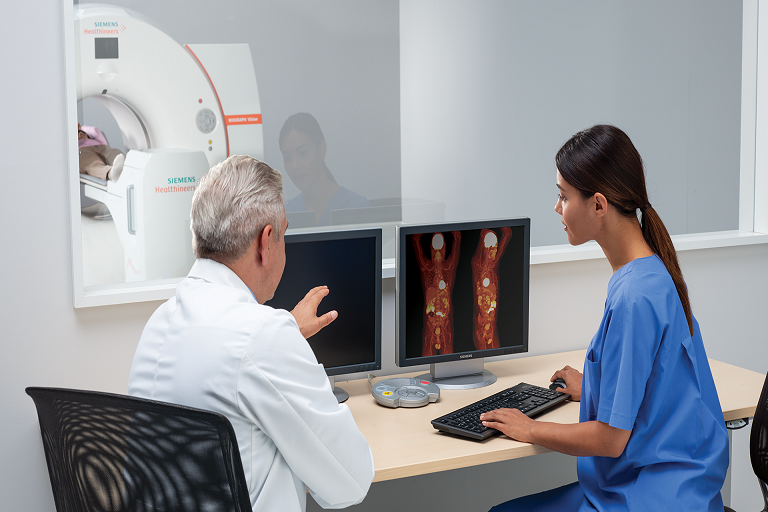
Diagnostic imaging technology is a complex and expensive investment for healthcare provider organizations. It’s also at the heart of healthcare delivery today, with so many diagnoses requiring the various types of images that the technology provides Consequently, it’s crucial that hospitals and health systems have this technology running in an optimal fashion to ensure quality care and positive return on investment. And the technology should be running optimally not just generally, but also to meet the specific needs of an individual provider organization tech optimization
To help Healthcare IT News readers get the most out of their imaging technology, four imaging tech experts here offer best practices to optimize the technology so that it is functioning best, helping achieve organizational goals, and contributing to high-quality patient outcomes.
Patient-centric growth strategies
The healthcare CIO, as part of an executive leadership team, is responsible for the growth and development of the provider organization. While the specific objectives or the “what” may vary from provider to provider, the “how” typically is grounded in improving delivery of the healthcare “quadruple aim,” said Calum Cunningham, general manager, enterprise diagnostic informatics, at Philips.
“The quadruple aim is useful for identifying and quantifying the key dimensions of the organizational success in healthcare – improving outcomes, lowering costs, and improving the experience of healthcare for both patients and staff,” he explained. “Effective growth strategies deliver benefits across all four areas. It sounds easy, but of course, in reality, there always is a need to balance the goals and ambition of the organization with the resources available.”
At the same time, CIOs more than most are faced with building strategies that effectively harness technologies that are advancing at a furious pace, he noted. “The informatics revolution has helped to place the patient where they belong – at the heart of the healthcare system,” he said. “We increasingly are seeing the shift from systems of record – a static file of patient information – to systems of engagement – in which the patient, and all the staff they interact with at their healthcare provider, are supported to play a greater role in managing the care experience.”
This can be in the form of the patient booking or changing their own appointment through a website or app and receiving reminders and interactive preparation guidelines to ensure they arrive for their appointment prepared – something that can have a big impact on reducing no-shows and repeat scans, he said.
Or it can be in the form of ensuring the right information is presented to a radiologist at the right time, and that their findings are seamlessly shared back with the referring physician, he added.
The patient as a guiding principle
Brandi Houck, a former imaging manager and a senior analyst at Pivot Point Consulting, agrees with Cunningham that putting the patient at the center of things can help diagnostic imaging technology centers run optimally.
“I always try to remember that literally everything we do in diagnostic imaging is about the patient,” she said. “Ensuring that when patients arrive for their exam or scan, it is important to make the best use of their time and limit waiting, and even more important, limit or eliminate wasted scanner time.”
Additionally, when starting an optimization and having the patient as a core guiding principle, a best practice recommendation is to leverage the growing suite of analytics available in the radiology information system and/or electronic health record to know as much as possible about the department, she advised.
“Reporting tools can be very helpful to imaging managers, technicians and administrators to best plan schedules for patients and differing modalities,” she said.
Scheduling technology and productivity
Another recommended best practice for optimizing imaging tech is to leverage block scheduling technology to maximize productivity, improve efficiency and have more predictable workdays, said Joe Clemons, director of advisory services at Pivot Point Consulting.
“Setting up scheduling blocks essentially creates time that is dedicated to specific scans that complement the time needed for prep and turnaround time for more complex exams,” he explained. “Idle scanner time is not only a waste for patients, it affects the department financially in lost revenue.” Think of block scheduling as a lock and key concept, Houck said.
“When the scheduler goes to schedule a specific modality, only the available slots that are unlocked are presented,” she said. “These available times are strategically chosen based on efficiencies of scale related to considerations like prep time. This allows for maximizing the overall schedule and organizes the types of exams so we can get the most work done in a single day.”
For example, she explained, say a patient who requires oral contrast and a patient who does not require oral contrast both arrive at the same time. Understanding the prep time needed, the block schedule would allow for both of these patients to check-in at the same time and then the oral contrast patient gets their prep completed and then waits the hour required for it to process through their body.
“While they are waiting for this required step, the second patient who does not need contrast can then occupy the scanner space, maximizing the utilization of the machine,” she explained. “Further, blocked scheduling like this would continue throughout the day, alternating folks who need oral contrast with those who don’t require it for their scan. Pro tip: Always schedule the last patient to be one that is non-oral so we’re not waiting for the contrast to process.”
Challenging but beneficial
Clemons added that many healthcare provider organizations do not leverage this technology because it is perceived as a difficult build and too restrictive. “The benefits, however, far outweigh the challenges and should be a key consideration for anyone wanting to optimize this space,” he stated. “It does, after all, leverage two very important investments – the RIS/EHR and the diagnostic imaging technology. It is important to allow for flexibility when necessary by enabling an override so the technicians can adjust the schedule when clinically required.” In addition to improving the patient experience, this set-up also increases technician satisfaction, he contended.
“It fosters an environment that is organized, less hectic, steady but not crazy busy, and predictable,” he said. “It also has the added value of increasing revenue for the organization by maximizing the technology to be used every available minute.” And when using the reporting capabilities and combining those with the concept of scheduling blocks, data can show that low scanner idle time means the department is operating at maximum efficiency, Houck said.
“This really helps in the situations where capital requests are made for additional screening equipment,” she noted. “Data analytics and block scheduling are two considerations for any diagnostic imaging department that will not only help the business, they also complement each other very nicely.”
Database administration for AI
Artificial intelligence is a hot trend in healthcare and many new and established players are investing heavily in this promising area. To this end, the need to engage in deep learning and collaboration between radiologists and diagnosticians and IT’s ability to access these repositories has become crucial to leverage the clinical knowledge embedded there, said Steve Romocki, worldwide product line manager at Carestream Health.
“Some hospitals are investigating ways to monetize these warehouses of past clinical efforts to third parties,” he said. “Many others are approaching AI as a way to increase their own effectiveness and more confidently render a differential diagnosis for their patients. Legal implications of these endeavors both within an organization and across collaborating institutions pose patient concerns over privacy as well.”
Intelligent sampling to reduce introducing bias from uneven or improper representation of patient data sets must enlighten and inform the AI learning process, he added. The CIO’s team will play a crucial role in overseeing this massive analytic undertaking, he said.
Leveraging real-time reports
On another imaging optimization front, at a time where patients are more informed and demanding the best service experience, leveraging real-time reports to better understand the department can be a real game-changer for the diagnostic imaging department, said Clemons of Pivot Point Consulting.
“For example, real-time application reporting has the capability to show the patients whom you are expecting and the priority of their visit,” he said. “Having this information ahead of time is important because you can then easily sort these patients and schedule them to maximize the imaging technology that will be required as well as the resources that will be needed.”
Dashboards are another reporting tool that can be very useful in providing a holistic view of table turnaround time, patient wait time, modality volume, exam volume by hour, and overall trends, he added. Using these reports in a way that makes the most efficient use of the imaging technology will increase a patient’s satisfaction and improve the overall performance of the department, he said.
“And speaking of turnaround times, here are some practical examples of why this should be considered a best practice for optimization,” said Houck of Pivot Point Consulting. “Many RIS and EHR systems can provide a breakdown of time stamps between each segment of the imaging lifecycle so you can determine areas where improvement opportunities exist.” For example, she said, consider the time stamp of when the order was placed and then when it was scheduled: Knowing this information can help identify areas that might improve the scheduling process.
“Next, consider what happens after the patient arrives, how long does it take to register the patient?” she asked. “Next, there is the time stamp from when the patient is done with registration and the time the tech starts the exam. This is a big one and relates directly to patient satisfaction.” A next natural area to examine is the technician time from start to end, she said.
“I recently assisted an imaging director with this particular area and we found that one technician was significantly faster than the others and after some observation and interviews, identified some steps that were applied to the workflow of the other technicians,” she explained. “A final area to consider is the end of the exam to the final report. All of this is easily accomplished by leveraging the time stamps in the system through applied analytics.”
Framework for investment decision making
Cunningham of Philips offers another imaging technology optimization best practice: Making tight budgets stretch further always is the toughest balancing act for CIOs, so it is vital that financial investments are tied to growth priorities and that technology maturity of an organization is well matched to strategy.
“It also is important that the CIO has a clear picture of current informatics maturity across their system and can set investment priorities that align with a clear set of objectives for where they want to get to,” he added.
A great framework for this is the HIMSS Analytics Digital Imaging Adoption Model (DIAM), which identifies seven development stages, from limited electronic image management all the way through to sophisticated, enterprise-wide imaging solutions and in enablement of new diagnostic service lines, he said.
“Frameworks such as DIAM support CIOs in identifying and adopting the right digital strategy for the unique needs of their organization,” he concluded. “It also provides a common language they can use with vendors to clarify their needs and expectations.”
Source: https://www.healthcareitnews.com/news/tech-optimization-peak-performance-imaging-technology


