







































































Events Calendar

Mon
Tue
Wed
Thu
Fri
Sat
Sun
M
T
W
T
F
S
S
27
12:00 AM - Arab Health 2020
29
1
7
10
12
14
16
20
23
25
27
28
29
1
Arab Health 2020
2020-01-27 - 2020-01-30    
All Day
ABOUT ARAB HEALTH 2020 Arab Health is an industry-defining platform where the healthcare industry meets to do business with new customers and develop relationships with [...]
12th International Conference on Acute Cardiac Care
2020-01-28 - 2020-01-29    
All Day
ABOUT 12TH INTERNATIONAL CONFERENCE ON ACUTE CARDIAC CARE Acute Cardiac Care has been undergoing a substantial transformation in recent years as the population ages and [...]
30 Jan
2020-01-30 - 2020-01-31    
All Day
The ICMHS conference is an international forum for the presentation of technological advances and research results in the fields of Medical and Health Sciences. The [...]
Annual Lower and Upper Canada Anesthesia Symposium 2020 (LUCAS)
2020-01-31 - 2020-02-02    
All Day
ABOUT ANNUAL LOWER & UPPER CANADA ANESTHESIA SYMPOSIUM 2020 (LUCAS) On behalf of the Departments of Anesthesia of McGill University, Queen’s University, and the University [...]
RF - 577th International Conference On Medical & Health Science - ICMHS 2020
2020-02-02 - 2020-02-03    
All Day
577th International Conference on Medical & Health Science - ICMHS 2020. It will be held during 2nd-3rd February, 2020 at Berlin , Germany. ICMHS 2020 [...]
ISER- 747th International Conference On Science, Health And Medicine ICSHM
2020-02-02 - 2020-02-03    
All Day
ISER- 747th International Conference on Science, Health and Medicine ICSHM is a prestigious event organized with a motivation to provide an excellent international platform for [...]
International Conference On Medical And Health SciencesICMHS-2020
2020-02-03 - 2020-02-04    
All Day
The ICMHS conference is an international forum for the presentation of technological advances and research results in the fields of Medical and Health Sciences. The [...]
Medlab Middle East 2020
2020-02-03 - 2020-02-06    
All Day
ABOUT MEDLAB MIDDLE EAST 2020 Medlab Middle East is the only medical laboratory industry event that offers manufacturers the opportunity to meet a diverse audience [...]
Cloud Architecture Implementation Healthcare 2020
2020-02-04 - 2020-02-06    
All Day
This summit brings together leaders from healthcare organizations to scale up their cloud infrastructure, implement cloud technology and share use cases about the success and [...]
4th Microbiome Movement - Drug Development Summit Europe 2020 - London, UK
2020-02-04 - 2020-02-06    
All Day
A unique forum focusing on pursuing disease causation to foster the creation of targeted Microbiome-based therapeutics, biomarkers and diagnostics. Time: 8:30 am - 5:50 pm [...]
Structural Heart Intervention And Imaging Feb 2020 CME Conference-San Diego
2020-02-05 - 2020-02-07    
All Day
The Scripps Structural Heart Intervention and Imaging conference features live case demonstrations, lectures from renowned faculty, hands-on workshops, and extensive satellite symposia. Time: 7:00 am [...]
Structural Heart Intervention And Imaging Feb 2020 CME Conference-San Diego
2020-02-05 - 2020-02-07    
All Day
The Scripps Structural Heart Intervention and Imaging conference features live case demonstrations, lectures from renowned faculty, hands-on workshops, and extensive satellite symposia. Time: 7:00 am [...]
18th Annual South Beach Symposium
2020-02-06 - 2020-02-09    
All Day
ABOUT 18TH ANNUAL SOUTH BEACH SYMPOSIUM The 18th Annual South Beach Symposium will take place in Miami Beach, Florida from February 6-9, 2020 at the [...]
Primary Care CME In Clearwater Beach, Florida February 2020
2020-02-08 - 2020-02-10    
All Day
Topics include latest hypertension guidelines, cancer screening, cholesterol management, immunizations, COPD, skin and soft tissue infections, etc. Time: 08:00 - 11:00
Primary Care CME In Clearwater Beach, Florida February 2020
2020-02-08 - 2020-02-10    
All Day
Topics include latest hypertension guidelines, cancer screening, cholesterol management, immunizations, COPD, skin and soft tissue infections, etc. Time: 08:00 - 11:00  
World Congress On Medical Imaging And Clinical Research WCMICR-2020
2020-02-09 - 2020-02-10    
All Day
The WCMICR conference is an international forum for the presentation of technological advances and research results in the fields of Medical Imaging and Clinical Research. [...]
Medical Design & Manufacturing (MD&M) West
2020-02-11 - 2020-02-13    
All Day
ABOUT MEDICAL DESIGN & MANUFACTURING (MD&M) WEST Medical Design & Manufacturing (MD&M) West is where serious professionals find the technologies, education, and connections to stay [...]
Third International Conference On Zika Virus And Aedes Related Infections
2020-02-13    
All Day
This Conference will bring together multidisciplinary experts aiming to tackle the challenges that Aedes related infections present including zika, dengue, yellow fever, and chikungunya. Time: [...]
The IRES - 791st International Conferences On Medical And Health Science ICMHS
2020-02-15 - 2020-02-16    
All Day
The IRES - 791st International Conferences on Medical and Health Science ICMHS aimed at presenting current research being carried out in that area and scheduled [...]
4th International Conference on Chronic Diseases
2020-02-17 - 2020-02-18    
All Day
ABOUT 4TH INTERNATIONAL CONFERENCE ON CHRONIC DISEASES It takes immense pleasure to invite you to attend the 4th International Conference on Chronic Diseases (Chronic Diseases [...]
European Gynecology and Obstetrics Congress
2020-02-17 - 2020-02-18    
All Day
ABOUT EUROPEAN GYNECOLOGY AND OBSTETRICS CONGRESS Gynecology 2020 destine to endeavor leading-edge memoranda of eminent keynote speakers, universal personalities, special sessions and poster presentations attracting [...]
18 Feb
2020-02-18 - 2020-02-20    
All Day
Technology Networks is a global online scientific publication that covers the latest research, industry news, and technologies. Our 12 online communities provide focused coverage of [...]
6th International Conference On Food And Beverages
2020-02-19 - 2020-02-20    
All Day
Meetings International Meetings Int. invites you to attend the ‘6th International Conference on Food and Beverages 2020” which is to be held on February 19-20, [...]
10th Global Summit on Neuroscience and Neuroimmunology
2020-02-19 - 2020-02-20    
All Day
ABOUT 10TH GLOBAL SUMMIT ON NEUROSCIENCE AND NEUROIMMUNOLOGY 10th Global Summit on Neuroscience and Neuroimmunology (Neuroimmunology 2020) is aimed at improving health across the globe, [...]
Mayo Clinic Nephrology And Transplantation For The Clinician 2020
2020-02-21 - 2020-02-22    
All Day
Nephrology and Transplantation for the Clinician: 18th Annual Update From Mayo Clinic is a two-day course designed to u-p-d-a-t-e participants on nephrology topics relevant to [...]
28th International Conference on Cancer Research and Pharmacology
2020-02-21 - 2020-02-22    
All Day
ABOUT 28TH INTERNATIONAL CONFERENCE ON CANCER RESEARCH AND PHARMACOLOGY PULSUS Conferences is glad to invite all the participants across the globe to attend 28th International [...]
Rocky Mountain Winter Conference On Emergency Medicine 2020
2020-02-22 - 2020-02-26    
All Day
Each day the conference starts with a hot breakfast followed by engaging, cutting edge didactics led by experts from the countrys top academic programs. Please [...]
CRT20 Conference
2020-02-22 - 2020-02-25    
All Day
ABOUT CRT20 CONFERENCE CRT, one of the world’s leading interventional cardiology conferences, is attended by more than 3,000 interventional and endovascular specialists. At the 2019 [...]
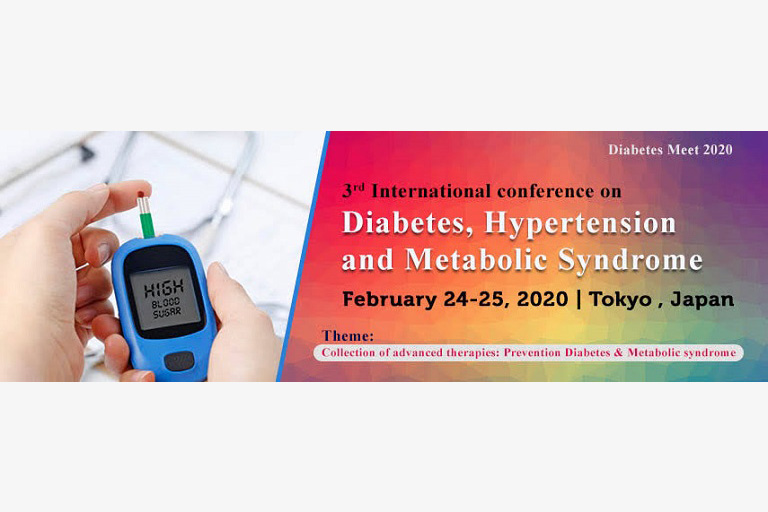
3rd International conference on  Diabetes, Hypertension and Metabolic Syndrome
2020-02-24 - 2020-02-25    
All Day
About Diabetes Meet 2020 Conference Series takes the immense Pleasure to invite participants from all over the world to attend the 3rdInternational conference on Diabetes, Hypertension and [...]
3rd International Conference on Cardiology and Heart Diseases
2020-02-24 - 2020-02-25    
All Day
ABOUT 3RD INTERNATIONAL CONFERENCE ON CARDIOLOGY AND HEART DISEASES The standard goal of Cardiology 2020 is to move the cardiology results and improvements and to [...]
Medical Device Development Expo OSAKA
2020-02-26 - 2020-02-28    
All Day
ABOUT MEDICAL DEVICE DEVELOPMENT EXPO OSAKA What is Medical Device Development Expo OSAKA (MEDIX OSAKA)? Gathers All Kinds of Technologies for Medical Device Development! This [...]
Events on 2020-01-27
Arab Health 2020
27 Jan 20
Dubai
Events on 2020-01-28
Events on 2020-01-30
Events on 2020-01-31
Events on 2020-02-03
Events on 2020-02-06
18th Annual South Beach Symposium
6 Feb 20
Miami Beach
Events on 2020-02-09
Events on 2020-02-11
Events on 2020-02-17
Events on 2020-02-18
18 Feb
Events on 2020-02-22
CRT20 Conference
22 Feb 20
National Harbor
Events on 2020-02-26
Latest News

The barriers to health data exchange that are exacerbating the coronavirus pandemic

ehr vendors

We have been watching the statistics for more than weeks now. We watch with a sense of disbelief, horror, sorrow, hope, disgust, and impatience. We hear about the number of tests performed, positive tests, negative tests, confirmed cases, number of individuals who have recovered, and deaths. We have heard new terms like social distancing, flattening the curve and second wave. We hear statistics from the Centers for Disease Control, Johns Hopkins, our state public health departments and the World Health Organization.

We also hear what we must do to defeat the virus. The “weapons” according to renowned infectious disease specialist Jim Yong Kim, one of the founders in Partners in Health are described in his recent article in the New Yorker. The five weapons to combat this, and any pandemic, are social distancing, testing, contact tracing, isolation and treatments. But one of the weapons I think that he missed is accurate, timely data.

How can we know if social distancing is working, when it can be relaxed, the real number of infected individuals, and how to contact trace, or who to isolate or treat if we do not have accurate and timely test results and diagnoses? To protect health care providers, it is vitally important to know if someone who walks into their clinic has ever tested positive for COVID-19 at the emergency room, a local hospital, or even at a drive through testing site.

You may be shocked to learn that even though nearly all hospitals and doctors use electronic systems in their facilities, unless those providers choose to connect to a health network such as a health information exchange, that information is not routinely shared. They may have one or two connections to other providers, but the data is not shared with all providers who treat that patient. You might also be surprised to hear that the data collected for all the public health statistics, like lab results, are not shared with all the patient’s doctors or sent to the health information exchange.

To understand how we could improve physician access to accurate and timely data we should describe health information exchanges. HealtHIE Nevada is the private non-profit technology organization that runs the state-wide health information exchange in Nevada – a highly secure and private network that addresses the gap of sharing medical information that currently exists between hospitals, doctor’s offices, nursing homes, laboratories, imaging centers and all other health care organizations on patients that they have in common.

Think of an HIE as a type of health care public utility. For example, if you were recently admitted to a local hospital with a diagnosis of COVID-19? After you recover and during your discharge you would be instructed by hospital staff to get another X-ray at the imaging center and schedule a follow up visit with your primary care provider.

If the hospital, imaging center, and primary care provider were all connected to an HIE then when you went to your follow up visit with your PCP the lab results, medications, and doctor notes from your hospital stay plus your X-ray would be readily available to your PCP. Access to all this information improves the quality of care, ensures that medications are accurate, and reduces the chance that the PCP would need to repeat tests thus saving you money on deductibles and copays.

So why aren’t all hospitals, doctor’s offices and all other health care organizations in the state connected to the HIE? And why aren’t the public health network and the HIE connected? The answer lies in state and federal regulations, public policy, and the way we pay for health care.

Except for a handful of states, regulations do not require providers, hospitals, and other medical facilities to share data with their statewide HIE network. Some of these facilities allow doctors who are not affiliated with their organization to access their data, but these are singular connections from one facility to another and either require the provider to login to a portal or only share data between the two facilities; hardly a network of all providers.

The way we pay for health care also creates barriers to sharing data among providers who are treating a patient. Most health care organizations are still paid only when they perform a service for the patient. They are not reimbursed to share their data with other providers, and thus they have little incentive to share data. Even though almost all providers have electronic health records systems, their vendors charge them an additional fee to develop the software interface to send data to the HIE.

This fee can be significant, often around $5000 or more. Plus, to sustain our HIE we also charge providers a subscription fee of $25 per provider per month. While the clear majority of providers want to do the right thing and share medical data, the paradox they face is that when they pay to share their information, the value accrues to someone else. They will only derive value themselves if everyone else also pays to share their data.

At the federal level, regulations have created a network for public health called the National Notifiable Diseases Surveillance System, or NNDSS. This system, coupled with regulations from the Centers for Disease Control require that providers, hospitals, and labs send data to their state or local health departments. Even though it is not mandatory, all states send medical information and lab results for notifiable diseases and conditions on to the CDC for public health reporting and analysis.

The CDC maintains a list of these notifiable diseases and conditions and revises it periodically. While this system is crucial to public health, it has been designed to be a “private network” with a limited scope of what it collects. This system does not share data with the entire medical community. If a doctor orders a COVID-19 lab test on one of their patients, the doctor would get the lab result and it would be sent to the NNDSS system. But if that patient later developed worsening symptoms and ended up in the emergency room, those doctors would not have access to the lab results unless both the original provider and hospital were connected to the HIE.

And the data won’t be collected by NNDSS unless the disease or lab test is on the notifiable list in advance. Because COVID-19 was novel (brand new) it was not a notifiable disease, so data weren’t collected by NNDSS until the outbreak was well underway. Both issues could be avoided if the data first were sent by the lab into the HIE, making this data available to all treating providers and then to the NNDSS system.

Out of this crisis we will likely see more funding for public health, medical readiness, stockpiling of personal protective equipment and other measures to assist our courageous front-line health care workers and our public health system. All of these are important areas that we must fund as a nation.

But we must also change our thinking that often views public health as separate from the rest of our healthcare system. Local and state governments and the federal government have created this silo of health data, but the information in that silo is not connected to the greater healthcare system through our statewide HIE. If this was to occur, then treating providers would have access to COVID-19 test results and so much more information to provide needed care faster. If new investments in public health just create bigger and better silos of information we will have missed the mark on really improving our healthcare system.

Instead let’s invest in an interoperable health data system that connects all providers, hospitals, nursing homes, insurance companies, state and local governments, public health, and patients who need access to medical records. Let’s create public policy that requires that all healthcare providers, labs, imaging centers, and all other healthcare organizations send their data to our state-wide health information exchange system so that it can be securely shared with those providers who need it. And by all means let’s fund that system so when the next medical crisis occurs we will have data ready to combat the crisis.


