





















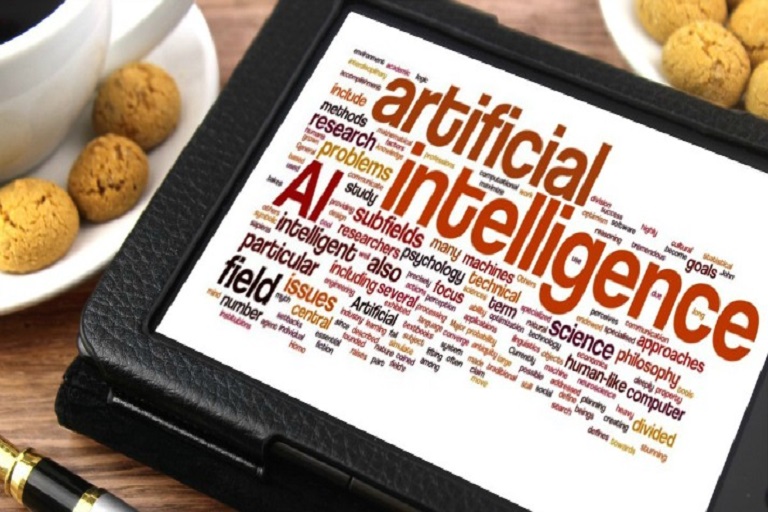
Healthcare is at an inflection point. Machine learning and data science are becoming key components in developing predictive and prescriptive analytics. AI-powered applications are transforming the health sector by reducing spend, improving patient outcomes and increasing accessibility to care. But where did AI in healthcare stem from? And what factors are driving AI use in healthcare today? Dr. Taha Kass-Hout, general manager for healthcare and AI, and chief medical officer at Amazon Web Services, offered some historical perspective during a HIMSS20 Digital educational session, Healthcare’s Prescription for Transformation: AI.
The early days of AI in healthcare
“In medicine, at the end of the day, we want to know what sort of patient has a disease and what disease a patient has, so predicting what each patient needs and delivering the best care for them, that’s ultimately the definition of precision health or precision medicine,” Kass-Hout said. “The intersection of medicine and AI is really not a new concept,” he added. “Many have heard of a 1979 project that used artificial intelligence as it applied to infection, such as meningitis and sepsis.”
AI in medicine even goes back to 1964 with Eliza, the very first chatbot, which was a conversational tool that recreated the conversation between a psychotherapist and a patient, he explained. That also was the early days of applying artificial intelligence and rules-based systems on the interaction between patients and their caregivers, he added. “But up until three years ago, deep learning, when it comes to the most advanced algorithms, was never mentioned in The New England Journal of Medicine or The Lancet or even JAMA,” he noted.
“Today, if you’re looking at PubMed, it cites over 12,000 publications with deep learning, over 50,000 machine learning, and over 100,000 pieces of scientific healthcare literature with artificial intelligence, with the point that most of that is highly skewed toward perhaps the last few years.” Looking at this literature, one sees that most of the applications seen today of artificial intelligence in healthcare have involved pattern recognition, prediction and natural language understanding, he added.
Why AI is important today
“If you look at the overall value of why AI is really important, especially in our current situation with the global pandemic we live in, 50% of the world’s population has no access to essential healthcare,” Kass-Hout stated. “If you look at the United States alone, 10% of the population has no insurance and 30% of the working population are underinsured, and insurance costs per individual have reached over $20,000-$30,000 in the last year alone.”
So the healthcare industry also should look at AI as it relates to the way the industry collects the information for medical records, he suggested. For example, the way it does collect this information is error-prone, where 30% of medical errors are causing more than 500,000 deaths per year. On a related note, when it comes to the need for AI, there is a projected shortage in the U.S. of more than 120,000 clinicians over the next decade, he added.
“So this is really where, if we think about more of this global view of the problem as well as the population, we can see where AI and advancements in AI can really help us overcome many things; for example, performing tasks that doctors can’t,” said Kass-Hout, “using large data sets and modern computational tools like deep learning and the power of the cloud to recognize patterns too subtle for any human to discern.”
Tackling financial and operational inefficiencies
In the HIMSS20 Digital educational session, attendees can hear directly from four experts on how and why they are focusing on some of the industry’s biggest opportunities and where AI can help tackle both financial and operational inefficiencies that plague global health systems today.
Kass-Hout is joined by Karen Murphy, RN, executive vice president and chief innovation officer at Geisinger; Dr. Marc Overhage, former vice president of intelligence strategy and chief medical informatics officer at Cerner; and Stefan Behrens, CEO and c-founder of Gyant, a vendor of an AI-powered virtual assistant. To attend the session, click here.


