




















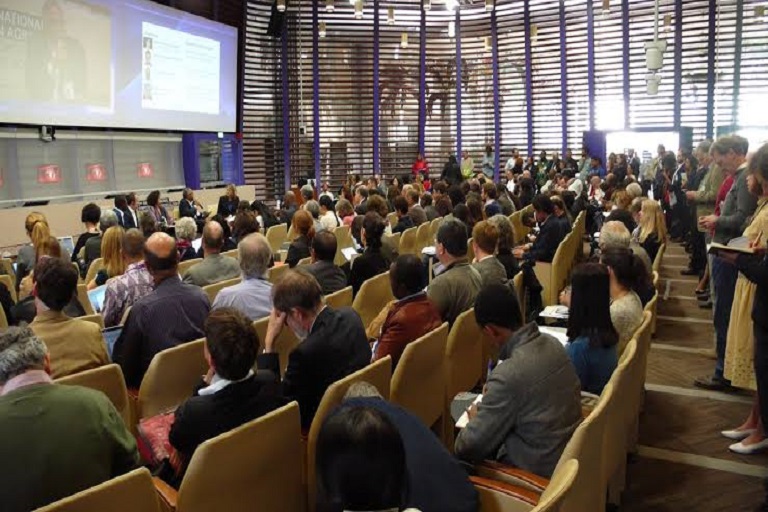






























Chris Stenglein, CEO of Provider Web Capital, explores the impact consumerism and alternative reimbursement models will have on the US healthcare system.
Online PR News – 07-March-2017 – Atlanta, Georgia – I recently attended a financial services conference and was asked the questions: Are not all doctors wealthy and successful? Are M.D.’s not highly attractive customers for banks?
In order to appropriately address these question we have to take a quick review of how the system of healthcare currently works in the United States.
We all have limited time in the day, so I will break this up into a 3-Part Series. Part I is intended to give a backdrop of the ecosystem of healthcare to new entrants and explore the impact that consumerism and alternative reimbursement models will have on the US healthcare system. This may be a bit old news to you veteran healthcare pros (my apologies), but stay tuned as the ideas explored in this article will hopefully ignite new ideas and possibilities of how care is managed, paid for and delivered under a new wave of innovation that is approaching the healthcare industry.
Part I. US Healthcare System is complex, however its purpose is very simple: Improve the lives of its patients/consumers. “May you live long and prosper”, Mr. Spock, 1967.
Those of us who have worked in other industries (I feel like I am as old as Spock), and now call the healthcare industry our home, quickly realize it is like no other industry in the United States. It is a fluid, complex body of numerous disparate systems and operators (physicians, IT/administration/operations/EBO/CBO and government) designed to provide care (or support the delivery of care) to all of us in a non-standard/standard form (we are all unique but at times treated as one).
Simply put, the US healthcare ecosystem spans across the value chain I call CP3. No not a rip-off from Star Wars but it does bring back some great quotes from C-3PO that are applicable in our discussion: “The city’s central computer told you? Artoo Detoo, you know better than to trust a strange computer” (C-3PO, The Empire Strikes Back).
Ok so what is CP3? It is simply a way for us all to get our arms around the new paradigm of purchasing and utilizing the healthcare system. This begins with the Consumer, then Patients (unique and infinite in their needs), Providers (talent constrained and not infinite), Payers (currently 1,000’s who accept deposits from consumers who will be future patients, make payments on their behalf and manage contracts with providers to serve them) and lastly one of the fastest growing segments of healthcare: Healthcare IT which acts as the operational support system for the entire body.
Again to give folks a sense of scale and how big the IT system is, it includes: Practice Management Systems, Electronic Healthcare Records, Revenue Cycle Management which includes billing, claims processing and payment, collections, denial management, population health, data integrators, on boarding, teleheath, HIPPA EDI compliance toolsets, etc. etc. etc…This is good – plenty of folks trying to figure this thing out – including your doctor. The point is Healthcare consumes over 17% of GDP, and is expected to one day equal 25% of the US economy and the supporting system is equally massive and complex.
If the goal of the system is to continue to provide world-class healthcare to patients at reasonable costs and encourage innovation, then in many ways the current system delivers. Independent physicians innovate while larger systems focus on scale and profitability. This dynamic provides a healthy push and pull on the healthcare market for further advances in care. In other areas of the value chain of healthcare many argue fiefdoms have been created and protected at all cost. Clearly this runs contrary to the goal and is creating one of the greatest challenges facing our current system. I will not get into politics or attempt to choose the good from the bad. Facts will be presented in this series with a focus on this support system and how as innovators we may improve it to foster innovation, eliminate waste and drive down the costs of delivering care.
If we consider Healthcare IT as the support system to enable care delivery at its highest efficiency, then in its current form it is failing for smaller providers.
The healthcare system today is complex, more burdensome on physicians and changing faster than at any time in US history: From the implementation of ICD-10, MACRA, ACA, CMS, MIPS, regulations, EHR requirements, compliance, and audit reviews, the system is growing ever more complex. Should we focus on caring for and repairing the human body or on the system that is trying to regulate that care? According to a recent Forbes article co-written by a local Atlanta surgeon Dr. Michael Korwichak, EHR regulatory burdens in some cases have “reduced physicians to data-entry clerks”. If you have visited your doctor lately you probably noticed he/she working directly on a computer or iPad diligently making inputs into its system. Reports show in many cases nearly 3x as much time is spent in EHR systems than actually providing care to patients.
Rise of consumerism, patient responsibility and alternative reimbursement models increase likelihood of payment delays and may actually reduce quality of care.
Rise of consumerism driven by rapid increase in patient responsibility: The patient portion of healthcare has risen disproportionately to the growth rate in healthcare and is estimated to reach nearly $650 Billion in annual spend over the next decade. Where does this burden now lay? It lays squarely at the foot of the patient’s bedside – and who is standing there…you guessed it – your doctor. Your doctor is now the one who has to manage, bill and collect the patient payments and all the complications that arise from this new world of “patient financial engagement”. Consumerism is good for the industry and it should increase quality and value purchasing, while over time reducing costs through increased competition. However, physicians who do not adapt quickly will be losing patients and potentially payer network access.
Alternative reimbursement models are here to stay: As noted in a recent Healthcare IT conference in Atlanta, CMMS is currently utilizing bundled payments, value reimbursement and other alternative “at risk” payment models for over 30% of current reimbursements. Commercial payers will be modifying their reimbursement models as well. This trend is not likely to reverse. What does this mean to the provider? Increased lag between the date of service and payment across both payers and patients.
Providing care and getting paid for it can be a daunting task for small to midsize practices. Where are we now? Providers face increasing demands from the new consumer-driven market. They need to deliver measurable quality care, while managing burn out and computer fatigue due to EHR regulations, back office/practice management, fragmented payment systems, and new alternative reimbursement models (we will table Tort liability for another day). These factors present continued challenges for practices large and small. The trends over the last 40 years show a striking contrast between delivering care to the patient and the administrative support needed to thrive.
Bottom line: The burden of administration has grown at a breakneck speed and providers feel it with increased overhead and burnout. The cash lag from the date of service to payment is likely to become elongated with patient responsibility increasing and risk-based value reimbursement becoming the norm.
In the Part II, Chris Stenglein, CEO of Provider Web Capital & Technologies will be discussing how new financial and data-driven systems are positioned to assist in serving providers so they can serve more patients.


