



































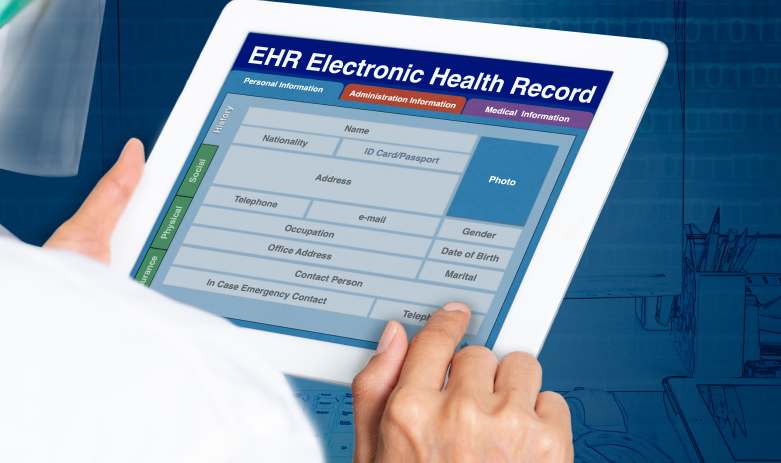
Trump Unveils Plan to Launch Private Health Tracking System with Major Tech Companies
On Wednesday, the Trump Administration unveiled a new initiative aimed at enabling Americans to share their medical records through a variety of apps and programs operated by private tech companies. Supporters argue this will simplify access to records within the country’s fragmented healthcare system, while digital privacy experts warn it could compromise patient data security.
“For decades, America’s healthcare networks have needed a high-tech upgrade, and that’s exactly what we’re delivering,” President Donald Trump stated during the event announcing the initiative.
The Administration has secured commitments from over 60 tech and healthcare companies—including Amazon, Apple, Google, and OpenAI—to help build a next-generation digital health ecosystem aimed at improving patient outcomes, easing provider workloads, and increasing value, according to a press release from the U.S. Centers for Medicare & Medicaid Services (CMS).
For decades, making health records more accessible has been a federal goal, intended to allow patients to switch providers smoothly. However, efforts have been hindered by privacy concerns and the challenge of competing proprietary record systems from different companies.
The Administration’s new initiative, CMS states, will prioritize “easy and seamless” information sharing between patients and healthcare providers, along with expanding personalized tools to equip patients with the information and resources needed for better health decisions. Early focus areas include apps for diabetes and obesity management, conversational AI assistants to support patients, and replacing paper intake forms with digital check-in options.
The announcement marks the latest effort by the Trump Administration to highlight the importance of integrating cutting-edge technology into the healthcare system. In June, Health and Human Services Secretary Robert F. Kennedy Jr. testified before Congress, describing “wearables” like smartwatches as transformative tools for healthcare.
“We believe wearables are central to the MAHA agenda—Making America Healthy Again. My vision is for every American to be wearing a wearable within four years,” Kennedy stated.
However, the announcement faced immediate criticism from digital privacy experts, who cautioned about the risks of sharing health data with companies not covered by the Health Insurance Portability and Accountability Act (HIPAA)—the federal law that protects personal health information from being disclosed by certain entities, such as healthcare providers and insurers, without patient consent.
Andrew Crawford, senior policy counsel at the Center for Democracy and Technology, expressed concerns about how the companies involved in the initiative will collect and use data, what information consumers will receive about their privacy, and what restrictions will be placed on data use and sharing. He warned that if a company were to share a patient’s information beyond the intended health service—such as with advertisers who might target individuals based on health data inferences—that would be highly problematic.
Crawford also raised questions about whether, and under what circumstances, the government might gain access to patients’ health data through this initiative, and how such information could be used or restricted.
“We’ve recently seen this Administration create new data sets for purposes like immigration enforcement,” Crawford noted. He cited reproductive health data as an example of sensitive medical information many people would be uneasy sharing widely. Additionally, since many apps collect location data, Crawford worries that such information could potentially reveal if individuals traveled out of state to access abortion services unavailable in their home state.
In its announcement, CMS stated that the initiative will be “more secure and personalized,” utilizing secure digital identity credentials to access medical records from CMS Aligned Networks.
Dr. Brian Anderson, CEO of the Coalition for Health AI—a nonprofit focused on establishing guidelines for responsible AI use in healthcare—acknowledges there are still “some outstanding questions” regarding the initiative, particularly around how data shared with tech companies outside HIPAA’s scope will be protected. However, he believes these challenges can be overcome.
“We need collaboration between the private and public sectors to clearly define the rules of the road, ensuring patients’ data is used only as they intend and desire,” Anderson explained.
He expressed enthusiasm about the group of tech companies committed to making it easier for patients to access their own data, especially given that “our data is often scattered across multiple locations.”
However, some remain skeptical about whether this initiative will truly benefit patients, especially if their sensitive medical records are at risk of being compromised.
“I believe our system already encourages data sharing,” Crawford explains. “While there are certainly issues and flaws, I’m not convinced—without seeing the full details—whether this move to share more information with private entities, many potentially outside HIPAA’s protections, will actually improve the quality of care.”


