






































Utilizing Technology to Improve Business for Your Hospital
At every level within the healthcare industry, the highest goal is to administer first-rate healthcare to patients. In order to provide healthcare of the highest quality, hospital administration must both prioritize the patient’s experience while managing the often intricate regulations and medical expectations that govern the field.
Fortunately, technological innovations have been rapidly transforming the healthcare industry for the better. Providers and patients alike benefit tremendously from an upgraded digital infrastructure, adopting more efficient, patient-centric practices facilitated by powerful yet straightforward programs.
Read on for significant ways that technology can benefit hospital administration while improving each patient’s experience with their own medical care.
Strengthen Patient Relationships
In order to deliver quality care, hospitals must first seek to understand the ways patients interact with their own healthcare data and the providers responsible for its implementation. Through data collection programs, not unlike CRM for small business, hospitals can better coordinate with and engage patients using data insights that analyze the manner in which they approach their healthcare.
This information can be used to better design digital pathways such as online patient portals, electronic medical charts and hospital-wide email lists or newsletters. Most patients today seek an electronic option for medical transactions, and the more user-friendly these options are, the more satisfied patients are likely to be with your hospital.
As well, simplified digital structures encourage patients to be active participants in their own care, and the more patients are engaged in their treatment, the more likely they are to be invested in and satisfied with your hospital’s staff and procedures.
Streamline Staff’s Workflow
With improved structures for hospital staff comes a better, smoother work experience for your employees. The introduction of digital solutions for processes that once required the efforts of direct care staff now relieves employees almost entirely of those tasks and allows them to spend more time interacting with patients face-to-face.
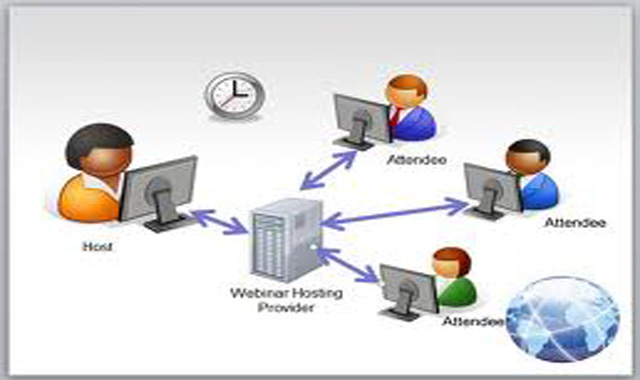
Telemedicine, for example, allows providers to meet personally with patients, though remotely, to discuss a wide variety of medical conditions. Virtual visits are typically far shorter in duration, so providers have the capability to meet with more patients overall within a single day.
Additionally, through wearable medical technology for patients, providers have access to important patient health data that is logged in real time, so significant vital patient information can be monitored remotely without the need for consistent appointments or checkups, freeing your employee’s schedules for other patients.
Gather and Store Relevant Patient Data
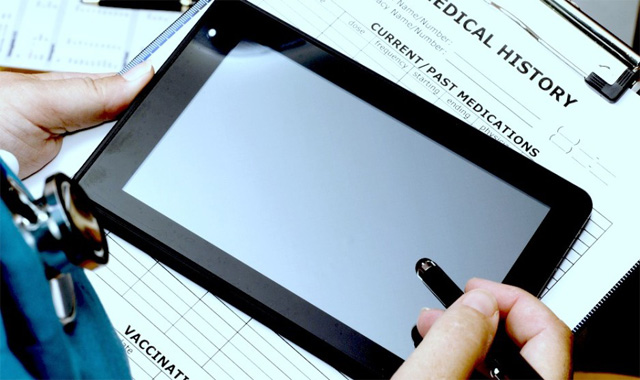
Diagnostics, treatment plans and health histories are no longer stored in manilla folders, but have a new home in private, secure digital storage locations. Electronic medical records and the use of tablets, devices and centralized databases make it far easier for hospital staff to store and access patient health data.
With the help of electronic medical records, patients whose medical conditions require the services of multiple providers can receive better, more effective care than ever. Innovations in electronic health record keeping have enabled staff to more swiftly enter and access data, and each provider can share and transfer records to unify and inform other providers and specialists charged with a single patient’s care.
The use of electronic health information benefits undiagnosed patients, too. Algorithms and software programs designed with improved diagnostics in mind assist providers in their own medical research and diagnoses. Information on drug interactions, potentially co-morbid conditions and medical device recommendations are nearly instantly available to providers, so every diagnosis and treatment plan is free from many common human errors of the past.
Improve Awareness of Industry Information
From medical device recalls to novel pharmaceutical formulas, staying abreast of every change within the industry is made easier through technological access. Such information isn’t only a benefit to hospital providers and their patients, but it’s also vital to ensure the continued safety and wellbeing of your patients.
By adopting web-based management programs, both low and high level providers have access to relevant development and safety information with regard to devices, medical regulations and medications, and are able to relay this information to patients much more quickly.
Technological advancements not only improve healthcare at the provider level, but they promote a better experience for patients, creating a healthier, happier population overall.


