







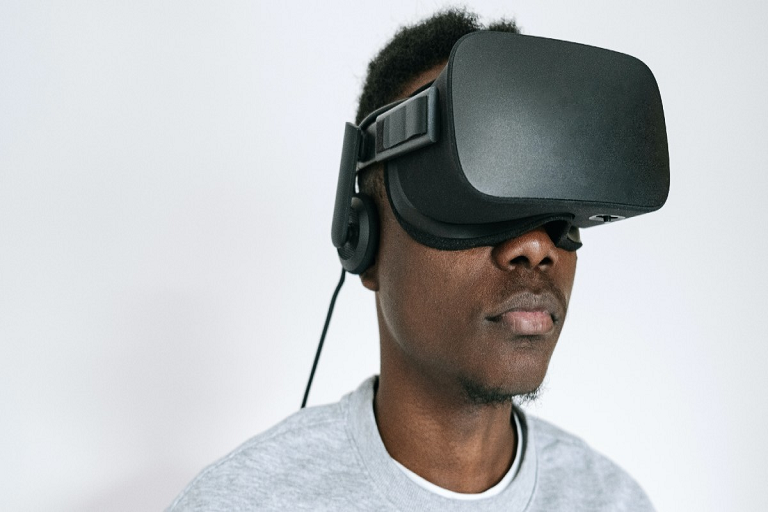
Virtual reality for pain management has potential, but hurdles remain
A study from UC San Francisco found that frontline pain management clinicians are curious about VR – but want to see crucial adaptations for diverse patient groups.
A study published this week in the Journal of Medical Internet Research found that virtual reality can be a useful, scalable and appealing alternative to existing pain management approaches.
At the same time, however, UC San Francisco researchers noted that challenges remain when it comes to adoption of the technology, especially for addressing the needs of diverse populations.
“There are specific considerations in adapting digital innovations to diverse populations and to safety-net healthcare settings that disproportionately care for them,” read the study.
“We sought to elucidate the implementation climate specifically for VR,” it explained.
WHY IT MATTERS
The research was a collaboration between S.O.L.V.E. Health Tech, a health equity incubation partner at UCSF, and AppliedVR, a platform that provides therapeutic VR for pain management.
As the study notes, clinicians have demonstrated interest in VR therapy as a safe and effective alternative for opioids when it comes to pain management.
However, the researchers pointed out that many VR studies have been conducted in settings that serve “ethnically homogenous, relatively advantaged populations with high health literacy and educational attainment.”
The research team sought to take a deeper look by interviewing healthcare providers, leaders and administrators from safety-net health systems and academic medical centers, along with one from a nonprofit regional tertiary medical center.
They found that frontline pain management clinicians and leaders are interested in VR, but that it will require significant adaptation – such as cultural tailoring and translation, along with usability testing – to address the specific needs of the diverse populations they serve.
“The participants cited integration into complex workflows, structural costs and reimbursement concerns as major concerns to implementing and scaling VR use,” wrote the researchers.
“There is a tremendous unmet need in the U.S. to deliver evidence-based digital therapeutics to the broader population,” said Dr. Urmimala Sarkar, lead author on the study, UCSF professor of medicine and cofounder of S.O.L.V.E. Health Tech, in a statement.
“But, it will require collaboration across industries to overcome the hurdles that stand in the way of wider adoption, including commitments from payers for more reimbursement and adapted content that tailors to the needs of diverse populations,” Sarkar continued.
THE LARGER TREND
Virtual reality, and, more broadly, extended reality, offer a range of opportunities for enhancing healthcare and patient engagement, especially in a remote care setting.
For instance, VR has been used in combination with artificial intelligence to enhance telesurgery: the ability to do live surgery in different locations or mentorship and proctorship. It can also offer new opportunities to provoke an empathetic response among caregivers.
ON THE RECORD
“Our goal is to make VR the standard of care in pain management for everyone, and research like this is critical to understanding how we can create more usable, more affordable and more equitable treatment programs,” said Josh Sackman, president and cofounder of AppliedVR, in a statement.
“The COVID-19 pandemic put on full display the health inequities that have existed in our country for years, so digital medicine shouldn’t be the latest innovation to fall into the same trap,” he said.