











Events Calendar

Mon
Tue
Wed
Thu
Fri
Sat
Sun
M
T
W
T
F
S
S
30
2
3
4
5
6
7
9
12
13
14
15
17
19
22
25
27
12:00 AM - HLTH 2019
28
29
30
31
1
2
3
01 Oct
2019-10-01 - 2019-10-02    
All Day
The UK’s leading health technology and smart health event, bringing together a specialist audience of over 4,000 health and care professionals covering IT and clinical [...]
08 Oct
2019-10-08 - 2019-10-09    
12:00 am
Looking to maximize the efficiency of your current Revenue Cycle solution? Join us as we present strategies for analyzing your MEDITECH Revenue Cycle, and learn from other [...]
2019 Southwest Dental Conference
2019-10-10 - 2019-10-11    
All Day
ABOUT 2019 SOUTHWEST DENTAL CONFERENCE For 91 years, the Southwest Dental Conference has been the meeting of choice for quality professional development and innovative educational [...]
Annual Conference & Exhibition Lyotalk USA 2019
2019-10-10 - 2019-10-11    
All Day
ABOUT ANNUAL CONFERENCE & EXHIBITION LYOTALK USA 2019 Lyotalk is USA’s largest annual conference on Lyophilization/Freeze Drying. Lyotalk attracts gathering from of 150+ experts from [...]
Lab Indonesia 2019
2019-10-10 - 2019-10-12    
All Day
ABOUT LAB INDONESIA 2019 LabAsia is Southeast Asia’s leading laboratory exhibition, serving as the region’s trade platform for laboratory equipment & services suppliers to engage [...]
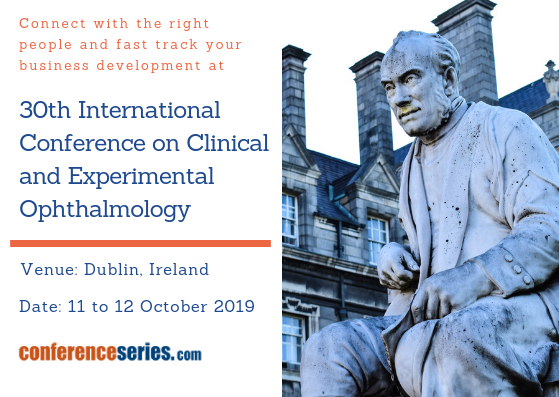
30th International Conference on Clinical and Experimental Ophthalmology
2019-10-11 - 2019-10-12    
All Day
ABOUT 30TH INTERNATIONAL CONFERENCE ON CLINICAL AND EXPERIMENTAL OPHTHALMOLOGY The 30th International Conference on Clinical and Experimental Ophthalmology is going to be held during October [...]
7th International Conference on Cosmetology & Beauty 2019
Cosmetology and Beauty 2019 passionately welcomes each one of you to attend a global conference in the field of cosmetology which is held on October [...]
16 Oct
2019-10-16 - 2019-10-17    
All Day
ABOUT 17TH INTERNATIONAL CONFERENCE ON CANCER RESEARCH AND THERAPY Cancer Research Conference 2019 coordinates addressing the principal themes and in addition inevitable methodologies of oncology. [...]
Global Cardio Diabetes Conclave 2019
2019-10-18 - 2019-10-20    
All Day
ABOUT GLOBAL CARDIO DIABETES CONCLAVE 2019 A strong correlation between cardiovascular diseases and diabetes is now well established. The American Heart Association considers that individuals [...]
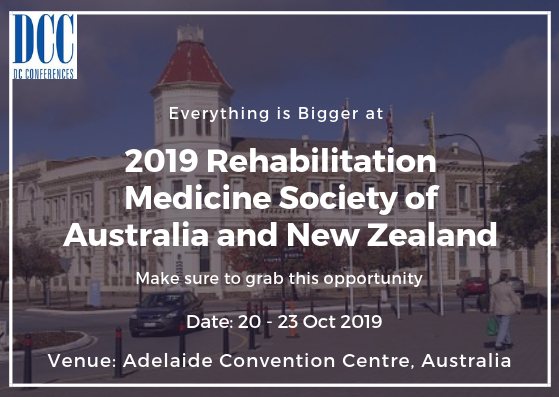
2019 Rehabilitation Medicine Society of Australia and New Zealand
2019-10-20 - 2019-10-23    
All Day
ABOUT 2019 REHABILITATION MEDICINE SOCIETY OF AUSTRALIA AND NEW ZEALAND On behalf of Rehabilitation Medicine Society of Australia and New Zealand (RMSANZ) and the organising [...]
21 Oct
2019-10-21 - 2019-10-23    
All Day
ABOUT GLOBAL CONFERENCE ON SURGERY AND ANESTHESIA (GCSA 2019) Global Conference on Surgery and Anesthesia (GCSA 2019) scheduled on October 21-23 2019 in Dubai, UAE [...]
21 Oct
2019-10-21 - 2019-10-22    
All Day
ABOUT 10TH INTERNATIONAL CONFERENCE ON MASS SPECTROMETRY AND CHROMATOGRAPHY ME Conferences is excited to announce the “10th International Conference on Mass Spectrometry and Chromatography” that [...]
MEDICAL JAPAN 2019 TOKYO
2019-10-23 - 2019-10-25    
All Day
ABOUT MEDICAL JAPAN 2019 TOKYO B to B Trade Show Covering All the Products/Services/Technologies in the Healthcare Industry! MEDICAL JAPAN TOKYO, a sister show of [...]
15th ACAM Laser and Cosmetic Medicine Conference 2019
2019-10-23 - 2019-10-25    
All Day
ABOUT 15TH ACAM LASER AND COSMETIC MEDICINE CONFERENCE 2019 As the new president of ACAM, I am delighted to welcome you all to the 15th [...]
23rd European Nephrology Conference
2019-10-24 - 2019-10-25    
All Day
ABOUT 23RD EUROPEAN NEPHROLOGY CONFERENCE Theme: The Imminent of Nephrology: Current & Advance Approaches to treat Kidney Diseases 23rd European Nephrology Conference is the world’s [...]
FNCE 2019 Food & Nutrition Conference & Expo
2019-10-26 - 2019-10-29    
All Day
ABOUT FNCE 2019 – FOOD & NUTRITION CONFERENCE & EXPO Experience dynamic educational opportunities not available elsewhere. Gain access to new trends, perspectives from expert [...]
HLTH 2019
2019-10-27 - 2019-10-30    
All Day
ABOUT HLTH 2019 HLTH is the largest and most important conference for health innovation. It’s an unprecedented, large-scale forum for collaboration across senior leaders from [...]
Events on 2019-10-01
01 Oct
Events on 2019-10-08
08 Oct
8 Oct 19
Massachusetts
Events on 2019-10-10
Events on 2019-10-18
Global Cardio Diabetes Conclave 2019
18 Oct 19
Bidhannagar
Events on 2019-10-23
Events on 2019-10-24
Events on 2019-10-26
Events on 2019-10-27
HLTH 2019
27 Oct 19
Las Vegas
Advisors

What are EEGs, and How Do They Work?

EEG

What are EEGs, and How Do They Work?

What are EEGs?

Electroencephalograms or EEGs are recordings of the electrical activity of the brain. They are commonly used to diagnose and track changes in brain function and study how different activities affect brain waves.

EEGs can be recorded from various head parts, including the scalp, skull bones, and cerebrospinal fluid. Most EEG recordings consist of a continuous trace called an alpha rhythm. The frequency of alpha rhythms typically varies between 8 and 12 hertz, but they can also be found at higher or lower frequencies depending on the individual’s condition or activity. Alpha rhythms are often associated with states of relaxation and concentration and can be altered by things like meditation or sleep deprivation.

EEGs can also be used to detect abnormalities in brain function. For example, an abnormally high level of beta waves may indicate a problem with memory or attention span. And a decrease in alpha waves may indicate damage to nerve cells or a seizure.

What are the Different Types of EEGs?

There are three main types of EEGs:

  • Wired EEGs- These use cables to send readings from the electrodes to a computer.

  • Wireless EEGs- The wireless eeg system uses radio waves to send readings from the electrodes to a computer.

  • Implantable EEGs are small devices surgically placed into the brain.

EEGs can measure various things, including brain activity, heart rate, and blood flow. Each type of EEG has its advantages and disadvantages, and it can be helpful in different ways for researchers studying other aspects of brain function.

While many types of EEGs are available, it’s important to note that not all devices produce accurate results. It’s also important to remember that while certain kinds of EEGs may be helpful for specific research purposes, they’re not always feasible or practical to use in practice. That said, several commercially available devices fall into one or more categories mentioned above, so it’s worth checking out what’s available before deciding which type of EEG to use in your research project.

How Do They Work?

Electroencephalogram (EEG) machines are usually used to diagnose brain disorders. These machines measure electrical brain activity by recording blood flow patterns in specific head regions. There are different EEG types, but they all use the same principle.

When people think or feel something, their brain produces tiny electrical pulses. EEG machines can detect these impulses and record them as a graph on a screen. The recorded patterns can help doctors diagnose various conditions like epilepsy, stroke, and Alzheimer’s.

What Are the Benefits of EEGs?

There are a lot of benefits to EEGs, which is why they are becoming so popular. They can diagnose medical conditions, assess brain function, and track changes over time. EEGs can also be used to develop therapies and treatments for various issues. Here are some of the most notable benefits of EEGs:

  1. EEGs can diagnose medical conditions: EEGs can help physicians diagnose conditions such as epilepsy, stroke, and brain tumors. They can also detect abnormalities in heart rate, blood pressure, and brainwave activity that may indicate a health problem.
  1. EEGs can assess brain function: EEGs can help doctors evaluate the level of brain function in patients with disorders such as dementia or Alzheimer’s. They can also determine whether a patient is experiencing seizures or has suffered a traumatic injury to the head.
  1. EEGs can track changes over time: EEGs can monitor changes in brain function in patients with disorders such as Alzheimer’s disease or concussion syndrome. This information may help doctors better understand and treat the condition.

How do EEGs Compare to Other Brain-Monitoring Technologies?

Compared to other brain-monitoring technologies, EEG is considered more sensitive and specific for detecting abnormalities in brain function. However, due to its less-developed technology, it has limitations in accuracy and reliability compared to other methods. Additionally, EEG is not always practical or feasible in clinical settings.

Conclusion

EEG is an essential tool used by scientists to study the brain and its functions. EEG measures the electrical activity of the brain using electrodes on the scalp. By recording this activity, researchers can glimpse what’s happening in different brain parts at any time. This information can help them understand how the brain works and how it might be affected by diseases or injuries.

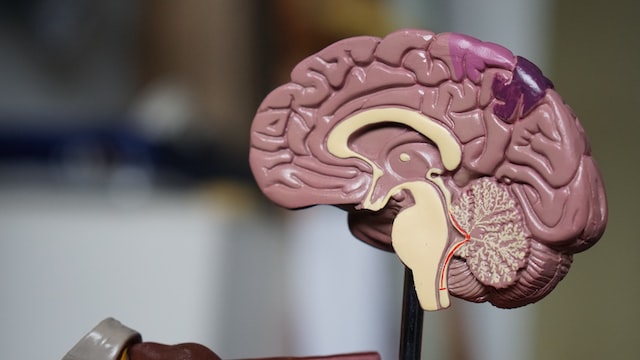
Image from: https://unsplash.com/photos/3KGF9R_0oHs