









































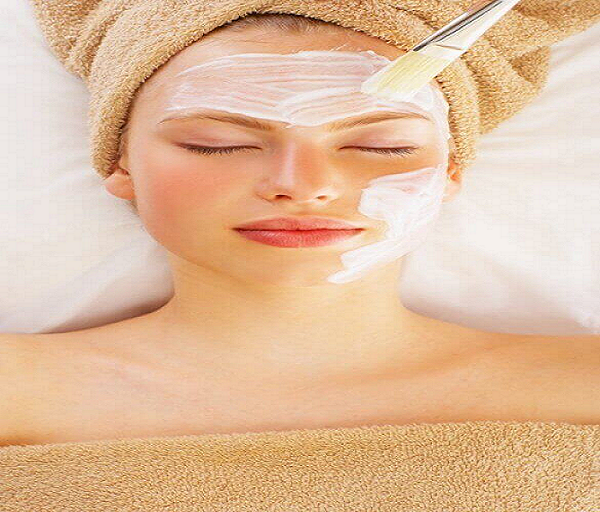
What Collagen Face Masks Can (and Can’t) Do for Your Skin
One of the best words you can pair with skin health is collagen. That’s because the more of it you have, the bouncier, smoother, and fine-line free your face is.
“Collagen is the most abundant protein in the body,” says Rina Allawh, M.D., a board-certified dermatologist with Schweiger Dermatology Group in King of Prussia, PA. “Essentially, these are long, large molecules with chains of amino acids. Together, collagen is responsible for keeping skin strong and firm and plays an important role in wound healing.”
Your body begins to produce less collagen with age—and your skin pays the price. Dr. Allawh tells patients that after age 20, the skin produces 1% less collagen each year. More dramatic visible changes appear in your 30s and 40s, as fine lines and wrinkles begin to creep in.
Because of this, many people choose to add collagen to their diet or beauty routine—say, in the form of a collagen mask. After all, collagen helps skin hold onto water and stay moisturized, giving it that smooth, plump look, Dr. Allawh adds. Why not add it to a hydration-boosting mask for extra oomph, right?
But does applying collagen topically really prompt your skin to make more of the essential protein? We asked dermatologists to set the record straight.
What are collagen masks, exactly?
These are creams, gels, or sheet masks designed to be applied to your face that contain collagen as an ingredient. The idea is that you leave them on skin for a set amount of time and the collagen from the product absorbs into your skin where it works to decrease lines, wrinkles, and sagging.
When applied topically, via a mask, “the concern is whether or not the collagen protein will penetrate the top layer of skin,” Dr. Allawh says. For that reason, she advises looking for a product that contains the ingredients hydrolyzed collagen or collagen amino acids for better absorption. Some collagen masks simply list collagen as an ingredient, which may mean that these products contain molecules that won’t be well absorbed.
Hydrolyzed collagen is more readily absorbed into the top layer of skin because this indicates that the collagen has been broken down into groups or chains of amino acids, which are much smaller. Hydrolyzed collagen also acts as an antioxidant, notes a 2020 review in the journal Antioxidants.
So, as your skin soaks up the amino acids, the idea is that collagen production may increase. “There isn’t a lot of great data out there in the scientific literature about how effective collagen masks are. We know hydrolyzed collagen can penetrate the upper layers of skin to stimulate new collagen in skin, but we still need more studies that analyze how effective this is,” Dr. Allawh says.
However, one small study on 60 middle-aged women published in the Journal of Cosmetic Dermatology found that those who applied a topical hydrolyzed collagen product for one month benefitted from a rise in the moisture content of their skin and greater elasticity compared to a placebo. (Another group consumed oral collagen. After 90 days their pore size decreased.) That said, larger, more conclusive studies are needed to determine the true effectiveness of collagen-infused skincare products.
Do collagen masks have any side effects?
Topical collagen itself is unlikely to be a skin irritator, says Dr. Allawh. But it’s likely that the product you choose will contain additional supporting ingredients to boost the anti-aging results. These may include antioxidants like vitamin C or botanical extracts, and those could cause side effects in certain skin types. Even though these are “natural,” they can be irritating, says Dr. Allawh. Added fragrances may also trigger angry, red skin.
If you apply the collagen mask and feel immediate tingling, burning, or see redness in your skin, she recommends taking it off right away. On the other hand, if you feel a pleasant cooling sensation followed by a gentle tingling, this is more normal.
Make sure you’re reading the directions on the mask and removing it at the recommended time. For best results, Dr. Allawh recommends washing skin first with a gentle face wash (such as Cetaphil or CeraVe), applying the collagen mask treatment, and following up with a thin layer of moisturizer on top.
Do other products effectively boost skin’s collagen?
The gold standard ingredient to stimulate collagen production is a retinoid (or a weaker form called retinol), which is a vitamin A derivative, says Dr. Allawh. Retinoids are proven to be effective in counteracting wrinkles, sagging, discoloration, and rough texture, notes a study in the American Journal of Clinical Dermatology. (Retinoids can be irritating, but an alternative called bakuchiol has been found to work just as well while being gentle on skin.)


