




















Events Calendar

Mon
Tue
Wed
Thu
Fri
Sat
Sun
M
T
W
T
F
S
S
29
30
1
2
3
4
5
7
8
10
11
12
13
14
15
16
17
18
20
22
23
24
25
26
27
28
29
30
31
1
C.D. Howe Institute Roundtable Luncheon
2014-04-28    
12:00 pm - 1:30 pm
Navigating the Healthcare System: The Patient’s Perspective Please join us for this Roundtable Luncheon at the C.D. Howe Institute with Richard Alvarez, Chief Executive Officer, [...]
DoD / VA EHR and HIT Summit
DSI announces the 6th iteration of our DoD/VA iEHR & HIE Summit, now titled “DoD/VA EHR & HIT Summit”. This slight change in title is to help [...]
Electronic Medical Records: A Conversation
2014-05-09    
1:00 pm - 3:30 pm
WID, the Holtz Center for Science & Technology Studies and the UW–Madison Office of University Relations are offering a free public dialogue exploring electronic medical records (EMRs), a rapidly disseminating technology [...]
The National Conference on Managing Electronic Records (MER) - 2014
2014-05-19    
All Day
" OUTSTANDING QUALITY – Every year, for over 10 years, 98% of the MER’s attendees said they would recommend the MER! RENOWNED SPEAKERS – delivering timely, accurate information as well as an abundance of practical ideas. 27 SESSIONS AND 11 TOPIC-FOCUSED THEMES – addressing your organization’s needs. FULL RANGE OF TOPICS – with sessions focusing on “getting started”, “how to”, and “cutting-edge”, to “thought leadership”. INCISIVE CASE STUDIES – from those responsible for significant implementations and integrations, learn how they overcame problems and achieved success. GREAT NETWORKING – by interacting with peer professionals, renowned authorities, and leading solution providers, you can fast-track solving your organization’s problems. 22 PREMIER EXHIBITORS – in productive 1:1 private meetings, learn how the MER 2014 exhibitors are able to address your organization’s problems. "
Chicago 2014 National Conference for Medical Office Professionals
2014-05-21    
12:00 am
3 Full Days of Training Focused on Optimizing Medical Office Staff Productivity, Profitability and Compliance at the Sheraton Chicago Hotel & Towers Featuring Keynote Presentation [...]
Events on 2014-04-28
Events on 2014-05-06
DoD / VA EHR and HIT Summit
6 May 14
Alexandria
Events on 2014-05-09
Latest News

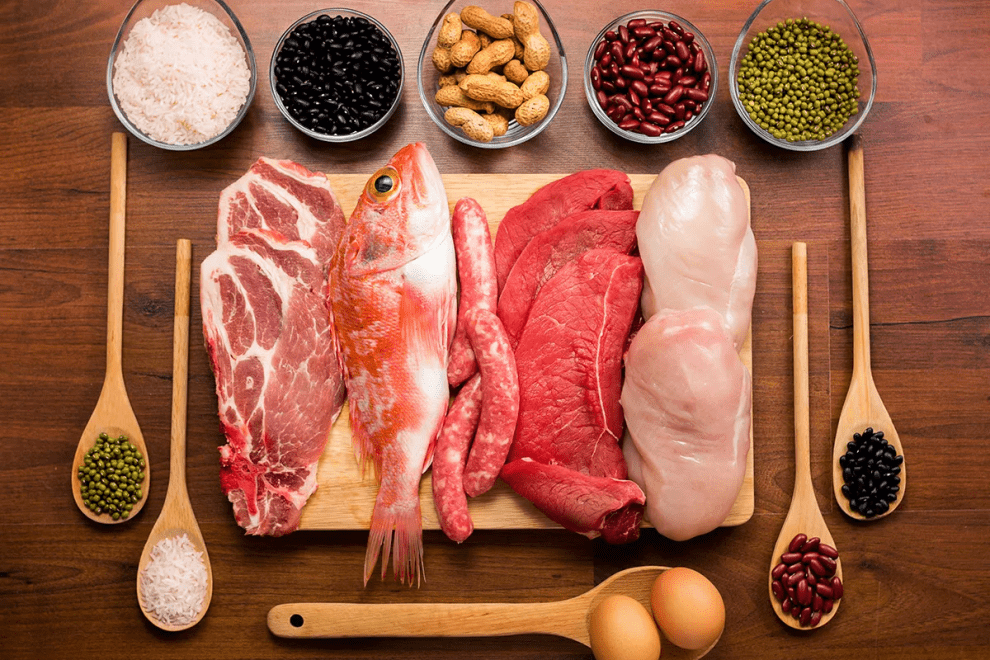
What is the Excessive Protein Intake in a Single Meal?

Protein serves numerous essential functions in maintaining overall bodily health, emphasizing the daily necessity of adequate intake.

However, experts caution that consuming an excessive amount of protein in a single sitting can lead to discomfort. According to Beth Czerwony, RD, a dietitian at Cleveland Clinic’s Center for Human Nutrition, there is a limit to the amount of protein the body can absorb at once.

The definition of what constitutes “too much” protein for one sitting is subjective and varies among individuals. Abby Langer, RD, a dietician in Toronto, stresses the importance of considering factors such as body composition, size, age, sex, activity levels, and medical history when assessing whether someone is consuming an excessive amount of any macronutrient.

Given the possibility of overconsumption, experts advise distributing protein intake throughout the day to facilitate better absorption by the body.

Determining your daily protein needs is crucial for maintaining optimal health. According to Traci McCarthy, PT, DPT, PhD, an exercise physiology instructor at New York University, the recommended dietary allowance (RDA) for protein is 0.8 grams per kilogram of body weight, providing basic support for general life. However, McCarthy notes that this may not be sufficient if you engage in 30 minutes of daily exercise.

For those who are more active, the protein requirement may range from 1.2 to 1.7 grams per kilogram of body weight, as suggested by Traci McCarthy. This higher intake becomes especially important when aiming to build muscle.

Determining the ideal amount of protein to consume in a single sitting remains inconclusive, according to experts. Perri Halperin, MS, RD, CDN, clinical nutrition coordinator at the Mount Sinai Health System, mentioned that while the standard recommendation is 25 to 30 grams of protein per meal, further research is necessary to establish a specific upper threshold for per-meal protein intake.

Similar to the daily protein intake, the quantity of protein required at each meal is influenced by factors such as activity level and body composition goals, as highlighted by experts.


