

























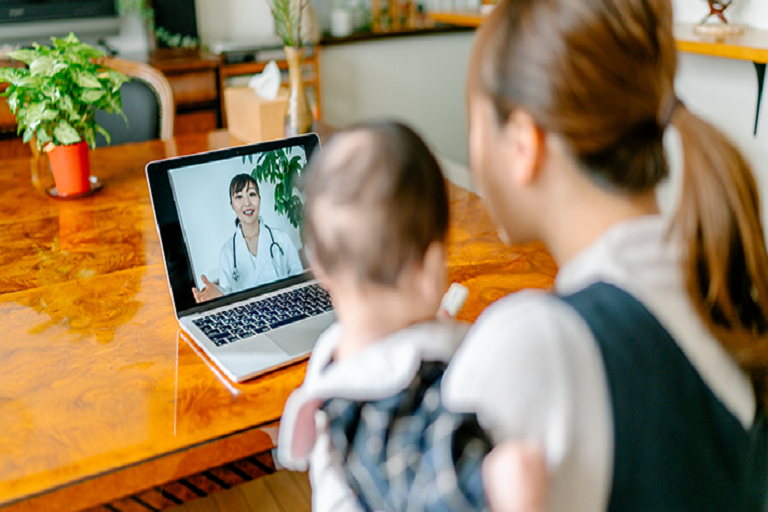
This past week, Centers for Medicare and Medicaid Services Administrator Seema Verma said she “can’t imagine going back” to making beneficiaries return to in-person visits after the agency’s relaxation of telehealth regulations in response to the coronavirus pandemic
Verma’s comments came as industry leaders pushed for two-dozen federal regulatory waivers surrounding telehealth to become permanent, and other new studies have shown notable patient appreciation for what it could mean for their healthcare experience. All this hope for telehealth’s staying power, given the current momentum behind it, raises the question: What will telehealth look like in the long term for both providers and patients? “I think it’s difficult to predict right now,” said Heather Alleva, attorney at Buchanan Ingersoll and Rooney.
Alleva, who focuses on the federal regulation of healthcare providers, payer enrollment and HIPAA compliance, told Healthcare IT News that it’s still too soon to tell how patients will react to loosening coronavirus restrictions. “Some states are still in particular phases,” she said. “I’ve seen a downtick in the number of appointments being made in telehealth. Some people are going back to their in-person appointments.” The coronavirus, she said, has acted as “kind of an unexpected experiment.”
“Providers got to dip their toe in telehealth provision in a way they wouldn’t have had to without major financial considerations in the past,” she said. “It’s not easy for businesses to just try something new.” Though the relaxation of regulatory hurdles by CMS and the Office for Civil Rights around HIPAA has allowed providers to begin implementing telehealth en masse, new challenges have become evident.
“It’s reinvigorated an argument around broadband access,” she said. “It’s great that OCR is waiving HIPAA requirements, but if your patient doesn’t have access to high-speed Internet, so you can’t actually connect in that way, you’re not going to be able to utilize the telehealth.” Other experts have pointed to the need for medical interpreters and the gap in patient access to devices as additional barriers presented by the rise in telehealth.
Whether telehealth is as widely available in the future, Alleva said, depends on the degree to which payers are willing to pay for it – which may not be a given. Verma, for example, hinted that the government may not continue paying at the same rate for virtual visits as for in-person care.
“I think [payers] will choose to continue covering things in the mental health space,” Alleva predicted, especially considering the high rates of anxiety and depression around the country during the pandemic. She pointed to so-called sensitive medical topics – such as sexually transmitted infections, erectile dysfunction and hair loss – as good candidates for telemedicine coverage, as well as dermatology and ophthalmology.
“I’m not so optimistic about prescriptions, especially in the opioid space,” she said. In-person requirements for controlled substance prescriptions “were put in place as a protection.” And, she noted, referring to the ongoing opioid crisis, “we’re still in an epidemic, even in a pandemic.”
When it comes to lasting regulatory changes, “licensure is the biggest one,” said Alleva. During the epidemic, many states created ways for out-of-state providers to get medical licenses in that state; the American Telemedicine Association is pushing for regional compacts along those lines. Another perhaps lesser-appreciated consideration is law around corporate practice of medication. “It’s very arcane, but the concept is a corporation isn’t licensed to practice medicine – it can get complicated in the different states,” said Alleva.
“If you have some type of national provider,” she explained, “you don’t just have the hurdle of making sure physicians are licensed in all 50 states. You also have to make sure the provider is complying with corporate practice of medicine restrictions in different states.” This is an issue in states such as Pennsylvania, for example. Though its border with New Jersey is only a ten-minute drive away from Philadelphia, “some states don’t recognize other states’ professional entities.”
Like other experts, Alleva hypothesized that telemedicine will be a “supplement to care: an additional tool.” Before COVID-19, telemedicine was “underutilized,” she said. “And telehealth during the pandemic was a replacement for all care.” But without in-person care, “kids are going under-vaccinated; people aren’t getting their cancer screenings,” Alleva explained.
Source: https://www.healthcareitnews.com/news/what-sort-staying-power-does-telehealth-really-have


