





































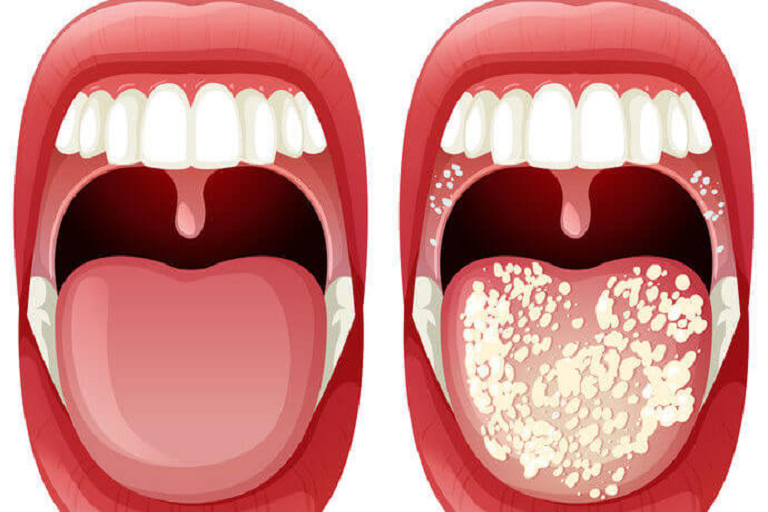
What You Need to Know About Candidiasis of the Mouth, Also Known as Oral Thrush
Taking a round of antibiotics has a slew of weird side effects, like stomach trouble. But one common result you might not hear about? An oral version of a fungal disease called candidiasis.
Candidiasis of the mouth, also known as candida, oral yeast infection, or oral thrush, is a fungal infection in the lining of the mouth characterized by the yeast (a type of fungus) candida, explains Barry S. Zingman, M.D., medical director of the AIDS center and clinical director of infectious diseases at Montefiore Health System, and professor of medicine at Albert Einstein College of Medicine.
It’s unclear exactly how common candidiasis is, because it often goes unreported and there’s no national count for these infections, according to the Centers for Disease Control. But, that doesn’t mean it’s not an uncomfortable issue. To get you some relief, we’re breaking down exactly what you need to know about oral yeast infections, including treatment and prevention.
How do you get candidiasis of the mouth (oral thrush)?
Candida yeast is a very normal part of our bodies, living within our mouth, throats, and intestines. In a healthy person, the candida is kept under control by all the other bacteria living in our bodies, explains Dr. Zingman. But when something throws off the very careful balance of bacteria, suddenly we can get stuck with a dominant species that overgrows. This then leads to symptoms of the overgrown fungus, he says. So, what would cause an imbalance of bacteria?
Using antibiotics
In the same way you can get stomach discomfort from antibacterial medications throwing off your gut microbiota, antibiotics can also affect other bacteria throughout your body. “The most common reason is taking antibiotics by mouth or intravenous. This kills off the good bacteria and allows for yeast to grow because there won’t be that competition for space anymore,” Dr. Zingman says.
An impaired immune system
Anyone with an impaired immune system is at risk because it becomes more difficult to keep the yeast under control, Dr. Zingman says. This includes those with diabetes, cancer, and uncontrolled HIV or AIDS, anyone on immune-suppressing medications, and anyone with immune deficiencies due to a medical procedure like chemotherapy or an organ or stem cell transplant, he says.
Taking an inhaled steroid
Though technically an immune-suppressing drug, inhaled steroids can leave residue in your mouth, allowing yeast to grow. “If a lot of the steroid is deposited in their mouth instead of in their lungs, that suppresses the immune system of the mucus membrane,” Dr. Zingman explains. Many doctors that prescribe inhaled steroids (often for asthma or other lung conditions) will recommend rinsing your mouth after taking the inhaler, he says.
Lacking dental hygiene
If you aren’t brushing your teeth properly, this could leave extra room for bacteria to grow. Particularly people with dentures who haven’t been cleaning them correctly can allow yeast to overgrow and cause an infection, Dr. Zingman says.
Actively breastfeeding
Because babies have weaker immune systems, they’re already predisposed to getting candidiasis, explains Natasha Bhuyan, M.D., regional medical director at One Medical. Both bottle-fed or breastfed babies can get an infection. “This is likely from the infant’s mouth coming into contact with something that contains Candida,” she says. “This can also happen if nipples are cracked or have any growth of Candida.
It’s also important to note that unless you’re also immunocompromised or on antibiotics yourself, it is very unlikely to catch a candidiasis infection from another person. “It’s not significantly contagious,” Dr. Zingman says. “The yeast is a normal part of our bodies. The exposure of someone with candida does not significantly increase our chances of getting it.”
But, it’s likely in your favor to avoid direct contact with someone’s saliva with candidiasis, like kissing. “It’s unlikely to pass from person to person if healthy adults are involved as the immune system will generally control the growth of Candida,” Dr. Bhuyan says.
Symptoms of candidiasis of the mouth
Symptoms can range from mild to extremely severe and painful, explains Dr. Zingman. But some common signs include:
Difficulty eating. The oral discomfort will often cause difficulty eating and swallowing food properly. Additionally, if the candida infection spreads down the esophagus it can make it difficult for food to pass properly, he says.
Slight burning. This most often is felt in the mouth or on, underneath, and around the tongue, Dr. Zingman explains.
White or red marks. People will often notice white marks in their mouths when they’re brushing their teeth or opening their mouths. They can sometimes appear red as well, because they are very inflamed, he says. You can differentiate these white patches from white lesions because they can be easily scraped off the surface, adds Michael D. Turner, D.D.S., M.D., chief of oral and maxillofacial surgery at Mount Sinai Hospital. Trouble breastfeeding. If a baby gets candidiasis, they may have trouble feeding, says Dr. Bhuyan.
Loss of taste. If the infection is covering the nerves on the tongue that allow for taste, it’s common to lose the sense of taste entirely, Dr. Zingman says.
Cracking at the corner of the mouth. A fungal infection can occur at the corners of the mouth that looks dry, red, and cracked, Dr. Turner says.
Sore throat. If the candida infection spreads to the back of the mouth and throat area, this can cause a sore throat, Dr. Zingman adds.
Dry and sticky feeling in the mouth. Patients will often experience this, along with additional discomfort, Dr. Turner says.
How to prevent candidiasis of the mouth
Because the most common cause of candida infections is due to antibiotics, it’s best to only take antibiotics when absolutely necessary, Dr. Zingman says. This means not overtaking antibiotics or taking them in situations you don’t need them, like a viral infection.
Additionally, it’s important to get to the bottom of a recurring infection, by treating the underlying issue, Dr. Bhuyan says. Be sure to see your primary care provider to manage any chronic conditions you have, she notes.
It’s also imperative to practice good oral hygiene by brushing your teeth and any other tools, like dentures, regularly, Dr. Zingman agrees. And if you’re concerned about use of an oral steroid, always be sure to rinse after use, work on your technique with a doctor, or use an extender on the inhalation pump to help get the medication down your lungs instead of settling in your mouth, he says.
In very rare cases where someone is getting a candida infection very often, they may be prescribed antifungal medication as a preventative measure, Dr. Zingman says.


