








































Why Drinking Too Much Caffeine Sets Off Feelings of Anxiety, According to Experts
If you’re anything like me, and the estimated 62% of Americans who drink coffee daily, you not only love the taste—you love the way your cup of joe makes you feel. From the increased focus to the mood boost, coffee’s simply the best.
But like all good things, there’s a flipside: Too much caffeine can make you feel incredibly anxious and stressed.
Caffeine (the world’s most widely-used psychoactive drug) is a stimulant found in coffee, tea, soda, and chocolate. It can also be hiding in some medications and supplements, particularly weight control products. And, of course, in energy drinks, which can contain excessive amounts of caffeine.
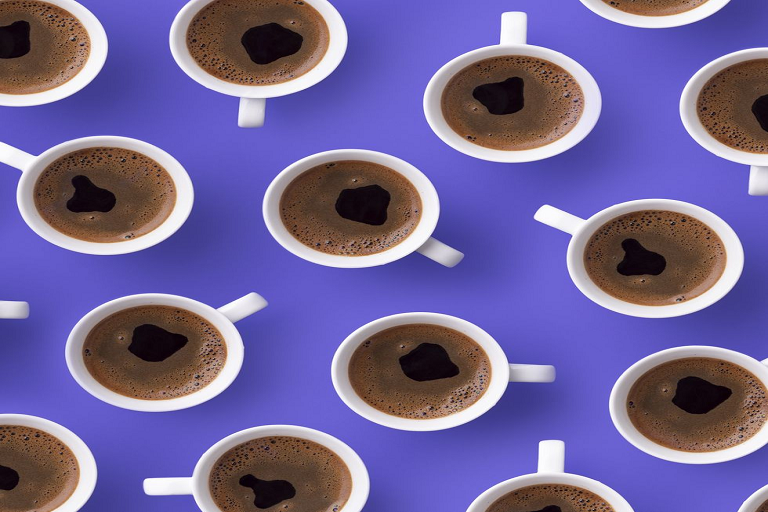
According to the U.S. Food and Drug Administration, caffeine is generally safe in moderate amounts (under 400 milligrams daily) for healthy adults. Coffee, which is how the majority of us get our daily dose, typically contains 80 to 100 milligrams of caffeine per cup. A stronger brew will naturally contain more. Meanwhile, there’s anywhere from 40 to 250 milligrams of caffeine per 8 ounces in energy drinks.
Energy drinks also contain plant-based chemicals that have a stimulatory effect or build upon the available caffeine in the beverage, says James Giordano, Ph.D., a professor in the department of neurology and biochemistry at Georgetown University Medical Center, who warns against mixing coffee with other stimulants.
How does too much caffeine increase stress?
Once caffeine is absorbed in the bloodstream, it passes up to the brain where it blocks chemicals known as adenosines, which cause drowsiness. This increases activity in the brain that stimulates your central nervous system, activating your body’s stress response.
The result is a cascade of chemical reactions, including the release of adrenaline and cortisol (the stress hormone), that prepare your body for “fight or flight.” Not only do you feel more alert, your heart also beats faster, blood flow increases, and muscles tense—all of which can be helpful in small doses.
How does too much caffeine increase stress?
Once caffeine is absorbed in the bloodstream, it passes up to the brain where it blocks chemicals known as adenosines, which cause drowsiness. This increases activity in the brain that stimulates your central nervous system, activating your body’s stress response.
The result is a cascade of chemical reactions, including the release of adrenaline and cortisol (the stress hormone), that prepare your body for “fight or flight.” Not only do you feel more alert, your heart also beats faster, blood flow increases, and muscles tense—all of which can be helpful in small doses.
How to find your caffeine threshold
Since there’s not a one-size-fits-all dose of caffeine for everyone, it’s important to determine your own threshold. The main way to do that is to pay attention to how you feel as you drink coffee or other caffeinated drinks throughout the day.
For me personally, I become anxious and a little weepy in the early afternoon when I’ve overdone it. You may become restless or easily agitated. Someone else may notice that they start tossing and turning throughout the night after that late afternoon Starbucks run.
It definitely takes some level of interoceptive awareness, which is awareness of our own inner body sensations,” explains Wolkin. When you start to feel tense, jittery, and like everything’s sped up—that’s a clue you’ve reached your limit. Take note of how much caffeine you’ve had once those feelings surface and aim to cap your intake before you hit that amount.
But experts warn against quitting cold turkey. The symptoms of caffeine withdrawal are very real and unpleasant, leading to headaches, fatigue, difficulty concentrating, irritability, and even muscle pain.
Giordano recommends gradually tapering off the amount of caffeine you drink in a day, allowing your system to return to normal in a more metered way. If you’re a coffee drinker, the Cleveland Clinic recommends alternating between regular and decaf at first, particularly if the taste of coffee is what you’re really after. (Coffee has a very strong conditioning effect that can act as a placebo due to its smell and taste, says Giordano.)
Try this for at least two to three weeks—gradually bringing down the amount of caffeine you drink in a day—and see what it does for you. This way, you can wean off slowly and return to an amount that feels healthy for you.


