


























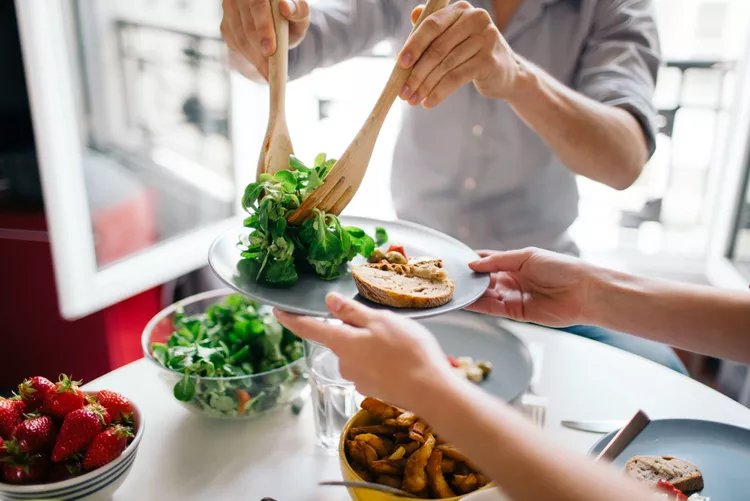
Making these diet changes also does not mean you have to feel hungry. “Portion control doesn’t mean you have to eat tiny portions of everything,” Lisa Young, PhD, author of The Portion Teller Plan: The No-Diet Reality Guide to Eating, Cheating, and Losing Weight Permanently told Health. “You don’t want to feel like you’re on a diet, but you have to eat fewer calories.”
Here are 14 easy ways to help you be aware of your portion sizes and maintain a healthy lifestyle.
Drink a Glass of Water
Drink 16 ounces (a big glass) of water before you eat, recommended Dawn Jackson Blatner, RD, author of The Flexitarian Diet. Filling your stomach with water will naturally make you less likely to overeat, Blatner said.
Plus, some symptoms of dehydration may actually be what’s causing you to feel hungry. When you’re feeling hungry, drink water. Thirst is often confused with hunger, according to the American Academy of Family Physicians, so sipping some water before you eat may eliminate what feels like hunger.
Use Small Plates
One simple way to control the portion of food you put on your plate: Use a smaller plate. A 2015 study, published in Cochrane Database of Systematic Reviews, found that using smaller plates, knives, forks, glasses and other tableware could reduce the amount of food we eat. The researchers from the University of Cambridge also suggested that eliminating larger-sized portions from the diet completely could reduce energy intake by up to 16% among UK adults or 29% among US adults.
Vegetables and Fiber
Bulking up your meals with vegetables is one easy way to cut calories while making you feel full. Spinach, for example, can be used as a sandwich-topper or can add fiber and nutrients to pasta and stir-fries, Blatner said. Other ideas to eat more vegetables include replacing meat with mushrooms, adding diced apples to your oatmeal, and using a whole-wheat pita in place of bread so you can stuff it with more vegetables.
Use Color-Contrasting Dinnerware
The color of your plate may influence how much you eat, according to a 2018 study in Nutrition Journal. The study suggested that if you want to eat less, try using plates that have a color contrast to the food you’re eating for dinner, like pasta with red sauce on a white plate. Or, if you want to eat more of a food, you can use a dish of the same color—you can try eating more green vegetables from a large green plate or bowl, for example. Health likes the Rehabilitation Advantage 3 Compartment Portion Plate with Lid.
Stop Using Carbs as the Main Part of Your Meal
Another good way to reduce the calories you eat is by rethinking the way you use grains and starches. Take a breakfast parfait, for instance. Instead of starting with a granola base, fill your cup with yogurt and then sprinkle just a tiny amount of granola on top for the crunch you crave.
The same principles apply to your other meals, too. First, load up your plate with veggies and a serving of lean protein. Then, add a quarter cup of brown rice or your carbohydrate of choice.
Eat Slower
“Taking your time while eating increases enjoyment and decreases portions,” Blatner said. For example, dim lights and listening to relaxing music set the tone for a more leisurely meal. Remember to chew slowly, put your fork down between bites, and sip water to make your meal last longer.
Try Hard-To-Open Food
Another way to slow down your eating speed includes trying foods that require shelling, peeling, or individual unwrapping, Blatner suggested. Oranges, edamame, and pistachios in their shells are healthy options.
Don’t Eat From the Bag or Box
When you sit down with a bag of chips, you may not pay attention to how much you are eating.
According to a 2021 Nutrients article, people eating snacks from smaller containers ate less compared to people eating from larger packages. This could have happened because people are unaware of serving sizes when eating from the larger package. A smaller container serves as a visual cue for when people have eaten a full portion.
You can apply this logic to snacks, too. If you buy a bag of pretzels or tin of nuts that contains 10 servings, divide the contents into 10 smaller containers ahead of time.
Eat Soup Before Your Meal
Before you dig in to your entrée, have some soup. Though it may seem counterintuitive to add more to your meal, consuming soup could make you feel fuller, similar to water. Additionally, according to a 2021 Obesity Reviews article, harder and more solid textures can help people feel more full. Chunky or viscous soups may be particularly helpful in making you feel sated.
To help you feel full, Young recommended trying a broth-based soup, preferably with veggies for natural fiber.
Browse the Buffet Before You Choose Your Food
In a 2013 study published in PLoS One, researchers observed people at two separate breakfast buffet lines that featured the same seven items: cheesy eggs, potatoes, bacon, cinnamon rolls, low-fat granola, low-fat yogurt, and fruit. One line presented the foods from healthiest to least healthy, while the other line had the order reversed. Regardless of which line they passed through, more than 75% of diners put the first food they saw on their plates; the first three foods they encountered in the buffet made up two-thirds of all the foods they added to their plate.
You can portion the kinds of foods you eat more carefully if you know what is available. Take a stroll around the buffet or dinner table before you serve yourself, Young suggested.
Drink From a Tall Straight Glass
You can have alcohol or a soft drink with your meal, but keep it to one glass and enjoy it slowly, Young suggested. According to a 2020 Scientific Reports article, people drank slower and less from glasses that were straight-edged, compared to outward-sloped.
The American Heart Association (AHA) recommends that you limit your consumption of sugary beverages and just one 12-ounce can of regular soda contains 10 teaspoons of sugar—a full four teaspoons more than what’s recommended for women per day, or one extra teaspoon for men. According to the Dietary Guidelines for Americans, adult women should limit themselves to one drink and adult men two drinks (12 ounces of beer; 5 ounces of wine) or less in a day.
Limit Mealtime Distractions
Turn off the TV, stop working, and put your smartphone away while you eat. Per a 2020 Frontiers in Psychology article, people ate more calories if they used their phones during their meals. Also, consider avoiding using your lunch break to work if you can—a 2019 Nutrients article also found that people felt less sated if they ate while working at a computer.
Think of Easy-to-Remember Visual Cues
One tip nutritionist Cynthia Sass, MPH, likes to use is easy, memorable visual cues for healthy awareness of how much of a food you should be eating. “For example, a golf ball is a pretty typical-sized portion of nuts or dried fruit. A thumb, from where it bends to the tip, is a typical-sized portion for olive oil. A deck of cards in thickness and width is a typical-sized portion of fish, and a tennis ball is a typical-sized portion of fresh fruit,” Sass told Health. “Rather than using these as strict rules for exactly how much to eat, they’re helpful as a starting place.”
End Your Meal With a Healthy Sweet Treat
Many people have expect to eat some type of dessert at the end of a meal, Blatner said. Blatner recommended brewing a flavorful decaf tea like peppermint, cinnamon, chocolate, or a fruity variety to satisfy that expectation. Or, reach for a bowl of fruit or small sweet potato topped with cinnamon and peanut butter.


