


























Events Calendar

Mon
Tue
Wed
Thu
Fri
Sat
Sun
M
T
W
T
F
S
S
27
28
29
30
1
2
3
4
5
6
7
9
11
12
13
14
15
16
18
19
20
21
22
23
25
27
28
29
30
31
1
2
3
4
5
6
Pollution Control & Sustainable 2021
2021-04-26 - 2021-04-27    
All Day
Pollution Control 2021 conference is organizing with the theme of “Accelerating Innovations for Environmental Sustainability” Conference Series llc LTD organizes environmental conferences series 1000+ Global [...]
Food and Beverages
2021-05-05 - 2021-05-06    
All Day
Conference Series LLC Ltd Organizes 3000+Global Events inclusive of 600+ Conferences, 1200+ Workshops and 1200+ Symposiums every year across USA, Europe & Asia with support [...]
Dental Public Health and Dental Diseases
2021-05-08 - 2021-05-09    
All Day
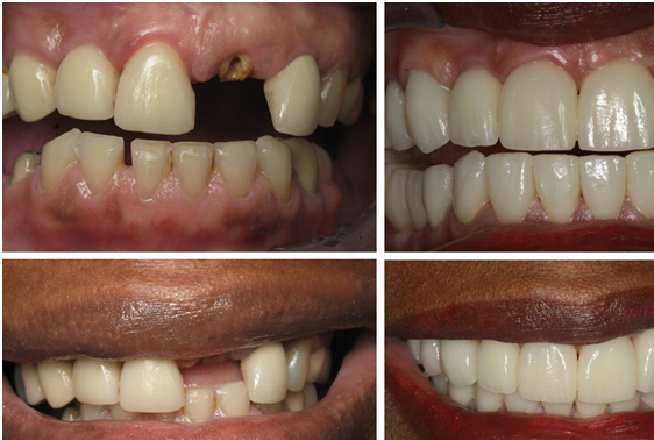
Conference series LLC would like to take the immense pleasure to announce the “ International Conference on Dental Public Health and Dental Diseases” (Dental Public [...]
10 May
2021-05-10 - 2021-05-11    
All Day
Are you planning to start a new business?? Don't have any background?? Want some useful tips from the successful Entrepreneurs then come and participate in [...]
Climate Change and Ecosystem 2021
2021-05-17 - 2021-05-18    
All Day
Conference Series LLC Ltd in conjunction with its institutional partners and whereas Advisory board members are delighted to invite you all to the World Congress [...]
Machine Learning and Deep learning 2021
2021-05-24 - 2021-05-25    
All Day
Looking for a moment to learn something new and need a short break for professional life. Both are possible by attending the Machine Learning 2021 [...]
Artificial Intelligence and Neural Networks
2021-05-24 - 2021-05-25    
All Day
The year 2020 hasn’t turned out the way people expected, we all aware of Covid-19 pandemic. As countries around the world started to open its [...]
Asia Pacific Entrepreneurship Congress
2021-05-26 - 2021-05-27    
All Day
We welcome all the Business Tycoons, Women Entrepreneurs, and enthusiastic youth, Academic Entrepreneurs, Small-scale Industrial People to come and participate in our conference and take [...]
Events on 2021-04-26
Events on 2021-05-05
Events on 2021-05-08
Events on 2021-05-10
Events on 2021-05-17
Events on 2021-05-26
Latest News

20% deceased wrongly marked alive in EHR

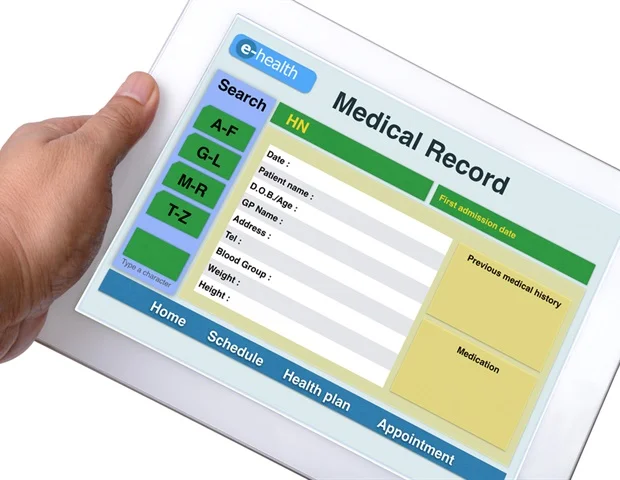
In a Californian healthcare system, nearly 20% of deceased patients were inaccurately labeled as alive in the electronic health record, leading to unnecessary outreach efforts. Researchers identified 676 patients at an academic health care system who were deceased but incorrectly marked as alive. Over 900 letters regarding unmet preventive care needs were sent to these misclassified deceased patients. Neil S. Wenger, MD, MPH, a professor at the University of California, Los Angeles (UCLA), highlighted the issue’s solvability, citing a state database capable of identifying most deceased patients, but current regulations limit its access to financial institutions rather than healthcare institutions.

Wenger and colleagues reported in JAMA Network Open that discrepancies in electronic health records (EHRs) often fail to indicate patient deaths, prompting their investigation into the proportion of active patients inaccurately marked as alive. The study involved analyzing EHRs of 11,698 seriously ill patients from 41 primary care clinics affiliated with UCLA, tracking them for two years or until November 2022. Comparing the EHR alive cohort against the California Department of Public Health Public Use Death File, they found 676 patients (5.8%) erroneously marked as alive in the EHR but deceased in the Death File. Of these patients, 80% had outstanding appointments or encounters, leading to 338 portal messages and 221 telephone calls. Deceased patients also received letters about unmet preventive care needs, mailed correspondence, vaccine and care orders, authorized medications, and maintained active appointments post-death. The researchers highlighted the impact on health management, billing, advanced interventions, and measurement, hindering the health system’s ability to learn from adverse outcomes and implement quality improvements. The study’s limitations include its single health system focus and modest follow-up period. Wenger emphasized that raising awareness may contribute to addressing this issue.


