











































Events Calendar

Mon
Tue
Wed
Thu
Fri
Sat
Sun
M
T
W
T
F
S
S
1
2
3
4
5
6
7
9
11
12
13
14
16
17
19
20
21
27
28
1
2
3
4
5
6
7
Psychiatry and Psychological Disorders
2021-02-08 - 2021-02-09    
All Day
Mental health Summit 2021 is a meeting of Psychiatrist for emerging their perspective against mental health challenges and psychological disorders in upcoming future. Psychiatry is [...]
Nanotechnology and Materials Engineering
2021-02-10 - 2021-02-11    
All Day
Nanotechnology and Materials Engineering are forthcoming use in healthcare, electronics, cosmetics, and other areas. Nanomaterials are the elements with the finest measurement of size 10-9 [...]
Dementia, Alzheimers and Neurological Disorders
2021-02-10 - 2021-02-11    
All Day
Euro Dementia 2021 is a distinctive forum to assemble worldwide distinguished academics within the field of professionals, Psychology, academic scientists, professors to exchange their ideas [...]
Neurology and Neurosurgery 2021
2021-02-10 - 2021-02-11    
All Day
European Neurosurgery 2021 anticipates participants from all around the globe to experience thought provoking Keynote lectures, oral, video & poster presentations. This Neurology meeting will [...]
Biofuels and Bioenergy 2021
2021-02-15 - 2021-02-16    
All Day
Biofuels and Bioenergy biofuel is a fuel that is produced through contemporary biological processes, such as agriculture and anaerobic digestion, rather than a fuel produced [...]
Tropical Medicine and Infectious Diseases
2021-02-15 - 2021-02-16    
All Day
Tropical Disease Webinar committee members invite all the participants across the globe to take part in this conference covering the theme “Global Impact on infectious [...]
Infectious Diseases 2021
2021-02-15 - 2021-02-16    
All Day
Infection Congress 2021 is intended to honor prestigious award for talented Young Researchers, Scientists, Young Investigators, Post-Graduate Students, Post-Doctoral Fellows, Trainees in recognition of their [...]
Gastroenterology and Liver Diseases
2021-02-18 - 2021-02-19    
All Day
Gastroenterology and Liver Diseases Conference 2021 provides a chance for all the stakeholders to collect all the Researchers, principal investigators, experts and researchers working under [...]
World Kidney Congress 2021
2021-02-18    
All Day
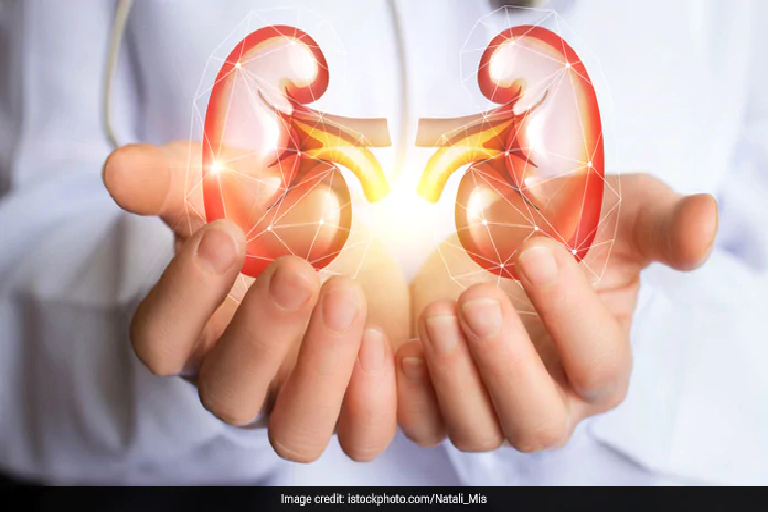
Kidney Meet 2021 will be the best platform for exchanging new ideas and research. It’s a virtual event that will grab the attendee’s attention to [...]
Agriculture & Organic farming
2021-02-22 - 2021-02-23    
All Day
                                                  [...]
Aquaculture & Fisheries
2021-02-22 - 2021-02-23    
All Day
We take the pleasure to invite all the Scientist, researchers, students and delegates to Participate in the Webinar on 13th World Congress on Aquaculture & [...]
Nanoscience and Nanotechnology 2021
2021-02-22 - 2021-02-23    
All Day
Conference Series warmly invites all the participants across the globe to attend "5th Annual Meet on Nanoscience and Nanotechnology” dated on February 22-23, 2021 , [...]
Neurology, Psychiatric disorders and Mental health
2021-02-23 - 2021-02-24    
12:00 am
Neurology, Psychiatric disorders and Mental health Summit is an idiosyncratic discussion to bring the advanced approaches and also unite recognized scholastics, concerned with neurology, neuroscience, [...]
Food and Nutrition 2021
2021-02-24    
All Day
Nutri Food 2021 reunites the old and new faces in food research to scale-up many dedicated brains in research and the utilization of the works [...]
Psychiatry and Psychological Disorders
2021-02-24 - 2021-02-25    
All Day
Mental health Summit 2021 is a meeting of Psychiatrist for emerging their perspective against mental health challenges and psychological disorders in upcoming future. Psychiatry is [...]
International Conference on  Biochemistry and Glyco Science
2021-02-25 - 2021-02-26    
All Day
Our point is to urge researchers to spread their test and hypothetical outcomes in any case a lot of detail as could be ordinary. There [...]
Biomedical, Biopharma and Clinical Research
2021-02-25 - 2021-02-26    
All Day
Biomedical research 2021 provides a platform to enhance your knowledge and forecast future developments in biomedical, bio pharma and clinical research and strives to provide [...]
Parasitology & Infectious Diseases 2021
2021-02-25    
All Day
INFECTIOUS DISEASES CONGRESS 2021 on behalf of its Organizing Committee, assemble all the renowned Pathologists, Immunologists, Researchers, Cellular and Molecular Biologists, Immune therapists, Academicians, Biotechnologists, [...]
Tissue Science and Regenerative Medicine
2021-02-26 - 2021-02-27    
All Day
Tissue Science 2021 proudly invites contributors across the globe to attend “International Conference on Tissue Science and Regenerative Medicine” during February 26-27, 2021 (Webinar) which [...]
Infectious Diseases, Microbiology & Beneficial Microbes
2021-02-26 - 2021-02-27    
All Day
Infectious diseases are ultimately caused by microscopic organisms like bacteria, viruses, fungi or parasites where Microbiology is the investigation of these minute life forms. A [...]
Stress Management 2021
2021-02-26    
All Day
Stress Management Meet 2021 will be a great platform for exchanging new ideas and research. It’s an online event which will grab the attendee’s attention [...]
Heart Care and Diseases 2021
2021-03-03    
All Day
Euro Heart Conference 2020 will join world-class professors, scientists, researchers, students, Perfusionists, cardiologists to discuss methodology for ailment remediation for heart diseases, Electrocardiography, Heart Failure, [...]
Gastroenterology and Digestive Disorders
2021-03-04 - 2021-03-05    
All Day
Gastroenterology Diseases is clearing a worldwide stage by drawing in 2500+ Gastroenterologists, Hepatologists, Surgeons going from Researchers, Academicians and Business experts, who are working in [...]
Environmental Toxicology and Ecological Risk Assessment
2021-03-04 - 2021-03-05    
All Day
Environmental Toxicology 2021 you can meet the world leading toxicologists, biochemists, pharmacologists, and also the industry giants who will provide you with the modern inventions [...]
Dermatology, Cosmetology and Plastic Surgery
2021-03-05 - 2021-03-06    
All Day
Market Analysis Speaking Opportunities Speaking Opportunities: We are constantly intrigued by hearing from professionals/practitioners who want to share their direct encounters and contextual investigations with [...]
Events on 2021-02-08
Events on 2021-02-18
Events on 2021-02-24
Events on 2021-03-03
Events on 2021-03-05
Articles

4 choices for getting Progressively with additional Information

It might be argued that access to more data gives people more ability to make the data say what they want, as in the case of data around which there are conflicting interests such as political campaigns and so on. Another argument is that collecting and storing more data, opens up even more opportunities for that information to be used inappropriately or in ways that may impact privacy and security.

However, if you’re looking to make sense of data by uncovering insights that may help to improve business processes or boost competitive advantage, the general rule of thumb for analytics is that “more actually is more”. Having access to more data simply gives you a more complete picture of your environment and whatever it is you want to observe, analyze or even predict. The key question is what types of additional data do you need, and how can you uncover the patterns?

In most cases, I think there are four types of additional data you can tap into. If you think about your current data sources, for example, you can tap into more historical data, more real-time data, and more frequent or higher resolution data (i.e. at a higher sampling rate such as every hour instead of every day for example), so that’s three additional ways you can enhance what you’re currently collecting where it makes sense to do so. The types of data I’m talking about might include time series data such as stock trades, video surveillance, weather data, sales data, feeds from intelligent sensors and so on.

The fourth option is to tap into additional data sources which may provide additional insights either individually or in combination with your current data sources. The ability to “connect the dots” is a great way to summarize this aspect and was highlighted in a recent testimony by General Alexander, the head of the NSA. Typical additional data sources may be structured or unstructured feeds that help to uncover patterns and provide additional insights. The typical example here is obviously feeds from social media which help provide input on customer sentiment, but which could additionally be leveraged for aspects such as uncovering new product or service opportunities, operational efficiency improvements, market pricing dynamics, and customer satisfaction.

Four options for tapping into additional data from new and existing sources

For every business scenario, your needs will vary, and you’ll want to carefully pick and choose between the various options listed above. For example if we look at historical data, in financial services, access to more historical data can give analysts more information to feed into their predictive models. In healthcare, electronic medical records (EHRs) are capturing massive amounts of clinical data that can be mined for information to improve preventative care and disease treatment. For the typical enterprise this storage of historical data raises important questions about how much data to keep and how much may be useful and relevant for future needs. An addition issue, related to backward compatibility, is ensuring the historical data is stored appropriately so it can be easily accessed in the future. This issue was discussed recently in a Computerworld article covering a speech by Vint Cerf.

In terms of collecting and analyzing more real-time data, this obviously has many scenarios in public sector (e.g. crime prevention, intelligence, traffic flows etc.) and in health care, manufacturing processes and so on. It can also apply to help improve revenues and operational efficiencies in retail where items such as real-time sentiment analysis, sales analysis, and supply chain monitoring can better inform decision makers. A good example is P&G’s business sphere which is an “integration of technology, visualization, and information that enables leaders to drill-down into data to get answers in real-time”. According to P&G, “one supply chain example leveraged supply chain sufficiency models to bring together multiple data points, analytics, and visualizations. This resulted in an inventory reduction of 25% and savings of tens of millions of dollars”.

When we think about more frequent or higher resolution data, this could be a finer sampling rate in terms of a time series or perhaps a higher resolution graphical (spatial) model. As an example, if you’re scheduling work crews on construction sites across a large city such as Chicago, having access to more granular weather forecast data may enable you to keep more crews productive in periods of stormy weather by knowing exactly where the weather may be good or bad.

Finally, tapping into additional data sources to connect the dots and glean new insights is the most commonly cited example around big data analytics. It’s also perhaps the hardest challenge to solve in terms of knowing what to look for. It’s relatively easy to analyze your existing data sources since you already have those feeds and know how to process and interpret them. With new feeds from multiple data sources, the challenge is in knowing where to connect the dots and what the uncovered patterns may actually be telling you. I’m a strong believer that solving these challenges takes more than data scientists alone – it takes a multi-disciplinary team of IT staff, data scientists, and industry domain experts to put in place the right technical underpinnings, including suitable visualization technologies, and then iteratively analyze and interpret the information.

Hopefully, these four options for tapping into additional data from both new and existing sources may get you thinking about how you might further utilize your existing data in addition to the wealth of new data sources you now have access to.


(Source)
