






























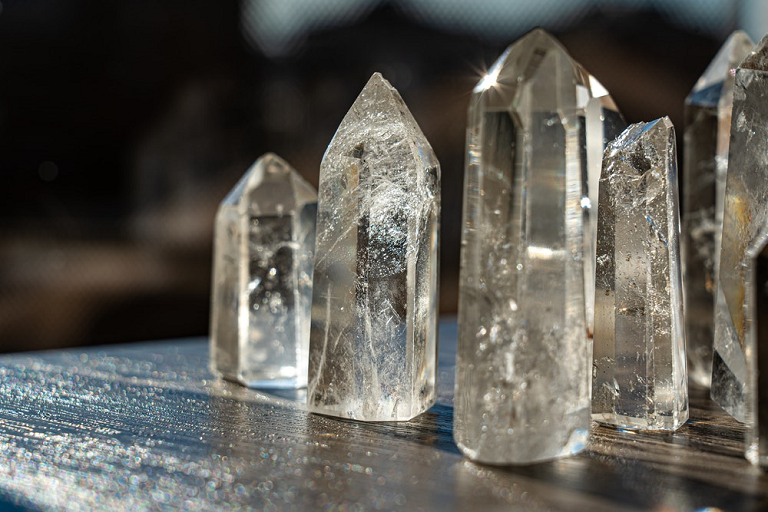
5 Ways Crystals Are Used in Technology
Most people never realize the different components that support the functions of the technologies they use every day. Learning about the importance of tools such as crystals for technology seems challenging.
However, these are important resources that would make it almost impossible to use various important devices today. Fortunately, this guide offers a quick run down into technologies that use crystals:
1. Micro Processors
Microprocessors today are often regarded by many tech-savvy people as high-tech and modern resources. They get such a reputation mainly because of silicon, which is the main component of computer chips.
The silicon in these chips comes from the melting of crystals into liquid form. The microprocessor makers perform this process to make the silicon easy to shape and mold. So, as you read this article, you are probably enjoying the power of crystals in delivering information.
The microprocessor features an electronic circuit that produces electrical signals thanks to the performance of vibrating crystals. The crystals produce a mechanical resonance, which comes from the piezoelectric effect.
While most microprocessors feature different piezoelectric resonators, the most common type would be the quartz crystal. That is because it has unique properties and can suit other functions in the traditional microprocessor.
2. LCD Displays
LCDs are typical devices that also leverage the piezoelectric effect of crystals. There are many LCD types, including those on computer monitors, handheld devices, and various other tools.
Not many people realize that the term LCD refers to Liquid Crystal Display. The term comes from the state of the crystals, which are in liquid form. The liquid state of the crystals makes them perfect for transmitting direct light.
That is why technology makers incorporate them into various types of displays. However, proper recycling of such tech devices is crucial once they exceed their life spans.
3. In Communication Lines
Making telephones calls from your handheld device or the internet sometimes involves fiber-optic resources. These resources feature glass interiors, which are responsible for transmitting light. The light helps to carries information or can offer access to resources such as the internet.
The glass in fiberoptic systems contains more than the traditional heated sand. It also has crystal components, which help improve the cable’s durability and help give it a consistent structure.
Over the past few years, liquid crystal technology has also been essential for various other telecommunication functions. For instance, the military often uses liquid-based crystals because of their ability to transmit information quickly.
The crystals are common in the production of essential communication resources such as high-bit-rate optical switches. You can find beta-barium borate crystals (bbo) crystals made by Gamdan in components like these.
4. Solar Cells
Modern-day solar panels feature crystals that energy experts refer to as perovskites (Puh-RAHV-skytes). These crystals often contain a unique mix of metals and various other components to boost their functionality.
Some of these metals can include bromine and iodine. The makers of solar panels often mix these metals with other ingredients and then convert them to a liquid mixture. The solar panel makers then apply the mixture onto the solar panel surface.
The liquid mixture then dries, and this process leaves behind crystals. The crystals sit in a pattern that makes them excellent conductors of electricity. These are just some of the properties that make crystals a better alternative to the traditional silicon-based types.
5. Ultrasound Machines
Ultrasound machines also feature transducers that have crystal components. The transducers use the piezoelectric effect to produce and absorb sound waves. Usually, the transducer features several crystals to help improve the accuracy of sound waves it can provide.
The crystals work by responding to an electric current, which changes their shape rapidly. Thus, this causes the ultrasound machine to produce outward-going waves. The crystals will produce electrical currents when exposed to pressure or sound waves.
These crystals also function in producing and absorbing sound waves. The transducer features a probe, which can absorb the reflections. It also has other components to help purify the sound waves that are produced.
Crystals are essential in the functions of various technological devices. It’s a component that works using the piezoelectric effect, which machines use for multiple device functions. The crystals are excellent because they provide an effective and convenient solution for such technologies.


