






With increasing frequency and impact, healthcare organizations are implementing EMR systems, such as Epic, to improve patient care and outcomes, drive standardization and reduce variability in clinical practice, accelerate adoption of evidence-based practices, optimize Meaningful Use Incentives, and reduce costs. For greatest success with these initiatives, many organizations are concluding that a successful organizational transformation requires
comprehensive adoption and a synchronized training plan—including training for awareness, super users, end users, and new hires—to ensure:
- On-time implementation schedule
- Awareness, momentum, and buy-in
- Successful adoption
- Competency and confidence
- Timely, reliable, and meaningful analytics
Understand Your Epic/EMR Training Needs
An Epic Enterprise initiative represents an enormous investment of time and resources to ultimately enable an organization to better serve patients. Every Epic Enterprise project requires a “workforce transformation” program that consists of communications, training, and formal adoption efforts. This solution must include:
- A comprehensive adoption and training plan to ensure that the Epic Enterprise project will improve patient care, reduce costs, accelerate adoption of evidence based practice and consistent clinical guidelines, and ensure effective coordination of care across multiple care providers
- A program that will allow the organization to hold to its Epic Enterprise timelines
- A training strategy that provides early training to build awareness and momentum and proceeds with rollout training in lockstep with application rollout
- A blended training program that relies on classroom instruction, coaching, mentoring, online courses, simulations, videos, community functionality, and a train-the-trainer methodology
- Training strategy aligned with change management plans: plans to build momentum by helping staff envision the future. Boost buy-in by articulating the compelling rationale for change, personalize the “vision,” and obtain employee input to help refine and finalize implementation. Plans should be reinforced in training strategies and initiatives.
- An approach to optimize Meaningful Use Incentives: The Medicare and Medicaid EHR Incentive Programs will provide incentive payments to eligible professionals, eligible hospitals, and critical access hospitals (CAHs) as they adopt, implement, upgrade, or demonstrate meaningful
use of certified EHR technology. Training strategies should be designed to help healthcare providers meet and exceed Meaningful Use requirements. - Timely, reliable, and meaningful analytics: Reporting that is easy to generate, monitor, understand, and manipulate. Transparency, accountability, and executive-level insight are all requirements for a successful rollout.
Best Practices for an EMR TrainingRoll-Out
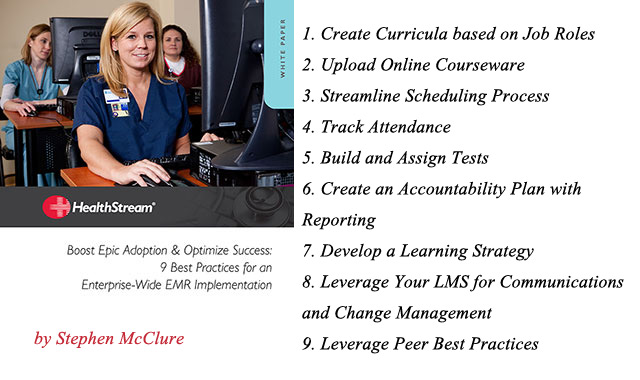
This white paper focuses on 9 Training Best Practices for an Enterprise-Wide EPIC/EMR Implementation. The components it describes in depth include:
- Create Curricula based on Job Roles
- Upload Online Courseware
- Streamline Scheduling Process
- Track Attendance
- Build and Assign Tests
- Create an Accountability Plan with Reporting
- Develop a Learning Strategy
- Leverage Your LMS for Communications and Change Management
- Leverage Peer Best Practices