




























































Events Calendar

Mon
Tue
Wed
Thu
Fri
Sat
Sun
M
T
W
T
F
S
S
1
2
6
7
9
10
11
12
13
14
18
19
20
21
23
27
28
30
12:00 AM - Hepatology 2021
31
1
2
3
4
Heart Care and Diseases 2021
2021-03-03    
All Day
Euro Heart Conference 2020 will join world-class professors, scientists, researchers, students, Perfusionists, cardiologists to discuss methodology for ailment remediation for heart diseases, Electrocardiography, Heart Failure, [...]
Gastroenterology and Digestive Disorders
2021-03-04 - 2021-03-05    
All Day
Gastroenterology Diseases is clearing a worldwide stage by drawing in 2500+ Gastroenterologists, Hepatologists, Surgeons going from Researchers, Academicians and Business experts, who are working in [...]
Environmental Toxicology and Ecological Risk Assessment
2021-03-04 - 2021-03-05    
All Day
Environmental Toxicology 2021 you can meet the world leading toxicologists, biochemists, pharmacologists, and also the industry giants who will provide you with the modern inventions [...]
Dermatology, Cosmetology and Plastic Surgery
2021-03-05 - 2021-03-06    
All Day
Market Analysis Speaking Opportunities Speaking Opportunities: We are constantly intrigued by hearing from professionals/practitioners who want to share their direct encounters and contextual investigations with [...]
World Dental Science and Oral Health Congress
2021-03-08 - 2021-03-09    
All Day
About The Webinar Conference Series LLC Ltd invites you to attend the 42nd World Dental Science and Oral Health Congress to be held in March 08-09, 2021 with the [...]
Euro Metabolomics & Systems Biology
2021-03-08 - 2021-03-09    
All Day
Euro Metabolomics 2021 will be a platform to investigate recent research and advancements that can be useful to the researchers. Metabolomics is a rapidly emerging [...]
International Summit on Industrial Engineering
2021-03-15 - 2021-03-16    
All Day
Industrial Engineering conference invites all the participants to attend International summit on Industrial Engineering during March15-16, 2021 Webinar. This has prompt keynotes, Oral talks, Poster [...]
Digital Health 2021
2021-03-15 - 2021-03-16    
All Day
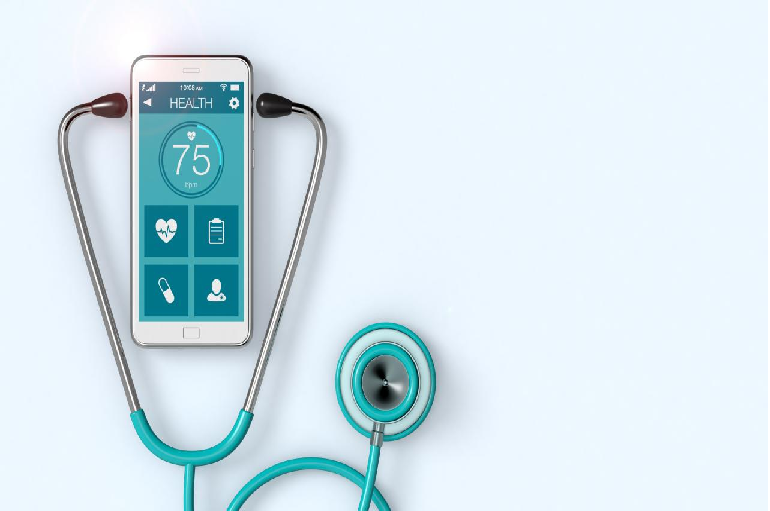
The use of modern technologies and digital services is not only changing the way we communicate, they also offer us innovative ways for monitoring our [...]
Genetics and Molecular biology 2021
2021-03-15    
All Day
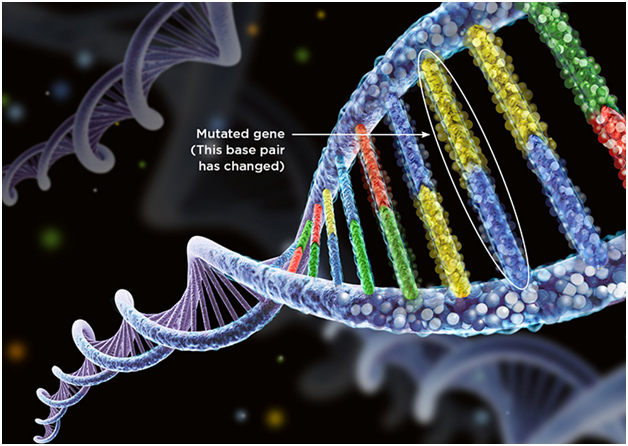
Human genetics is study of the inheritance of characteristics by children from parents. Inheritance in humans does not differ in any fundamental way from that [...]
Food Science and Food Safety
2021-03-16 - 2021-03-17    
All Day
Food Safety. It also provides the premier multidisciplinary forum for researchers, professors and educators to present and discuss the most recent innovations, trends, and concerns, [...]
Traditional and Alternative Medicine
2021-03-16 - 2021-03-17    
All Day
Traditional Medicine 2021 welcomes attendees, presenters, and exhibitors from all over the world. We are glad to invite you all to attend and register for [...]
Carbon and Advanced Energy Materials
2021-03-16 - 2021-03-17    
All Day
Materials Science 2021 was an enchanted achievement. We give incredible credits to the Organizing Committee and participants of Materials Science 2021 Conference. Numerous tributes from [...]
Advancements in Tuberculosis and Lung Diseases
2021-03-17 - 2021-03-18    
All Day
Tuberculosis is a communicable disease, caused by the infectious bacterium Mycobacterium tuberculosis. It affects the lungs and other parts of the body (brain, spine). People [...]
Herbal Medicine and Acupuncture 2021
2021-03-22 - 2021-03-23    
All Day
The event offers a best platform with its well organized scientific program to the audience which includes interactive panel discussions, keynote lectures, plenary talks and [...]
Hospital Management and Health Care
2021-03-22 - 2021-03-23    
All Day
Healthcare system refers to the totality of resource that a society distributes with in organization and health facilities delivery for the aim of upholding or [...]
Hematology and Infectious Diseases
2021-03-22 - 2021-03-23    
All Day
Hematology is the discipline concerned with the production, functions, bone marrow, and diseases which are related to blood, blood proteins. The main aim of this [...]
Aquaculture & Marine Biology
2021-03-24 - 2021-03-25    
All Day
The 15th International Conference on Aquaculture & Marine Biology is delighted to welcome the participants from everywhere the planet to attend the distinguished conference scheduled [...]
Artificial Intelligence & Robotics 2021
2021-03-24 - 2021-03-25    
All Day
The Conference Series LLC Ltd organizes conferences around the world on all computer science subjects including Robotics and its related fields. Here we are happy [...]
Tissue Engineering & Regenerative Medicine
2021-03-24 - 2021-03-25    
All Day
Tissue Engineering & Regenerative Medicine mainly focuses on Stem Cell Research and Tissue Engineering. Stem cell Research includes stem cell treatment for various disease and [...]
Nursing Research and Evidence Based Practice
2021-03-25 - 2021-03-26    
12:00 am
Global Nursing Practice 2021 has been circumspectly organized with various multi and interdisciplinary tracks to accomplish the middle objective of the gathering that is to [...]
Earth & Environmental Science 2021
2021-03-26 - 2021-03-27    
All Day
Earth Science 2021 is the integration of new technologies in the field of environmental science to help Environmental Professionals harness the full potential of their [...]
Earth & Environmental Science 2021
2021-03-26 - 2021-03-27    
All Day
Earth Science 2021 is the integration of new technologies in the field of environmental science to help Environmental Professionals harness the full potential of their [...]
Nanomaterials and Nanotechnology
2021-03-26 - 2021-03-27    
All Day
Nanomaterials are the elements which have at least one spatial measurement in the size range of 1 to 100 nanometre. Nanomaterials can be produced with [...]
Smart Materials and Nanotechnology
2021-03-29 - 2021-03-30    
All Day
Smart Material 2021 clears a stage to globalize the examination by introducing an exchange amongst ventures and scholarly associations and information exchange from research to [...]
World Nanotechnology Congress 2021
2021-03-29    
All Day
Nano Technology Congress 2021 provides you with a unique opportunity to meet up with peers from both academic circle and industries level belonging to Recent [...]
Nanomedicine and Nanomaterials 2021
2021-03-29    
All Day
NanoMed 2021 conference provides the best platform of networking and connectivity with scientist, YRF (Young Research Forum) & delegates who are active in the field [...]
Hepatology 2021
2021-03-30 - 2021-03-31    
All Day
Hepatology 2021 provides a great platform by gathering eminent professors, Researchers, Students and delegates to exchange new ideas. The conference will cover a wide range [...]
Events on 2021-03-03
Events on 2021-03-05
Events on 2021-03-17
Events on 2021-03-25
Events on 2021-03-30
Hepatology 2021
30 Mar 21
Articles News

AI is being used by some physicians to create medical records. What knowledge do you require?

EMR Industry

Consider this. You’ve worked up the nerve to approach a general practitioner about an uncomfortable issue. You take a seat. The doctor states, “I’m using my computer to record my appointments before we start. Because it’s AI, it will compose a letter to the specialist and a summary for the notes. Is that acceptable?
What? Our medical records are written by AI? Why would we desire that?

For safe and efficient medical treatment, records are crucial. Keep accurate records in order to maintain your registration as a clinician. To be recognized, health services must have reliable record-keeping systems. Records are legal documents as well, and they may be crucial in court cases or insurance claims.

However, it takes time to write things down or dictate letters or notes. Clinicians may split their focus during patient visits between maintaining accurate records and communicating with the patient. Clinicians occasionally have to work on records after hours, when their days are already long.

Health care practitioners of all stripes are understandably excited about “ambient AI” and “digital scribes.”

How do digital scribes work?
This isn’t your typical transcription program: Software records a dictated letter word for word.

Not so with digital scribes. They use AI, which is akin to ChatGPT (or occasionally, GPT4 itself) and consists of big language models with generative capabilities.

Using a specialized sensitive microphone or the microphone on a phone, tablet, or computer, the application captures patient-physician conversations in silence. The recording is transformed word for word into a transcript by the AI.

After receiving instructions, the AI system uses the transcript to generate a clinical note and/or letters for other physicians, which are then ready for the clinician to review.

The majority of doctors are not well-versed in these technologies. They are not AI specialists; they are experts in their field. “Let AI take care of your clinical notes so you can spend more time with your patients,” the promotional materials claim.

Imagine yourself as the clinician. One could respond, “Yes, please.”

How are they controlled?
The Australian Health Practitioner Regulation Agency has published a digital scribe best practices code of practice. A fact sheet was released by the Royal Australian College of General Practitioners. Both caution doctors that they are still accountable for the information in their medical records.

While many digital scribes are exempt from regulations, other AI applications are. Thus, it is frequently the responsibility of health services or physicians to determine the efficacy and safety of scribes.

What is the current state of the research?
There is a dearth of real-world data or proof about the effectiveness of digital scribes.

In a ten-week pilot study, researchers tracked 9,000 physicians in a large Californian healthcare system using a digital scribe.

The scribe was liked by certain doctors. They had fewer work hours and improved patient communication. Not even one other began to use the scribe.

Additionally, the scribe made errors, such as noting the incorrect diagnosis or the fact that a test was performed when one should have been performed.

Thus, how must we to handle digital scribes?
The first Australian National Citizens’ Jury on AI in Health Care’s recommendations are a wonderful place to start because they outline what Australians desire from AI in healthcare.

Expanding upon those suggestions, consider the following before visiting the clinic or emergency room regarding digital scribes:

1. If there is a digital scribe in use, you ought to know about it.

2. Only scribes made specifically for medical usage should be employed in medical settings. It is not appropriate to use common, open-source generative AI technologies (such as Google Gemini or ChatGPT) in healthcare settings.

3. You ought to have the option to approve or disapprove the usage of a digital scribe. Any pertinent risks ought to be disclosed to you, and you ought to have the freedom to accept or reject.

4. Strict privacy requirements must be met by clinical digital scribes. Regarding your medical care, you have a right to secrecy and privacy. A clinical note typically contains much less material than the entire transcript of a session. Thus, inquire:

    • Are your appointments’ transcripts and summaries processed in Australia or another nation?
    • How are they protected from prying eyes (are they encrypted, for instance)?
    • To whom are they accessible?
    • What is their purpose (do they train AI systems, for instance)?

    Is human oversight sufficient?
    Artificial intelligence (AI) generative systems are prone to error, fabrication, and misinterpretation of patient accents. However, they frequently convey these mistakes in an extremely convincing manner. Thus, meticulous human verification is essential.

    Insurance and IT companies tell doctors that they should (and should) review every summary or letter. However, it’s not that easy. Overly dependent on the scribe, busy practitioners may just accept the summaries. Clinicians who are worn out or lack expertise may believe that the AI is correct and their memory is flawed, a phenomenon referred to as automation bias.

    Some have proposed that these scribes ought to be qualified to write patient summaries as well. Health records are not our property, but we typically have access to them. Customers may be more inclined to view the information in their health record if they are aware that a digital scribe is being used.

    It has always been the responsibility of clinicians to take notes regarding our humiliating issues. These records’ secrecy, security, privacy, and quality have always been crucial.

    Perhaps in the future, digital scribes will lead to improved contacts with our providers and better records. However, at this time, solid proof that these instruments can function in actual clinics without sacrificing standards of quality, safety, or ethics is required.


