



































Amazing Charts, LLC, a leading developer of Electronic Health Record (EHR) and Practice Management (PM) systems for physician practices, today issued five health IT predictions for 2017.
#1 Telemedicine will no longer be futuristic. Contrary to popular belief, telemedicine does not necessarily mean live video conferencing with a physician halfway across the country who lacks a full picture of the patient’s health status. Patients would rather receive “low tech” remote care from a local primary care physician they already know.
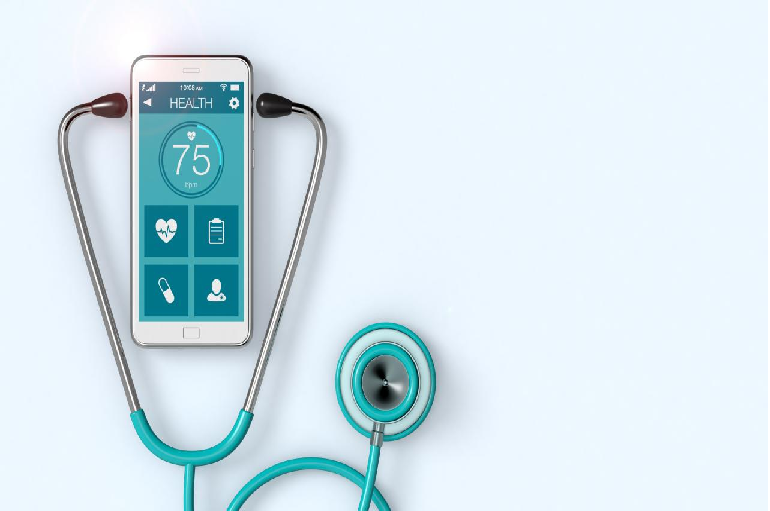
Telemedicine happens whenever an EHR system adds to a patient’s clinical chart the messages, pictures, or videos sent securely via smartphone. Use of smartphones for telemedicine will further increase with the introduction of add-on hardware for real-time collection of biometric data such as temperature, blood pressure and pulse.
This trend will be fueled by the expansion of reimbursement for non-face-to-face services. Medicare’s new billing code for Chronic Care Management is just one example of how the future of value-based care is not about 15-minute office visits, but instead keeping patients out of the office with follow-up phone calls about medications and answering patient questions via text.
#2 Practices will focus on reengineering patient access. As part of Medicare’s new Quality Payment Program, the Merit-based Incentive Payment System (MIPS) is designed to encourage providers to expand patient access with “practice improvement activities,” such as same-day appointments for urgent needs, longer office hours, and after-hours clinician advice.
Physicians also want to shift the responsibilities such as appointment scheduling from the office staff to the patient. Delegating that type of chore to the patient saves the staff time; and, patients not only don’t mind doing the work, they perceive value in self-service options that give them total control.
While tablet-based patient intake solutions have not become widespread because the hardware is costly and requires complex systems integration, simple web forms and PDF attachments can get the job done just as well.
#3 Physicians will get financially creative. A host of factors is pushing independent physicians to be more financially creative. These include the frustrations of making claims to insurance carriers, the new Medicare fee-for-value payments creating uncertainty in gauging reimbursement levels, and burnout with the “corporate medicine” model of seeing dozens of patients each day for lower fees.
One example of financial creativity is the direct care model which establishes a financial relationship between patient and provider, cutting out the middleman of insurance payers. This model includes concierge and direct primary care, where patients become members who pay a fixed monthly fee for unlimited care. There are also a growing number of cash-only practices for walk-in and urgent care.
Beleaguered small practices under financial stress are also looking for novel ways to generate cash. The new rules allowing reimbursement of telemedicine and other non-face-to-face services will encourage physicians to bill for activities they were already doing for free, such as phone calls with patients to discuss medications.
#4 Physicians will opt out of Medicare thanks to MACRA. Like all well-intentioned laws, The Medicare Access and CHIP Reauthorization Act of 2015 (MACRA) will have unintended consequences. Some providers in small independent practices will either opt-out of Medicare entirely, or decline to accept new Medicare patients if they currently fall below the threshold for exemption (less than $30,000 in Part B billings or 100 Part B patients).
To ease small practices into MACRA, the Final Rule issued by the Centers of Medicare & Medicaid Services (CMS) relaxed many of the requirements for 2017. By 2018, however, MACRA starts to impose more financial risk and stricter reporting requirements with less clarity around the return on investment. Small practices might just drop Medicare altogether and transition to a direct-care practice based on cash, membership, or a hybrid (see prediction #3 above).
#5 EHRs will become more interoperable. The next certification cycle from the Office of the National Coordinator for Health Information Technology (ONC) positions the EHR as a secure repository, allowing certified ancillary tools to be “snapped” into it. This will be driven by a new Application Programming Interface (API) called Fast Healthcare Interoperability Resources (FHIR). FHIR is a more granular way to exchange data without the rigid workflow of traditional Health Level Seven International (HL7).


