






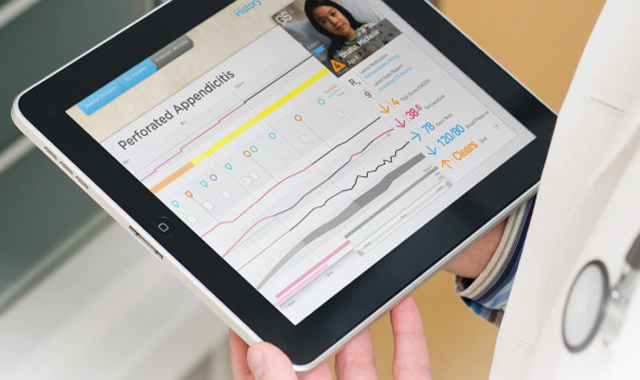
With new technologies, we are able to generate and gather a lot of electronic health data – but that data is useful only if we can effectively tap into its potential. That means finding efficient ways of gathering and organising the massive amounts of information it’s possible to gather through electronic means. If we can accomplish this, there is big potential for so-called Electronic Health Records (EHR) to support healthcare research and clinical trials. This is the goal of the EHR4CR project (Electronic Health Records for Clinical Research) which aims to work towards an electronic platform that will allow clinicians and researchers to easily access patient data in a way that is compliant with data privacy, ethical and legal policies.
Last week saw the event “Enriching the Opportunities for Clinical Research in European Hospitals: the EHR4CR Platform” take place in Brussels. The event outlined the progress that the EHR4CR project is making towards the deployment of EHR enabling clinical research in Europe. This video explains EHR4CR’s goals – and the significance of eHealth Records in general – in greater detail.
I believe the EHR4CR initiative offers a valuable contribution to our discussion on data in research. These days, research isn’t restricted to the laboratory, and it’s not just scientists in white lab coats who are involved. More and more, practicing doctors, patients, and other healthcare stakeholders are getting involved in research and development (R&D). Doctors and patients can contribute significantly with the generation of “real world” data, for instance by providing information about a patient’s interaction with a specific medicine.
The EHR4CR project reflects the increasing diversity we are seeing in R&D, as the platform involves hospitals, the pharmaceutical industry, academia, and technical service providers. In fact, even the framework behind the project reflects the increased openness we are seeing in R&D: EHR4CR is partially supported by the Innovative Medicine Initiative, IMI, a public-private partnership between the European Commission and EFPIA.
Thanks to a collaborative spirit that brings together diverse stakeholders from industry, research, academia, and more, many of IMI’s data-driven projects are seeing success. The NEWMEDS project, for instance, has created the largest known database of studies on schizophrenia, which make it possible to improve clinical trials amongst others. Meanwhile, the GETREAL project is working to incorporate real life clinical data into drug development. EMIF brings together 57 partners (academic, industrial and patients) to work together towards a common information framework of patient-level data. The aim is to facilitate access to diverse medical and research data sources in order to open up new avenues of research.
What makes IMI and such projects noteworthy is the fact that IMI not only seeks to advance research, but also to ensure that research actually results in tangible benefits for patients. This will be an even greater focus of IMI2, the second Innovative Medicines Initiative. Taking the World Health Organization’s Report on Priority Medicines for Europe and the World as a point of departure, IMI2 aims to deliver tools, methods, prevention and treatment options that will progress not only research, but the ultimate delivery of that research’s outputs to patients.
Such a mentality is exemplified by this week’s EHR4CR conference, which focussed on examining how to bring electronic health records to European Hospitals. With such initiatives, EHR4CR is championing a collaborative agenda and a look beyond the laboratory, at how research can be implemented in and have impact on the real world. This is something we need to see more of and, with initiatives like IMI2 on the horizon, I am confident we will. Source