





























How analytics are changing health care
There is more to federal health IT than HealthCare.gov. And as agencies grapple with public health research and the care of their patient populations, innovators outside government are showing what’s possible with improved electronic health records (EHRs) and predictive analytics.
Take, for example, congestive heart failure, a disease that afflicts more than 5 million Americans and yet can be prevented if underlying causes are caught and addressed early. Dr. Stephen Morgan, senior vice president and chief medical information officer at Carilion Clinic, has modeled medical and claims data from 500,000 patients over three years to identify 8,500 undiagnosed individuals at risk for the disease.
“We could better understand the populations at risk because we are already moving from episodic care to population-based care,” Morgan said, adding that the next step is to feed that information back into EHRs so that doctors can choose appropriate treatment protocols.
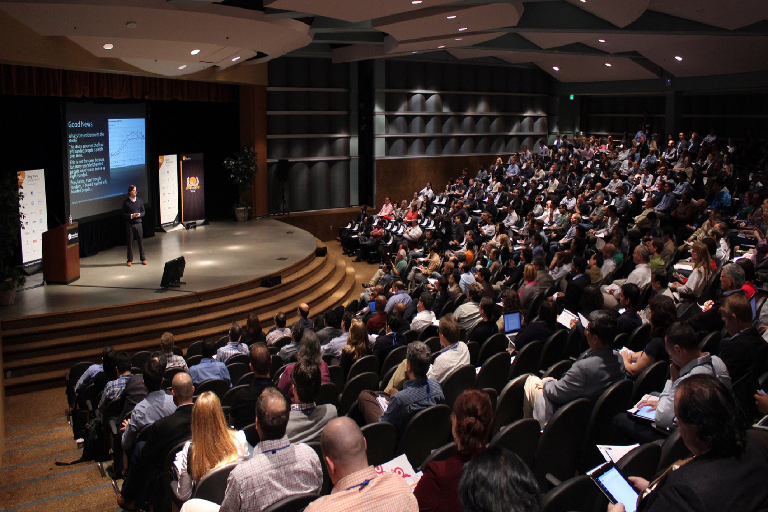
Morgan and other medical experts discussed the potential benefits and current challenges of EHRs and predictive medical analysis at the April 24 Federal Healthcare Forum in Washington. (The event was produced by 1105 Media, FCW’s parent company, and sponsored by IBM, an active player in the health IT market.) The discussion comes as the Defense Department in particular is increasing its focus on EHRs; the DOD Healthcare Management Systems Modernization program office recently issued a request for information on the minimum infrastructure requirements for a departmentwide system.
Predictive analysis can also be used to prevent mental health lapses that have been blamed for numerous mass shootings. John Bardi, vice president of government affairs at Otsuka America Pharmaceutical, said there are indicators, such as incarceration and homelessness, that precede such instances of gun violence.
“The possibility [exists] of eventually getting ahead of crises for those who suffer from these illnesses before the crises happen,” Bardi said.
So if predictive analytics and EHRs can transform the way health care is delivered, why aren’t they more widespread?
Dr. Peter Greene, the chief medical information officer at Johns Hopkins Medicine, said the technology’s complexity is a major hurdle for medical professionals.
“I explained to clinicians that I would rather teach you to do a median sternotomy than to teach you everything you need to know about Epic,” Greene said, referring to popular EHR software. He said the complexity of the medical systems is what makes them so dynamic, but at the same time, the technology needs to be harnessed with doctors, nurses and patients in mind.


