



























































Events Calendar

Mon
Tue
Wed
Thu
Fri
Sat
Sun
M
T
W
T
F
S
S
1
2
6
7
9
10
11
12
13
14
18
19
20
21
23
27
28
30
12:00 AM - Hepatology 2021
31
1
2
3
4
Heart Care and Diseases 2021
2021-03-03    
All Day
Euro Heart Conference 2020 will join world-class professors, scientists, researchers, students, Perfusionists, cardiologists to discuss methodology for ailment remediation for heart diseases, Electrocardiography, Heart Failure, [...]
Gastroenterology and Digestive Disorders
2021-03-04 - 2021-03-05    
All Day
Gastroenterology Diseases is clearing a worldwide stage by drawing in 2500+ Gastroenterologists, Hepatologists, Surgeons going from Researchers, Academicians and Business experts, who are working in [...]
Environmental Toxicology and Ecological Risk Assessment
2021-03-04 - 2021-03-05    
All Day
Environmental Toxicology 2021 you can meet the world leading toxicologists, biochemists, pharmacologists, and also the industry giants who will provide you with the modern inventions [...]
Dermatology, Cosmetology and Plastic Surgery
2021-03-05 - 2021-03-06    
All Day
Market Analysis Speaking Opportunities Speaking Opportunities: We are constantly intrigued by hearing from professionals/practitioners who want to share their direct encounters and contextual investigations with [...]
World Dental Science and Oral Health Congress
2021-03-08 - 2021-03-09    
All Day
About The Webinar Conference Series LLC Ltd invites you to attend the 42nd World Dental Science and Oral Health Congress to be held in March 08-09, 2021 with the [...]
Euro Metabolomics & Systems Biology
2021-03-08 - 2021-03-09    
All Day
Euro Metabolomics 2021 will be a platform to investigate recent research and advancements that can be useful to the researchers. Metabolomics is a rapidly emerging [...]
International Summit on Industrial Engineering
2021-03-15 - 2021-03-16    
All Day
Industrial Engineering conference invites all the participants to attend International summit on Industrial Engineering during March15-16, 2021 Webinar. This has prompt keynotes, Oral talks, Poster [...]
Digital Health 2021
2021-03-15 - 2021-03-16    
All Day
The use of modern technologies and digital services is not only changing the way we communicate, they also offer us innovative ways for monitoring our [...]
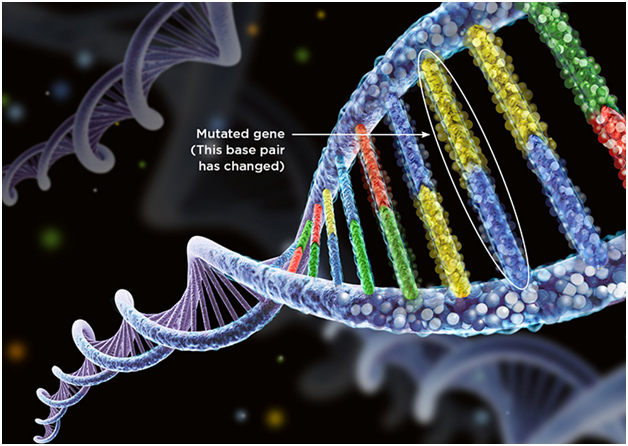
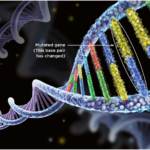
Genetics and Molecular biology 2021
2021-03-15    
All Day
Human genetics is study of the inheritance of characteristics by children from parents. Inheritance in humans does not differ in any fundamental way from that [...]
Food Science and Food Safety
2021-03-16 - 2021-03-17    
All Day
Food Safety. It also provides the premier multidisciplinary forum for researchers, professors and educators to present and discuss the most recent innovations, trends, and concerns, [...]
Traditional and Alternative Medicine
2021-03-16 - 2021-03-17    
All Day
Traditional Medicine 2021 welcomes attendees, presenters, and exhibitors from all over the world. We are glad to invite you all to attend and register for [...]
Carbon and Advanced Energy Materials
2021-03-16 - 2021-03-17    
All Day
Materials Science 2021 was an enchanted achievement. We give incredible credits to the Organizing Committee and participants of Materials Science 2021 Conference. Numerous tributes from [...]
Advancements in Tuberculosis and Lung Diseases
2021-03-17 - 2021-03-18    
All Day
Tuberculosis is a communicable disease, caused by the infectious bacterium Mycobacterium tuberculosis. It affects the lungs and other parts of the body (brain, spine). People [...]
Herbal Medicine and Acupuncture 2021
2021-03-22 - 2021-03-23    
All Day
The event offers a best platform with its well organized scientific program to the audience which includes interactive panel discussions, keynote lectures, plenary talks and [...]
Hospital Management and Health Care
2021-03-22 - 2021-03-23    
All Day
Healthcare system refers to the totality of resource that a society distributes with in organization and health facilities delivery for the aim of upholding or [...]
Hematology and Infectious Diseases
2021-03-22 - 2021-03-23    
All Day
Hematology is the discipline concerned with the production, functions, bone marrow, and diseases which are related to blood, blood proteins. The main aim of this [...]
Aquaculture & Marine Biology
2021-03-24 - 2021-03-25    
All Day
The 15th International Conference on Aquaculture & Marine Biology is delighted to welcome the participants from everywhere the planet to attend the distinguished conference scheduled [...]
Artificial Intelligence & Robotics 2021
2021-03-24 - 2021-03-25    
All Day
The Conference Series LLC Ltd organizes conferences around the world on all computer science subjects including Robotics and its related fields. Here we are happy [...]
Tissue Engineering & Regenerative Medicine
2021-03-24 - 2021-03-25    
All Day
Tissue Engineering & Regenerative Medicine mainly focuses on Stem Cell Research and Tissue Engineering. Stem cell Research includes stem cell treatment for various disease and [...]
Nursing Research and Evidence Based Practice
2021-03-25 - 2021-03-26    
12:00 am
Global Nursing Practice 2021 has been circumspectly organized with various multi and interdisciplinary tracks to accomplish the middle objective of the gathering that is to [...]
Earth & Environmental Science 2021
2021-03-26 - 2021-03-27    
All Day
Earth Science 2021 is the integration of new technologies in the field of environmental science to help Environmental Professionals harness the full potential of their [...]
Earth & Environmental Science 2021
2021-03-26 - 2021-03-27    
All Day
Earth Science 2021 is the integration of new technologies in the field of environmental science to help Environmental Professionals harness the full potential of their [...]
Nanomaterials and Nanotechnology
2021-03-26 - 2021-03-27    
All Day
Nanomaterials are the elements which have at least one spatial measurement in the size range of 1 to 100 nanometre. Nanomaterials can be produced with [...]
Smart Materials and Nanotechnology
2021-03-29 - 2021-03-30    
All Day
Smart Material 2021 clears a stage to globalize the examination by introducing an exchange amongst ventures and scholarly associations and information exchange from research to [...]
World Nanotechnology Congress 2021
2021-03-29    
All Day
Nano Technology Congress 2021 provides you with a unique opportunity to meet up with peers from both academic circle and industries level belonging to Recent [...]
Nanomedicine and Nanomaterials 2021
2021-03-29    
All Day
NanoMed 2021 conference provides the best platform of networking and connectivity with scientist, YRF (Young Research Forum) & delegates who are active in the field [...]
Hepatology 2021
2021-03-30 - 2021-03-31    
All Day
Hepatology 2021 provides a great platform by gathering eminent professors, Researchers, Students and delegates to exchange new ideas. The conference will cover a wide range [...]
Events on 2021-03-03
Events on 2021-03-05
Events on 2021-03-17
Events on 2021-03-25
Events on 2021-03-30
Hepatology 2021
30 Mar 21
Articles

Are We Working to Improve Healthcare or Health?

improve healthcare

By Irv Lichtenwald, president and CEO of  Medsphere Systems Corporation, the solution provider for the CareVue electronic health record.

I’m not sure what the relevant analogy might be, but I’ll take a shot, nonetheless.

Let’s say we poured billions of dollars into improving highways and city streets, but the local commute for residents continued to get longer, more frustrating, less effective.

Or, maybe we also dumped billions into school systems, but student test scores only got worse.

I ask if these comparisons are relevant after reading about a recent study published in the Lancet, which suggests that poor diet and lack of exercise kill more people globally every year than even smoking, the go-to bogeyman for all negative health indicators. For all the truckloads of cash we continue to push toward improving medical technology and technique, building different organizational structures and making Crocs mandatory healthcare footwear, the biggest bang for the buck remains diet and exercise.

How unsexy is that?

What the evolution of transportation, education and healthcare in the United States all demonstrate is that more money does not equal better overall outcomes. It’s not like this is a recent revelation.

“The United States spends more on health care than any other nation in the world, yet it ranks poorly on nearly every measure of health status. How can this be? What explains this apparent paradox?,” asked Steven A. Schroader, MD, in a 2007 New England Journal of Medicine article. “The two-part answer is deceptively simple — first, the pathways to better health do not generally depend on better health care, and second, even in those instances in which health care is important, too many Americans do not receive it, receive it too late, or receive poor-quality care.”

Schroader is telling us that we’ve equated better healthcare with better health when we should be looking at better choices/options and access to necessary care as the essential keys to a healthier population.

What would that look like in practice? More focus on population health and universal health insurance and less on perfecting physicians using carrots and sticks.

Instead we have a healthcare system that asks physicians to click hundreds of boxes with little evidence that the constant clicking creates better outcomes. Indeed, one could argue that our current goal of improving the provision of care is misplaced, making the strategy (clicks) used to get there irrelevant.

“For starters, we know that 70 percent to 90 percent of health outcomes are determined by socioeconomic and lifestyle factors,” writes W. Ryan Neuhofel, DO, MHP. “Appropriate health care, particularly primary care, can tilt the odds toward better outcomes through medical intervention, lifestyle guidance, and advocacy. Primary care can improve individual lives and help budgets by reducing the likelihood of more expensive downstream care.”

This is not to say that healthcare shouldn’t be working to improve by eliminating errors and making it easier to identify the most appropriate patient treatment. But the greatest improvement for the greatest number of patients/citizens is in thousands of daily choices that don’t directly involve a doctor.

Looking again at the study in the Lancet, researchers found that citizens of countries that follow a Mediterranean diet—whole grains, fruits and vegetables, heart-healthy fats and small amounts of lean protein—are the healthiest. Israel came in first, followed by France (no, they don’t eat triple-cream brie, baguette and Bordeaux at every meal) and Spain. The U.S. ranked number 43.

According to study estimates, we can attribute 3 million global deaths annually to too much salt, another 3 million to too few whole grains, and still 2 million more to not enough fruit.

Perhaps, America is just too much about the specific. We’re working to develop personalized medicine. We dream of individual genetic profiles and miraculous stem cell therapies. We’re trying to develop healthcare IT systems that are customizable to the particular needs of the clinician.

Again, these efforts are not inherently bad, but neither are they the keys to improving health for wide swaths of the public any more than is a strict blueberry diet.

“I love blueberries, wild and cultivated, but they are a fruit like any other,” writes professor and author Marion Nestle. “Their antioxidants may counteract the damaging actions of oxidizing agents (free radicals) in the body, but studies of how well antioxidants protect against disease yield results that are annoyingly inconsistent. When tested, antioxidant supplements have not been shown to reduce disease risk and sometimes have been shown to cause harm.”

Like blueberries and the human body, healthcare IT systems are not a cure for all that ails the body medical. We’ll eventually develop EHRs that doctors like to use, but if they don’t somehow create unforeseen behavioral changes en masse, the health of the general American populace will remain stubbornly in the 40s on a global scale.

Where linked computer systems really excel, however, is in the collection of large amounts of data and identification of trends. Sure, an EHR may remind Dr. Smith that Mrs. Jones is allergic to penicillin, and that will be great for Mrs. Jones and for Dr. Smith but will do little for overall health and mortality rates.

So, healthcare IT platforms have to remind Dr. Smith of crucial information about Mrs. Jones AND collect information to be used for information campaigns, vaccination efforts and resource allocation decisions. They need to alert an ER doc to this particular patient’s opiate addiction AND public health officials of a spike in measles cases. Integrated IT systems can also provide data on social determinants of health like income and family situation, which reliably predict illness across communities.

These systems need to contribute to making both healthcare and health better, but they’re virtually powerless absent good policy, effective implementation and comprehensive education.

Improvements in health and reductions in healthcare costs will come from several different inputs, including sound public health policy, preventive care, comprehensive insurance coverage, better personal choice and integrated healthcare IT.

In absence of these complementary factors, we’re left to hope that those blueberries really are a miracle cure.


