






























































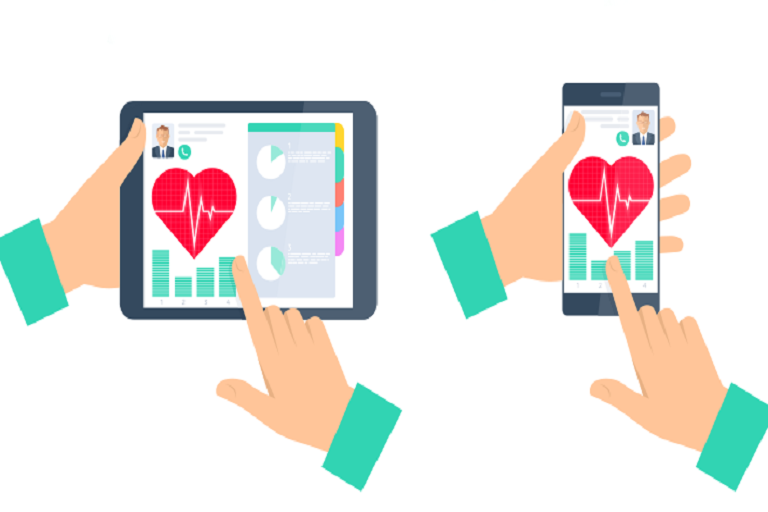
A recent estimate by consulting firm McKinsey suggests that $250 billion in healthcare spending could shift to virtual care models in the wake of the COVID-19 pandemic. Notwithstanding the dramatic headline, there is no disputing that we are directionally headed towards a significant shift in the way care is delivered. If anything, the actual shift in spend could be much higher.
A study by non-profit group FAIR Health suggests a 4,000% increase in telehealth claims across the country. My work with healthcare enterprises suggests that 80-90% of all outpatient visits could become “virtualized” in some way.
The rapid upscaling of virtual care capacity and the mainstreaming of telehealth have given rise to new digital health tools. Self-triaging and contact tracing for COVID-19 infection detection are among the new breed of digital health applications that startups to big firms alike were looking at to seize the emerging opportunities. Telehealth is here to stay. Healthcare is shifting to virtual care models. Digital front door apps are all the rage. What else is emerging that could change the way we experience care?
The reality check on telehealth and COVID-19
Three months on from the peak of the pandemic, the panic has subsided – somewhat. Healthcare enterprises that rapidly built up virtual care through ready-to-deploy consumer technologies are looking closely at the suitability of the platforms for enterprise-level scaling.
Many health systems that permitted the use of consumer technologies such as Zoom and Skype in the interest of expediency during the pandemic are carefully reviewing their platform choices. The good news for telehealth is that the reimbursement environment has improved, with the Center for Medicare and Medicaid Services bringing telehealth and eVisits on par with in-person visits for the duration of the pandemic, along with a relaxing of rules for virtual consults across state lines.
The future of telehealth seems assured. A recent survey by the Association of Community Health Plans also indicates that nearly 90% of consumers who used telehealth for accessing care were satisfied with their experience.
While existing players in the telehealth space are doubling down on their investments to respond to the skyrocketing demand, other tech firms, for their part, have launched “COVID-19” apps in a characteristically opportunistic way, much as they did with “AI-enabled” solutions before the pandemic. A recent study of more than 50 COVID-19 apps globally found that most were vague about privacy protections on the data collected from consumers using these apps.
In some ways, COVID-19 has become another marketing slogan for tech firms. As the Chair of Medicine of a large New York health system told me, too many companies are jumping into the COVID opportunity, and there is a lot of confusion, making it even more difficult to select the right platforms.
Digital health in a post-pandemic era
While telehealth is now the de facto mode of accessing healthcare for most low-acuity and routine care needs, a number of related technology-led trends are quietly gaining ground as well. I discuss a few of these and their potential impact on healthcare consumer experiences.
The rise of “contactless” experiences
As it often happens with major catastrophic events, natural or human-made, many societal practices change irreversibly. The pandemic has made us all afraid to touch any surface exposed to the public. Nowhere is this fear more prominent than a hospital or clinic setting. Healthcare executives now speak of airport check-in type of experiences for healthcare appointments, both for in-person and virtual visits.
Technology-enabled workflows now enable patients to complete most of the registration formalities prior to the visit, be it a virtual consult or a clinic visit. Registration kiosks in hospital lobbies may soon be enabled with facial recognition software to eliminate the need for touching any surface. Routine examinations are also going virtual, with many diagnostic procedures now possible through remotely controlled devices. Caregivers are beginning to do their patient rounds through virtual visits. This trend will only grow in the coming years.
Contact tracing
Inspired by the success of Singapore and South Korea, contact tracing applications on Bluetooth-enabled devices have been positioned as an effective means to track and trace infections to reduce the spread of COVID-19 ( “contact tracers” are also among the hottest job categories in today’s labor market).
However, the apps have failed to take off in the short term. A much-hailed partnership between Google and Apple, announced in April to enable a national data-sharing framework via API’s, has stalled due to disagreements with federal health authorities over the collection of location data (meanwhile, a slew of unregulated contact tracing apps have appeared on the Google and Apple stores). Despite the setbacks, contact tracing’s potential for deployment within communities and populations for uses beyond COVID-19 has longer-term potential, and this could be the single most important technology-enabled healthcare program to come out of the COVID-19 crisis.
Remote monitoring and automated communication
Healthcare executives are more motivated than ever to keep their populations healthy in their homes. The rise of telehealth and intelligent remote monitoring devices now allow patient populations to stay at home and manage their chronic care conditions, avoid visits to hospitals, and communicate on a real-time basis with their caregivers.
A vast and growing array of automated communication tools allows caregivers to use rule-based messaging to push everything from health coaching, post-discharge care instructions, and appointment reminders through IVR, text, SMS, and mobile alerts.
Data mining tools can identify subsets of populations at risk and enable caregivers to intervene on time. A New York-based COVID-19 Rapid Response Coalition involving tech giant Amazon that targeted high-risk populations through SMS campaigns that reached up to 10,000 members a day, is an example of how automated communication tools can serve populations in a crisis and during normal times. The use of digital health and automated communication tools has also improved healthcare outcomes by reducing no-shows for appointments, increased adherence to medication regimens, and targeted interventions during adverse events.
What will determine success for new technology-enabled virtual care models?
There is an unprecedented opportunity today to use telehealth technologies in the complete continuum of care. However, healthcare enterprises and their technology partners need to make them more user-friendly. As one physician put it to me recently, telehealth has to be a seamless platform that replicates the in-person visit experience as much as possible. The same guiding principle applies to seamless communication on home-care models.
A fundamental enabler for such seamless experiences is the integration of best-in-class telehealth and “digital front door” tools with the core EHR platform. The lack of interoperability between multiple technology platforms has been a significant challenge in developing seamless experiences consumers have come to expect.
The final interoperability and data-sharing rules, announced by CMS in April 2020, will ease data-sharing, reduce information blocking, and lead to more innovation in designing the seamless experiences of the future. Other opportunities exist too: The consolidation of fragmented web portal experiences into a single user interface and increasing the satisfaction with the use of existing tools for communications, scheduling, and the like can substantially move the needle towards better online experiences.
A final aspect of designing for seamless experiences is gaining an intimate understanding of the healthcare consumer journey in the new post-pandemic era and identifying the high-impact touchpoints for digital engagement. My experience suggests that individual patient populations differ in their digital engagement preferences, whether by socio-economic status, or any other demographic factor. Every health system has to design the digital experience that is suited for their patient populations while remembering to address the needs of caregivers who will deliver and manage the experiences.


