






























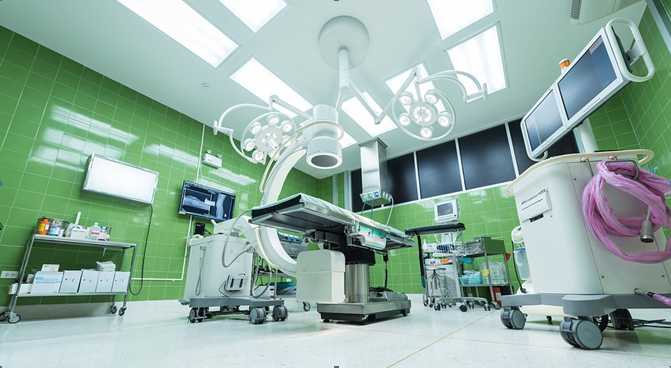
Quick and informed decisions have to be made by healthcare providers during emergency medical procedures. In high-stress situations, Big Data and analytics can greatly help physicians peruse through available data so as to comprehend the medical emergencies they’re facing and help them treat patients promptly. Big Data is so significant in the medical field in what is referred to as the Internet of Things (IoT). IoT is derived from a growing network of objects that individuals and businesses or organizations use to conduct their daily operations, from industrial machinery to consumer goods.
In the near future, homes, cars, and various appliances will start accomplishing several tasks while you’re busy with other commitments such as working, exercising, and shopping by sharing information through different platforms. Basically, the creation of this network of a wide variety of different objects is what is called the Internet of Things.
Understanding Big Data in Healthcare
There is massive data lying around in the entire field of medicine such as doctors’ prescriptions, imaging results, Electronic Patients Records (EPRs), machine sensor data from monitored parameters, and feeds from social media platforms. Information collected from other sources such as emergency care data, medical journals, and news feeds can also be very vital in enabling doctors to make crucial and quicker decisions unlike it was in the past.
IoT and Big Data come in handy in helping the industry of healthcare gain critical insights into the huge data sets and thus improving outcomes. Currently, ICU patients and their next of kin don’t have to worry even when healthcare providers are not nearby due to Big Data analytics.
Continuous and reliable monitoring of the well-being of patients have been made easier through the advancements experienced in technologies like IoT and modern Big Data analytics. The intricate network of sensors has enabled the transmission of massive data sets through cloud-based Big Data platforms. The data is collected, examined, and then warehoused appropriately. Patient safety has been improved by reducing unnecessary redundancies and unsuitable treatment. Major benefits have been witnessed in treating diseases and avoiding constant watching of patients who are suffering from hypertension, diabetes, and asthma.
Making prompt and informed decisions
Whenever there are emergency procedures, quick decisions need to be made by medical practitioners in order to protect a patient’s life. Therefore, Big Data and Analytics can be utilized to help the concerned doctors in such high-stress situations by enabling them to conduct a speedy analysis of the collected data. The doctors can get a deeper understanding of the situation at hand by running through numerous similar situations across the world, analyzing research articles, and perusing through genetic sequencing data and DNA sequence data.
The doctors are more informed in making quick and wise decisions based on facts rather than mere judgment as was the case in the past. The modern technological tools like Big Data and IoT can benchmark current patients against previous incidences. What was achievable only for a small number of patients can now be applicable on a much larger number of patients within a small period of time.
Reducing the overall cost of patient care
Latest technologies have drastically reduced the overall cost of healthcare worldwide. A research conducted by the McKinsey projects firm shows that the use of Big Data in solving medical problems has the capacity of reducing healthcare costs to $300 billion down from $500 billion in terms of healthcare data management. Another study conducted by Deskera concurs that cloud-based Big Data has a potential of reducing the healthcare costs by about 45%. This is because of early detection of diseases.
Also, it limits unnecessary hospitalization or the numerous visitations that the emergency departments experienced in most hospitals across the nation. In other words, all these efforts end up reducing the general cost of healthcare.
Some of the notable cases include that of Mrs. D’Souza who is a 72-year-old from Goa, suffering from a disorder called congestive heart failure in which the heart fails to pump enough blood and oxygen. Most patients who suffer from such a disorder rarely survive for more than five years. Mrs. D’Souza is supposed to visit her physician frequently, but currently, she doesn’t because her doctor is capable of keeping tabs on her health by utilizing IoT and Big Data analytics tools. Her doctor is capable of monitoring her congestive heart failure disorder and any other pre-condition that might affect her well-being.
Critical parameters such as heart rate, back pain, blood sugar and blood pressure are monitored through sensors placed on her body. The collected data is later transmitted to her doctor through connected smart health devices like laptops and tablets. In fact, the devices are updated in such a way that even the pharmacy and the doctors receive alerts whenever she misses her scheduled medication.


