























































Events Calendar

Mon
Tue
Wed
Thu
Fri
Sat
Sun
M
T
W
T
F
S
S
1
2
6
7
9
10
11
12
13
14
18
19
20
21
23
27
28
30
12:00 AM - Hepatology 2021
31
1
2
3
4
Heart Care and Diseases 2021
2021-03-03    
All Day
Euro Heart Conference 2020 will join world-class professors, scientists, researchers, students, Perfusionists, cardiologists to discuss methodology for ailment remediation for heart diseases, Electrocardiography, Heart Failure, [...]
Gastroenterology and Digestive Disorders
2021-03-04 - 2021-03-05    
All Day
Gastroenterology Diseases is clearing a worldwide stage by drawing in 2500+ Gastroenterologists, Hepatologists, Surgeons going from Researchers, Academicians and Business experts, who are working in [...]
Environmental Toxicology and Ecological Risk Assessment
2021-03-04 - 2021-03-05    
All Day
Environmental Toxicology 2021 you can meet the world leading toxicologists, biochemists, pharmacologists, and also the industry giants who will provide you with the modern inventions [...]
Dermatology, Cosmetology and Plastic Surgery
2021-03-05 - 2021-03-06    
All Day
Market Analysis Speaking Opportunities Speaking Opportunities: We are constantly intrigued by hearing from professionals/practitioners who want to share their direct encounters and contextual investigations with [...]
World Dental Science and Oral Health Congress
2021-03-08 - 2021-03-09    
All Day
About The Webinar Conference Series LLC Ltd invites you to attend the 42nd World Dental Science and Oral Health Congress to be held in March 08-09, 2021 with the [...]
Euro Metabolomics & Systems Biology
2021-03-08 - 2021-03-09    
All Day
Euro Metabolomics 2021 will be a platform to investigate recent research and advancements that can be useful to the researchers. Metabolomics is a rapidly emerging [...]
International Summit on Industrial Engineering
2021-03-15 - 2021-03-16    
All Day
Industrial Engineering conference invites all the participants to attend International summit on Industrial Engineering during March15-16, 2021 Webinar. This has prompt keynotes, Oral talks, Poster [...]
Digital Health 2021
2021-03-15 - 2021-03-16    
All Day
The use of modern technologies and digital services is not only changing the way we communicate, they also offer us innovative ways for monitoring our [...]
Genetics and Molecular biology 2021
2021-03-15    
All Day
Human genetics is study of the inheritance of characteristics by children from parents. Inheritance in humans does not differ in any fundamental way from that [...]
Food Science and Food Safety
2021-03-16 - 2021-03-17    
All Day
Food Safety. It also provides the premier multidisciplinary forum for researchers, professors and educators to present and discuss the most recent innovations, trends, and concerns, [...]
Traditional and Alternative Medicine
2021-03-16 - 2021-03-17    
All Day
Traditional Medicine 2021 welcomes attendees, presenters, and exhibitors from all over the world. We are glad to invite you all to attend and register for [...]
Carbon and Advanced Energy Materials
2021-03-16 - 2021-03-17    
All Day
Materials Science 2021 was an enchanted achievement. We give incredible credits to the Organizing Committee and participants of Materials Science 2021 Conference. Numerous tributes from [...]
Advancements in Tuberculosis and Lung Diseases
2021-03-17 - 2021-03-18    
All Day
Tuberculosis is a communicable disease, caused by the infectious bacterium Mycobacterium tuberculosis. It affects the lungs and other parts of the body (brain, spine). People [...]
Herbal Medicine and Acupuncture 2021
2021-03-22 - 2021-03-23    
All Day
The event offers a best platform with its well organized scientific program to the audience which includes interactive panel discussions, keynote lectures, plenary talks and [...]
Hospital Management and Health Care
2021-03-22 - 2021-03-23    
All Day
Healthcare system refers to the totality of resource that a society distributes with in organization and health facilities delivery for the aim of upholding or [...]
Hematology and Infectious Diseases
2021-03-22 - 2021-03-23    
All Day
Hematology is the discipline concerned with the production, functions, bone marrow, and diseases which are related to blood, blood proteins. The main aim of this [...]
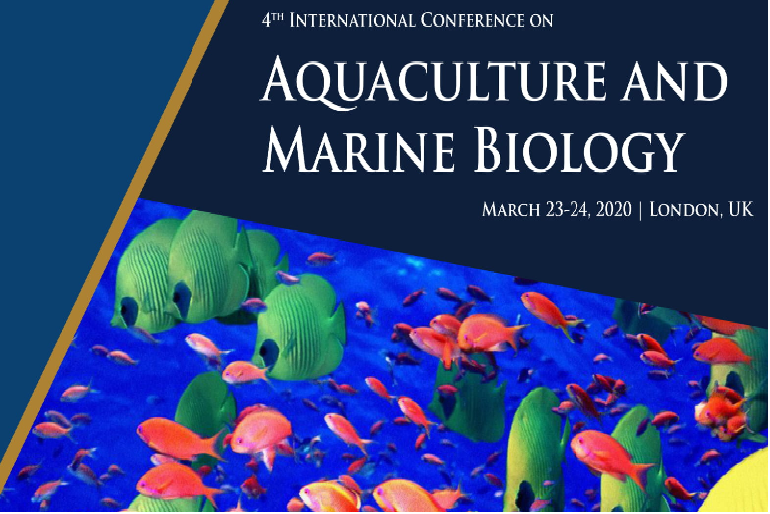
Aquaculture & Marine Biology
2021-03-24 - 2021-03-25    
All Day
The 15th International Conference on Aquaculture & Marine Biology is delighted to welcome the participants from everywhere the planet to attend the distinguished conference scheduled [...]
Artificial Intelligence & Robotics 2021
2021-03-24 - 2021-03-25    
All Day
The Conference Series LLC Ltd organizes conferences around the world on all computer science subjects including Robotics and its related fields. Here we are happy [...]
Tissue Engineering & Regenerative Medicine
2021-03-24 - 2021-03-25    
All Day
Tissue Engineering & Regenerative Medicine mainly focuses on Stem Cell Research and Tissue Engineering. Stem cell Research includes stem cell treatment for various disease and [...]
Nursing Research and Evidence Based Practice
2021-03-25 - 2021-03-26    
12:00 am
Global Nursing Practice 2021 has been circumspectly organized with various multi and interdisciplinary tracks to accomplish the middle objective of the gathering that is to [...]
Earth & Environmental Science 2021
2021-03-26 - 2021-03-27    
All Day
Earth Science 2021 is the integration of new technologies in the field of environmental science to help Environmental Professionals harness the full potential of their [...]
Earth & Environmental Science 2021
2021-03-26 - 2021-03-27    
All Day
Earth Science 2021 is the integration of new technologies in the field of environmental science to help Environmental Professionals harness the full potential of their [...]
Nanomaterials and Nanotechnology
2021-03-26 - 2021-03-27    
All Day
Nanomaterials are the elements which have at least one spatial measurement in the size range of 1 to 100 nanometre. Nanomaterials can be produced with [...]
Smart Materials and Nanotechnology
2021-03-29 - 2021-03-30    
All Day
Smart Material 2021 clears a stage to globalize the examination by introducing an exchange amongst ventures and scholarly associations and information exchange from research to [...]
World Nanotechnology Congress 2021
2021-03-29    
All Day
Nano Technology Congress 2021 provides you with a unique opportunity to meet up with peers from both academic circle and industries level belonging to Recent [...]
Nanomedicine and Nanomaterials 2021
2021-03-29    
All Day
NanoMed 2021 conference provides the best platform of networking and connectivity with scientist, YRF (Young Research Forum) & delegates who are active in the field [...]
Hepatology 2021
2021-03-30 - 2021-03-31    
All Day
Hepatology 2021 provides a great platform by gathering eminent professors, Researchers, Students and delegates to exchange new ideas. The conference will cover a wide range [...]
Events on 2021-03-03
Events on 2021-03-05
Events on 2021-03-17
Events on 2021-03-25
Events on 2021-03-30
Hepatology 2021
30 Mar 21
Latest News

Could a blood biomarker help diagnose hereditary Alzheimer’s 10 years sooner?

A BLOOD BIOMAKER CAN HELP DIAGNOSE

 January 17/1/2023  Common symptoms of Alzheimer’s disease include memory loss, language problems, and impulsive or unpredictable behavior. However, the disease starts to develop long before any signs or symptoms are visible.
Early detectionTrusted Source often means there are more treatment options available to slow disease progression.
Scientists are finding new ways to detect the disease by looking at biomarkers found in the blood, and now, researchers have identified another that could potentially help with early diagnosis.

The majority of dementia cases are comprised of Alzheimer’s disease, where the brain’s nerve cells deteriorate due to the excess accumulation of toxic beta-amyloid and tau proteins.

As the damage to brain neurons increases, it leads to difficulties with cognitive abilities, such as memory and speech.

The sooner a patient is accurately diagnosed, the sooner they can receive appropriate treatment to delay the development of the disease. This is one of the many reasons why further research is needed on accurate, easy-to-use early diagnosis methods.

In a new study, published in the journal Brain, researchers investigated a hereditary form of Alzheimer’s called autosomal dominant Alzheimer’s disease.

They found that a molecule named glial fibrillary acidic proteinTrusted Source (GFAP) could be a potential indicator for disease onset, so assessing for concentrations of this molecule in the blood could help physicians diagnose hereditary Alzheimer’s disease years sooner than traditional assessments allow.

What did the researchers find?
Researchers at Karolinska Institutet and Gothenburg University in Sweden along with their colleagues at Landspitali University Hospital in Iceland, and University College London in the United Kingdom have been investigating biomarkers in blood as a way to detect early signs of a hereditary form of Alzheimer’s disease.

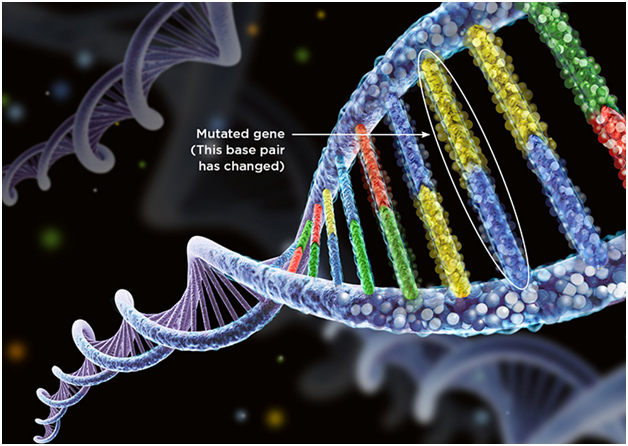
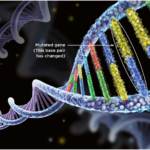
In hereditary Alzheimer’s disease, people inherit a copy of a mutated gene — the APOE E4Trusted Source allele — from a parent predisposed to Alzheimer’s disease, which, in turn, means they are likely to develop the condition.

In their study, the researchers evaluated 164 blood plasma samples from 75 individuals — 33 people with the inherited genetic mutation and 42 relatives without. The data was collected from 1994 to 2018.

“We have found that a protein called GFAP that is normally present in the brain can be measured at increased levels in blood from people who will develop Alzheimer’s disease in 10 years’ time,” Prof. Graff said.

What is GFAP?
GFAP — occurs in certain types of brain and nerve cells, called astrocytesTrusted Source, Schwann cells, and enteric glial cellsTrusted Source.

These proteins fall into a group of proteins called intermediate filamentsTrusted Source. They help these cells keep their shape and perform various functions.

“We have studied a very rare form of inherited Alzheimer’s disease caused by mutations but previous studies indicate that a similar increase in GFAP can be observed also in people who will develop the common, sporadic form of Alzheimer’s disease,” Prof. Graff told MNT.

What are the implications?
Prof. Graff explained that according to their research, GFAP seems to indicate the presence of immune cells in the brain that are associated with Alzheimer’s disease.

This protein appears to reflect changes in the brain caused by Alzheimer’s disease even before the tau protein build-up and observable damage to nerve cells can be seen.

“Since we can measure the GFAP-protein in a blood sample, it is also easily available for the general public once it has been fully developed for clinical practice,” Prof. Graff said.

“Blood-based biomarkers are attractive since blood sampling is a relatively cheap and simple procedure. It can thus be included in most if not all clinical research studies and very quickly be developed into a clinically validated tool.” she added.

Dr. James Giordano, Pellegrino Center professor of neurology and biochemistry at Georgetown University Medical Center, not involved in this research, agreed, telling MNT that this study demonstrated assessable biomarkers that can be evaluated utilizing simple blood tests, to determine the presence of biochemical factors that are strongly correlated to the eventual development of early-onset Alzheimer’s disease.

“These findings are important because they reveal that there are relatively simple tests that could demonstrate proxy indicators for a higher risk, if not [the] likelihood of developing (the familial, genetically dependent form of) Alzheimer’s disease,” Dr. Giordano told us.

Dr. Kathryn Brandt, clinical professor and chair of the primary care department at the University of New England, also not involved in this research, noted that “this is a very preliminary paper, but intriguing.”

“Its implications are something for medical professionals to keep an eye on,” said Dr. Brandt. She explained that:

Developing low-cost blood tests for Alzheimer’s
Dr. Giordano highlighted that the practicality of such blood-based biomarkers is threefold:

their relative ease in early disease assessment and diagnosis
employing them broadly may help develop more accurate epidemiological demographics of the disease, and to identify those patients who may gain from early intervention
they may also prove to be useful in other forms of dementia, including late-onset Alzheimer’s, which does not exhibit an autosomal dominant, genetically familial pattern.
Prof. Graff concluded that “the protein itself [GFAP] is interesting since it is produced by non-neuronal cells in the brain, the so-called astrocytes, which opens up a novel avenue for drug development.”

“We still do not know the exact origin for the GFAP-protein that we measure in blood,” she pointed out, “but it is an interesting idea that we could manage the Alzheimer’s disease progression by targeting other cells than neurons.”

Ultimately, further research is needed. Dr. Brandt agreed, saying “it’s important for everyone to understand that while very promising, this article reflects a beginning to this process, and that “[c]ommunity application is years away.”


