









Events Calendar

Mon
Tue
Wed
Thu
Fri
Sat
Sun
M
T
W
T
F
S
S
30
2
4
5
6
8
9
10
11
12
13
15
16
17
18
19
20
21
22
23
24
25
26
27
28
29
30
31
1
2
3
World Congress on Medical Toxicology
2020-12-01 - 2020-12-02    
12:00 am
World Congress on Medical Toxicology Medical Toxicology Pharma 2020 provides a global platform to meet and develop interpersonal relationship with the world’s leading toxicologists, pharmacologists, [...]
01 Dec
2020-12-01 - 2020-12-02    
All Day
International Conference on Food Technology & Beverages” at Kyoto, Japan in the course of Kyoto, Japan, December, 01-02, 2020 Theme of the Food Tech 2020 [...]
Biomedical, Bio Pharma and Clinical Research
2020-12-03 - 2020-12-04    
12:00 am
Biomedical, Bio Pharma and Clinical Research Conference Series LLC LTD cordially invites you to be a part of “2nd International Conference on Biomedical, Bio Pharma [...]
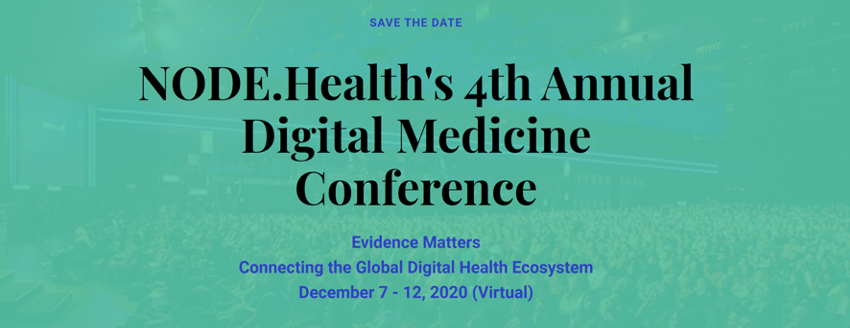
NODE Health 4th Annual Digital Medicine Conference
2020-12-07 - 2020-12-12    
12:00 am
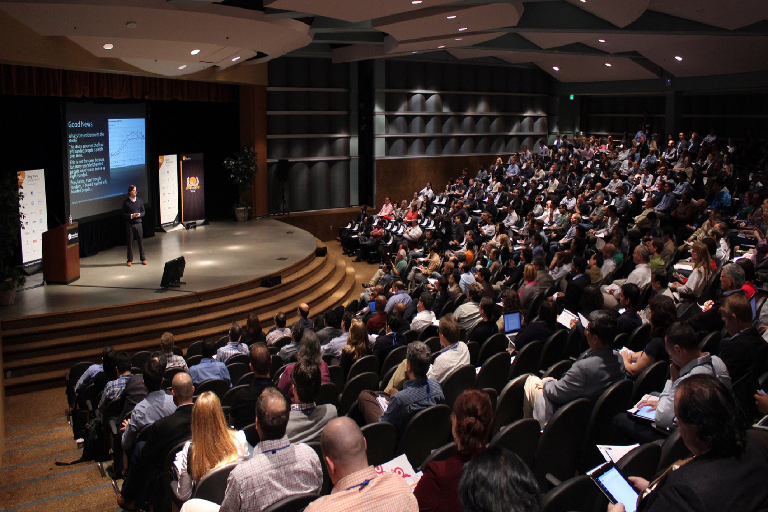
NODE.Health is delighted to announce the 4th Annual Digital Medicine Conference - Evidence Matters. Never before has the transformation of our healthcare system been more [...]
2020 Global Digital Health Forum
2020-12-07 - 2020-12-09    
12:00 am
Organized by Global Digital Health Network Digital health can be the great leveler – it can give anyone access to information about health and disease. [...]
International Conference on Cancer Treatment and Prevention
2020-12-14 - 2020-12-15    
12:00 am
Cancer Treatment Forum 2020 regards each one of the individuals to go to the "Cancer Treatment Forum 2020" amidst December 15, 2020 UK-Time Zone( GMT [...]
International Conference on Neurology and Neural Disorders
2020-12-14 - 2020-12-15    
12:00 am
International Conference on Neurology and Neural Disorders Neurology Research 2020 will join world-class professors, scientists, researchers, students, perfusionist, neurologist to discuss methodology for ailment remediation [...]
Events on 2020-12-03
White Papers

Using Customer Journey Maps to Improve Health Insurance Customer Loyalty

hipaa compliance
Using Customer Journey Maps to Improve Health Insurance Customer Loyalty
Executive Briefing
Author
Jim Tincher, Principal Consultant, HeartoftheCustomer
Jim@HeartoftheCustomer.com
Editor
Shane White, Director—New Projects, FC Business Intelligence

swhite@fc-bi.com

Overview

It’s a time of massive change for the healthcare industry. The Affordable Care Act accelerated the move to consumerism, requiring more of a focus on customer experience than ever before.
Even payers who have always focused on individual plans have to adjust. At the same time as new competitors enter the consumer market, they also have to support exchanges while their consumers demand more than ever. The good news is that companies that get the customer experience right are rewarded with growth, adding loyal customers while simultaneously lowering the cost to serve. But get it wrong–hide behind byzantine bureaucracy and incomprehensible rules–and market share drops rapidly as customers flee towards simpler plans. Watermark Consulting analyzed the stock price impact of customer experience, 1 and found that while the S&P benchmark increased by 14.5% from 2007 – 2012, customer experience laggards’ stock lost 33.9%. At the same time, customer experience leaders saw their stock rise by 43%.

A journey map is a visual display of an experience as a customer sees it. See Elements of a Journey Map on page 5 for an example. This customer view is what makes them so useful. Unlike a process map, steps that do not resonate with customers are left out, while other steps that do not  directly involve the sponsoring company are included. Journey maps are used for both business and consumer customers, although the research methods vary between the two audiences. Journey maps are used for experience design by many players in the healthcare industry, from the Mayo Clinic to UnitedHealthcare.

McKinsey & Company analyzed the importance of managing entire journeys versus managing individual touch points (such as the website or call center). They found that industry performance on journeys is “20% to 30% more strongly correlated with business outcomes, such as high revenue, repeat purchase, low customer churn, and positive word of mouth.”

The example map on page 5 shows a representative journey for a segment of consumers purchasing health insurance. Notice that eight of the first nine consumer steps do not involve Coolsure Insurance’s (a mythical health plan)people or systems. This is often the case in a purchasing journey, as consumers or employers use other resources for their research. Unfortunately, these steps often have more influence over whether the customer eventually buys than does a company’s website or its sales force.

A typical journey mapping project analyzes separate customer segments, with a unique map created for each. For example, a Fortune 100  company implements a new health care plan very differently than a 50-person software company. Trying to encapsulate both experiences as one journey results in a watered-down map that doesn’t accurately represent either customer segment.