






























Events Calendar

Mon
Tue
Wed
Thu
Fri
Sat
Sun
M
T
W
T
F
S
S
30
12:00 AM - Hepatology 2021
31
1
2
3
4
7
8
9
10
11
13
14
15
16
18
19
20
21
22
23
24
25
27
28
29
30
1
2
World Nanotechnology Congress 2021
2021-03-29    
All Day
Nano Technology Congress 2021 provides you with a unique opportunity to meet up with peers from both academic circle and industries level belonging to Recent [...]
Nanomedicine and Nanomaterials 2021
2021-03-29    
All Day
NanoMed 2021 conference provides the best platform of networking and connectivity with scientist, YRF (Young Research Forum) & delegates who are active in the field [...]
Smart Materials and Nanotechnology
2021-03-29 - 2021-03-30    
All Day
Smart Material 2021 clears a stage to globalize the examination by introducing an exchange amongst ventures and scholarly associations and information exchange from research to [...]
Hepatology 2021
2021-03-30 - 2021-03-31    
All Day
Hepatology 2021 provides a great platform by gathering eminent professors, Researchers, Students and delegates to exchange new ideas. The conference will cover a wide range [...]
Annual Congress on  Dental Medicine and Orthodontics
2021-04-05 - 2021-04-06    
All Day
Dentistry Medicine 2021 is a perfect opportunity intended for International well-being Dental and Oral experts too. The conference welcomes members from every driving university, clinical [...]
World Climate Congress & Expo 2021
2021-04-06 - 2021-04-07    
All Day
Climatology is the study of the atmosphere and weather patterns over time. This field of science focuses on recording and analyzing weather patterns throughout the [...]
European Food Chemistry and Drug Safety Congress
2021-04-12 - 2021-04-13    
All Day
We invite you to meet us at the Food Chemistry Congress 2021, where we will ensure that you’ll have a worthwhile experience with scholars of [...]
Proteomics, Genomics & Bioinformatics
2021-04-12 - 2021-04-13    
All Day
Proteomics 2021 is one of the front platforms for disseminating latest research results and techniques in Proteomics Research, Mass spectrometry, Bioinformatics, Computational Biology, Biochemistry and [...]
Plant Science & Physiology
2021-04-17 - 2021-04-18    
All Day
The PLANT PHYSIOLOGY 2021 theme has broad interests, which address many aspects of Plant Biology, Plant Science, Plant Physiology, Plant Biotechnology, and Plant Pathology. Research [...]
Pollution Control & Sustainable 2021
2021-04-26 - 2021-04-27    
All Day
Pollution Control 2021 conference is organizing with the theme of “Accelerating Innovations for Environmental Sustainability” Conference Series llc LTD organizes environmental conferences series 1000+ Global [...]
Events on 2021-03-30
Hepatology 2021
30 Mar 21
Events on 2021-04-06
Events on 2021-04-17
Events on 2021-04-26
Articles

Dec 04: Diagnosis: Electronic Medical Record myopia

dod ehr procurement

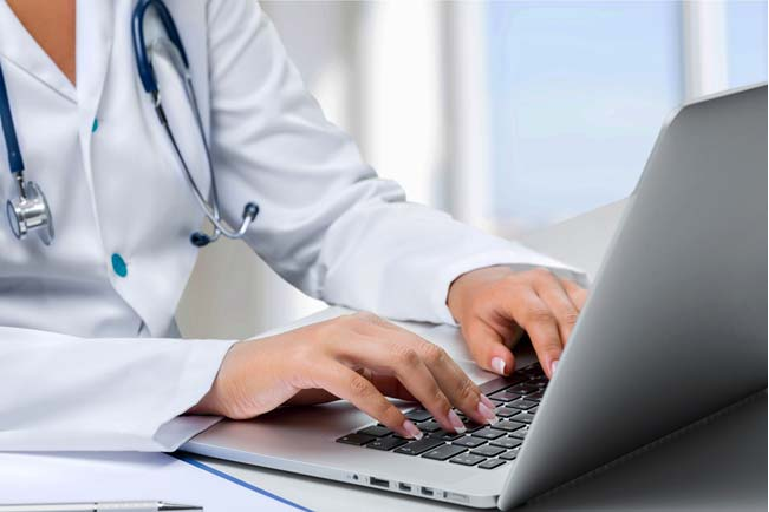
A few years ago I had an appointment with a doctor who got so deeply absorbed in reading and updating my electronic medical record, there was precious little in the way of eye contact during the appointment. As he sat there staring at the screen and tickling the keys on his laptop while he talked, I was tempted to say, “Hey, doc, my eyes are up here.”

Without eye contact, I felt as though I was talking to someone immersed in a crossword puzzle, only speaking to me absentmindedly in hopes I could cough (please) up an answer to help him fill in the blank squares.

Yes, I want my doctor to be conversant with the latest medical technology, but not at the expense of conversing with me.

The problem of electronic absorption in the doctor’s office seems to be common, as evidenced by a Viewpoint article (subscription required) published online today by JAMA.

In the piece, two Medical School physicians and a colleague at another university make the case that appropriate integration and use of electronic medical records needs to become part of the standard curriculum in medical education.

Natalie Pageler, MD, MEd, clinical assistant professor in pediatrics, and Christopher Longhurst, MD, MS, clinical associate professor in pediatrics, while extolling the many benefits of EMRs in enhancing communication among doctors and patients, point out that, “the introduction of the EMR has also introduced a wide range of unintended negative consequences.”

They cite papers from medical literature describing pitfalls such as medical trainees paying more attention to a patient’s EMR than information gleaned first-hand from the patient’s physical exam, as well as the ease with which doctors can inhibit the readability of appointment notes by overstuffing them with large amounts of cut and pasted data.

The authors recommend a number of ways in which appropriate use of EMR can be broadly incorporated into medical education. Pageler is medical director of clinical informatics at Lucile Packard Children’s Hospital and Longhurst is chief medical information officer at Packard Children’s, so they’re well acquainted with the promise and pitfalls of EMR.


source
