



















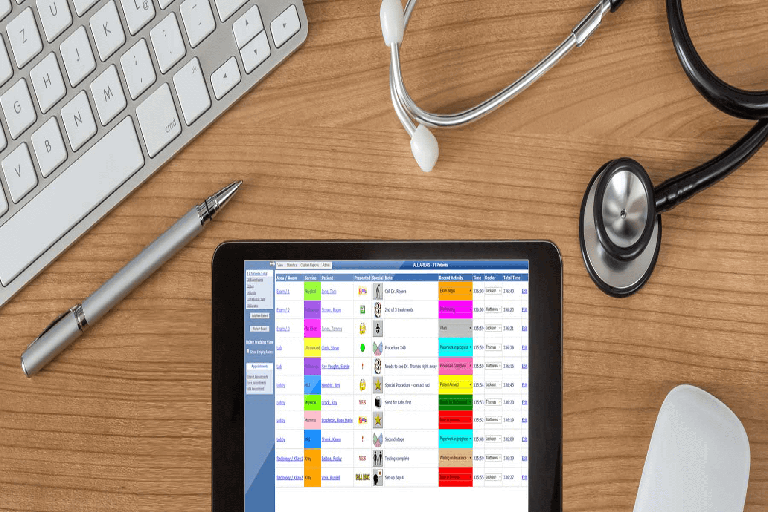







Hospitals and physician offices aren’t the only organizations getting aboard the EHR bandwagon. Long-term care facilities are increasingly adopting electronic health records and using tablets, cell phones, and other devices to conduct e-prescribing, documentation, and sharing of information with patients and families. The latest LeadingAge Ziegler 100 survey has found that 75.5% of large, non-profit systems use an EHR, while 83% use a point-of-service device to bring technology to the patient’s bedside, but health information exchange with external partners is still lacking.Long-term care facilities have long since adopted technologies to help improve residential life within the system, with more than 90% of facilities providing patients with internet access and greater than 80% using user-activated emergency response systems. Automatic fall detection was available in 20% of organizations, while almost 9 out of ten use some form of access control to prevent patients from wandering unattended. But outward-facing health IT is significantly scarcer, with few organizations participating in health information exchange with external partners.
Press Releases

Timeless Medical Systems® appoints Mike Antonelli as VP of Technology to drive next-generation platform innovation

Luma acquires Tonic to support 1,000+ health systems and 100M patients

HealthTree adds Flatiron Health and CareSpace EHR connections

DSS Wins CTM Plus Contract from U.S. Department of Veterans Affairs
Research Papers
Events Calendar
Mon
Tue
Wed
Thu
Fri
Sat
Sun
M
T
W
T
F
S
S
1
2
3
4
5
6
7
8
9
10
11
12:00 AM - Drug Addiction and Rehabilitation Therapy
12:00 AM - Drug Addiction and Rehabilitation Therapy
13
14
12:00 AM - 3D Printing and Additive Manufacturing
12:00 AM - Microfluidics and Bio-MEMS 2021
17
18
19
20
21
22
23
24
25
26
27
28
29
30
12:00 AM - Food Technology & Processing
2
3
4
5
Events
Dec 10: 75% of large, non-profit long-term care facilities use EHRs

“Providers we surveyed show strong commitment to safety, social connectedness and electronic documentation technologies,” stated Majd Alwan, Ph.D., senior vice president of technology at LeadingAge and executive director of the Center for Aging Services Technologies. “We hope and expect to see higher utilization of health information exchange with other providers to facilitate care coordination across settings.”
Only a quarter can send and receive laboratory orders and results, and just 16% can exchange problem lists and summary reports including admission, transfer, and discharge (ADT) information. Only about 20% organizations are currently able to send any type of health information to non-affiliated hospitals, physician providers, or public health agencies. Care plans were the least likely to be sent to outside providers.
Telehealth and remote monitoring are in use at 18% of organizations, but only 10% have been able to integrate mHealth data into their EHRs or other IT systems. Long-term care facilities were much more likely to use cognitive stimulation and physical exercise and rehab technologies to improve quality of life for residents. Only 2% of respondents indicated that they use no wellness monitoring technologies at all.
“Telemonitoring technologies— including telehealth, remote patient monitoring, telecare and behavioral monitoring technologies—are key to improving prevention, care management and coordination,” the survey states. “The integration of data from these technologies into an organization’s EMR/EHR system, as well as the ability to exchange such information with other providers, is also important to providing the care team with comprehensive information about the health and functional status of the seniors for whom they are providing care.”


